
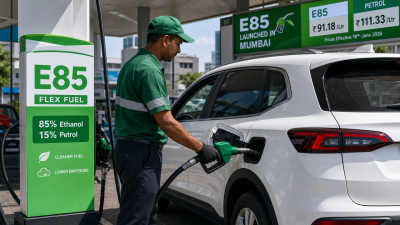
E85 fuel was launched in Mumbai on 18 June 2026 at ₹91.18 per litre, compared with Mumbai petrol at ₹111.33 per litre; Mumbai is the second major Indian market after Delhi‑NCR (E85 priced ₹82.12 per litre there).
What is E85
- Definition: A fuel blend of 85% ethanol and 15% petrol.
- Energy character: Ethanol has lower energy density than petrol, so E85 delivers lower kilometres per litre.
- Engine requirement: Requires a flex‑fuel engine designed for high ethanol content; not compatible with most standard petrol cars and motorcycles.
India rollout & pricing
- Launch: Mumbai launch on 18 June 2026; Delhi‑NCR was the first major market.
- Price differential: Mumbai E85 ₹91.18/l v petrol ₹111.33/l (≈₹20.15/l cheaper).
- Availability targets: Government aims ~500 retail stations by Dec 2026 and ~5,000 by Dec 2027; initial cities include Delhi‑NCR, Mumbai, Pune, Nagpur.
Feedstock, production & global context
- Feedstocks: Ethanol sourced mainly from sugarcane and maize in India.
- US industry data (2025): Ethanol production 16.4 billion gallons; exports 2.2 billion gallons; ~5.6 billion bushels of corn used for ethanol.
- Regulatory notes (US): EPA reported 40 small refinery exemption petitions pending (2023–2025); California approved E15 use.
Industry and vehicle examples
- Indian models: Hero MotoCorp (Splendor+; HF Deluxe Flex Fuel) and Maruti Suzuki (Wagon R Flex Fuel) offer flex‑fuel variants.
- Real‑world efficiency: E85 typically gives ~20–35% lower fuel efficiency compared with lower‑ethanol blends like E20.
IASPOINT Booster Facts
- National Policy on Biofuels (2018): Provides the policy framework for ethanol blending in India.
- Flex‑fuel vehicle features: Ethanol‑compatible fuel lines, seals, injectors and engine‑management calibration are required.
- Fuel class: E85 is an oxygenated, high‑octane transport fuel used in flex‑fuel programmes globally.