
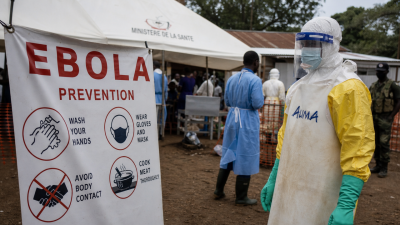
The Ebola outbreak declared on 15 May 2026 in Ituri province (DRC) has surpassed 1,000 confirmed cases; the DRC Ministry of Health reported 1,003 confirmed cases and 254 deaths as of 21 June 2026.
Outbreak snapshot
- Declaration date: 15 May 2026 (Ituri province, DRC).
- Case numbers: 1,003 confirmed cases and 254 deaths in DRC (21 June 2026).
- PHEIC: World Health Organization declared the event a Public Health Emergency of International Concern on 16 May 2026.
Virus and medical countermeasures
- Strain: Bundibugyo ebolavirus — a rare Ebola species.
- Vaccines/treatment: No licensed vaccine or strain-specific approved therapeutics for Bundibugyo as of June 2026.
Operational challenges
- Security: Access impeded by violence from ISIL-linked Allied Democratic Forces (ADF) in Ituri.
- Contact tracing: ~55% of exposed contacts reached; many infections likely undetected.
- Displacement: Overcrowded camps complicate isolation and surveillance.
Cross-border spread and demographics
- Uganda cases: 20 confirmed cases and 2 deaths (22 June 2026); most recent onset 21 June; cases reported in Kampala.
- Vulnerable groups: Shift towards higher incidence among women and rising cases in children.
- Camp alert: Kigonze camp (near Bunia) hosts >20,000 residents; 10 unexplained deaths reported recently; no confirmed Ebola there.
IASPOINT Booster Facts
- Bundibugyo ebolavirus: One of six recognised Ebola virus species; first identified in Uganda in 2007.
- PHEIC legal basis: International Health Regulations (2005) enable WHO to declare a PHEIC.
- Key surveillance metric: Proportion of contacts traced is critical for containment; thresholds vary by outbreak but >80% is commonly targeted.