
The early medieval period in India, particularly from the 8th to the 12th centuries, saw the emergence of regional powers. The decline of the Gupta Empire paved the way for dynasties such as the Palas, Pratiharas, and Rashtrakutas. This period was marked by shifting political dynamics and territorial conflicts, particularly in North India.
The Rise of Harshavardhana
After the Gupta Empire’s decline, Harshavardhana emerged as a key figure. He belonged to the Pushpabhuti dynasty and became the ruler of Kanauj. His reign marked a shift in political power from Pataliputra to Kanauj. Harsha’s rule lasted from 606 to 647 AD, and he played important role in unifying North India.
Bengal – The Pala Dynasty
Bengal, initially overshadowed in the political landscape, gained prominence with Sasanka’s rule from 606 to 637 AD. Sasanka expanded his territory and challenged Kanauj. His death led to a power vacuum, resulting in the rise of Gopala, the founder of the Pala dynasty.
Gopala and His Successors
Gopala established stability in Bengal during the late 8th century. His reign marked the beginning of the Pala dynasty’s influence. He was succeeded by Dharmpala, who is noted for his military campaigns and patronage of Buddhism. Dharmpala’s reign saw the Pala dynasty reach its zenith.
Dharmpala’s Achievements
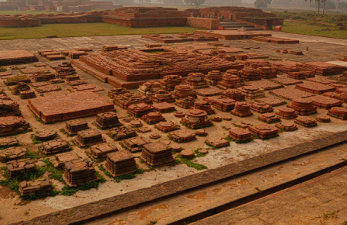
Dharmpala’s reign was characterised by military conquests and the establishment of Buddhist monasteries. He founded Vikramshila University, enhancing Bengal’s cultural significance. His campaigns included battles against the Pratiharas and Rashtrakutas, asserting Pala dominance in North India.
Devapala’s Rule
Devapala succeeded Dharmpala and ruled for around 40 years. His reign extended Pala influence as far as the Indian Archipelago. He continued military campaigns, defeating various regional powers. Devapala’s era is often seen as the pinnacle of Pala power.
The Tripartite Struggle
The Tripartite struggle involved the Palas, Pratiharas, and Rashtrakutas vying for control over Kanauj. Initially, the Rashtrakutas, under Dhruva, achieved victories. However, internal strife within their kingdom allowed the Palas to regain influence.
Pratihara Expansion
The Pratiharas, led by Vatsaraja, controlled large territories in Rajputana and Central India. Their expansion towards the east brought them into conflict with the Palas. This rivalry was marked by several military engagements, reflecting the dynamic political landscape.
Rashtrakuta Dominance
The Rashtrakutas, under Dhruva, sought to extend their influence into North India. They initially defeated both the Pratiharas and Palas. However, the death of Dhruva led to instability, allowing the Palas to recover and assert their authority.
Decline of the Pala Dynasty
Post-Devapala, the Pala dynasty faced challenges from the Kalachuris and other regional powers. Mahipala I attempted to defend against invasions but ultimately, the dynasty began to lose its grip on power. The rise of independent chiefs further fragmented Pala authority.
Ramapala’s Restoration
Ramapala, a notable Pala ruler, managed to restore some of the dynasty’s former glory. He reclaimed territories and engaged in military campaigns against the Gahadavalas. His reign marked a brief resurgence for the Pala kingdom.
The Sena Dynasty
As the Pala power waned, the Sena dynasty emerged in West Bengal. Vijayasena, the first ruler, defeated Madanapala and expanded into Assam and Mithila. The Sena dynasty continued to thrive under Ballalasena and Lakshmanasena.
Political Developments in Orissa
Orissa also played role in the early medieval political landscape. The Sailodbhava dynasty, established after Sasanka’s conquests, marked regional independence. This period saw Orissa develop its distinct political identity.
Military Conflicts and Territorial Changes
The period was characterised by numerous military conflicts. Dynasties frequently engaged in battles to expand their territories or reclaim lost lands. The shifting allegiances among regional powers contributed to the complex political scenario.
Influence of Buddhism
Buddhism flourished during the reigns of the Palas. The establishment of universities and monasteries attracted scholars from various regions. This cultural development enhanced the prestige of the Pala dynasty and contributed to its legacy.
Legacy of the Palas
The Pala dynasty’s contributions to art, culture, and education left a lasting impact on Indian history. Their patronage of Buddhism and establishment of universities positioned Bengal as a centre of learning. This legacy persisted even as political power shifted.
Role of Historical Analysis
About the political history of this period involves analysing the interactions between dynasties. The rise and fall of powers reveal vital information about the socio-economic conditions of the time. Historians study these dynamics to comprehend the evolution of Indian polity.
Last Modified: March 31, 2025