
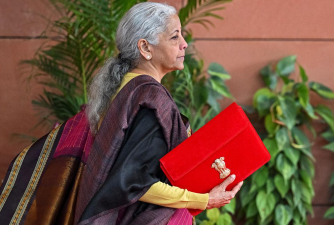
The Union Budget continues a fiscal strategy that has been carefully refined over the past few years: simplify taxes, reduce debt and deficits, and improve the quality of public expenditure. This three-part approach has now become the defining grammar of India’s macroeconomic management. While the Budget does not cater to every demand voiced in the pre-Budget debate, it reflects a principled attempt to balance growth, stability and long-term reform.
Fiscal Strategy: Staying the Course
At the heart of the Budget lies a continued commitment to fiscal consolidation. The fiscal deficit for FY27 is budgeted at 4.3% of GDP, down from 4.4% last year, while the public debt ratio is projected to trend towards 55%. These may appear incremental changes, but in a global environment where fiscal slippages are common, consistency itself is a policy achievement.
More importantly, the composition of expenditure has improved. Capital expenditure, including grants to states for capex, has risen from 3.9% of GDP to 4.4%. For the first time, the central government is investing more than it is borrowing — a principle known as the “golden rule” of public finance. Since productive investment raises growth, this rule helps compress deficits, lower debt ratios and reduce interest burdens, which still consume about 20% of central revenues.
The Golden Rule and Its Significance
Globally, many governments have experimented with the golden rule but struggled to sustain it. Political compulsions often lead to borrowing for current consumption in bad times and overspending in good times. In this context, the Centre’s ability to adhere to fiscal discipline stands out.
While central borrowing has broadly met market expectations, elevated state-level borrowing continues to keep government securities (G-Secs) yields high. High-debt “outlier” states impose negative spillovers by raising borrowing costs for all. Addressing subnational debt sustainability is therefore emerging as a key macroeconomic challenge.
Tax Simplification Without Rate Populism
On taxation, the Budget signals continuity rather than dramatic change. Major rate reforms have already been undertaken in previous years; the current focus is on process simplification, particularly in customs administration.
The share of taxes in GDP is projected to dip slightly from 11.4% to 11.2%, yet total available resources rise sharply to ₹35.3 lakh crore from ₹33.4 lakh crore last year. This reflects the power of high nominal growth: even with tax relief and revenue-sharing with taxpayers, the government has more fiscal space to spend.
Crucially, the Budget resists pressure to make ad hoc concessions. Calls for sharp cuts in capital gains taxes or removal of withholding tax for foreign portfolio investors (FPIs) were not accepted. The logic is clear: insulating investors from downside risks would create moral hazard, while narrowing the tax base would undermine the long-term goal of low and equitable taxation.
Predictability Over Populism
By sticking to clear principles, the Budget enhances predictability — a quality valued by investors and policymakers alike. Reform-consistent incentives have been preferred over headline-grabbing giveaways. These include easier buyback norms, safe harbour rules to attract foreign direct investment, and deeper financial instruments for MSMEs, infrastructure and municipal finance.
One exception that raised questions was the increase in Securities Transaction Tax (STT) on futures, which went against market expectations. While intended to curb excessive retail speculation, the same objective could arguably have been met through tighter entry norms or higher capital gains exemptions for households. However, such trade-offs underline the complexity of balancing equity, efficiency and revenue needs.
Diversity as an Engine of Resilience
India’s economic diversity has been a key buffer against recent geo-economic shocks. The Budget seeks to reinforce this strength by supporting manufacturing, services and agriculture through incentive-compatible measures.
Special emphasis is placed on high-technology and employment-intensive sectors, aligning comparative advantage with developmental needs. Examples include the use of AI for skilling farmers and youth, tax holidays for data centres, and targeted incentives for select exporters. Importantly, many of these incentives are temporary or conditional, improving behaviour without locking the exchequer into permanent liabilities.
Demand, Inclusion and Growth Sustainability
Structural reforms can raise potential growth, but sustaining actual growth requires adequate demand. Since exports alone cannot drive India’s expansion, rising labour productivity and incomes are essential. The Budget therefore combines reform with empowerment and inclusion initiatives aimed at broad-based income growth.
Performance Gaps and Delivery Challenges
Beyond headline ratios, performance indicators reveal a mixed picture. Effective capex grew by 6.5% this year, a recovery from last year’s 3.7%, but still short of the promised double-digit growth. Spending on major schemes rose to 5.3%, below the 7% target. Subsidy expenditure increased by 9.1%, while spending on social welfare and development grew more modestly at 4.6%.
Urban development spending has declined for three consecutive years, despite mounting needs. The renewed emphasis on tier-2 and tier-3 cities is therefore significant and could help correct this imbalance if implemented well.
From Allocation to Execution
India does not suffer from a shortage of investible projects; its scale and infrastructure gaps ensure a steady pipeline. The real test lies in planning, implementation and monitoring. The Budget signals a shift from merely allocating funds to improving delivery outcomes.
Public-private partnerships (PPPs) will play a role, but with a crucial difference: instead of assured funding, agencies and institutions should increasingly compete for resources based on capacity and execution capability. This marks a move towards outcome-oriented governance.
What to Note for Prelims?
- Fiscal deficit FY27 (BE): 4.3% of GDP.
- Capital expenditure share: 4.4% of GDP.
- Golden rule: government investment exceeds borrowing.
- Debt ratio target: around 55%.
What to Note for Mains?
- Analyse the importance of expenditure composition over deficit size.
- Discuss the golden rule of public finance in the Indian context.
- Examine predictability versus populism in fiscal policymaking.
- Evaluate challenges in translating budget allocations into outcomes.
The Budget’s underlying message is clear. Achieving Viksit Bharat amid global uncertainty will require discipline, patience and collective restraint. If special interests give way to principled policymaking, the fiscal framework on display offers a credible path to India’s long-term potential.
Last Modified: February 3, 2026