
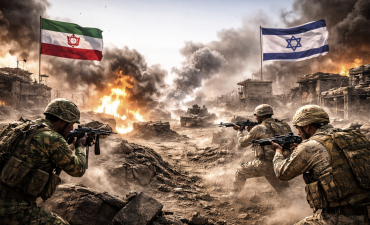
The Iran-Israel conflict intensified sharply in early 2026. After decades of covert cooperation turned bitter rivalry, Israel and the United States launched major air strikes against Iran’s nuclear and military facilities. Iran retaliated with ballistic missile attacks on Israeli and American bases. This cycle of violence follows years of failed diplomacy, proxy wars, and shifting alliances in West Asia. The conflict now threatens regional stability and global security.
Historical Context of Iran-Israel Relations
In the late 1970s, Iran and Israel maintained secret military ties under the Shah’s regime. Iran purchased advanced Israeli missiles and agreed on joint production. However, the 1979 Islamic Revolution transformed Iran into an ideological foe of Israel and the U.S. The new Iranian regime declared Israel an enemy, supporting Palestinian and Lebanese militant groups like Hamas and Hezbollah. This rivalry has shaped West Asia’s geopolitics for over four decades.
Regional Influence and Proxy Conflicts
Iran expanded its influence through alliances with Shia militias and governments in Iraq, Syria, and Lebanon. It helped establish Hezbollah and backed Hamas to challenge Israel’s dominance. Israel, backed by the U.S., countered by targeting Iranian proxies and maintaining military superiority. The Syrian civil war and the rise of the Islamic State further complicated the conflict. Iran’s alliance with Bashar al-Assad’s regime and Russia helped preserve its strategic foothold.
Diplomatic Efforts and Nuclear Controversy
The 2015 Joint Comprehensive Plan of Action (JCPOA) aimed to curb Iran’s nuclear ambitions in exchange for sanction relief. Israel opposed the deal, fearing Iran’s nuclear potential. The U.S. withdrawal from the JCPOA in 2018 under President Trump reignited tensions. Iran resumed uranium enrichment beyond limits. Attempts at renewed negotiations failed as Israel and the U.S. demanded Iran halt missile production and proxy support, which Tehran rejected.
Recent Escalation and Military Actions
In 2026, protests in Iran over economic issues were crushed amid accusations of foreign interference. Soon after, Israel and the U.S. launched coordinated air strikes targeting Iran’s leadership and key military sites. Iran responded with missile attacks on Israel and U.S. bases. Israel’s stated goal is to dismantle Iran’s nuclear programme and weaken its regional influence. Iran views the conflict as a fight for national survival. The war risks destabilising West Asia and undermining international norms.
Topics for Prelims:
Iran’s Military and Political Transformation
- Before 1979, Iran was an ally of Israel and the U.S.
- The 1979 Islamic Revolution established a theocratic regime hostile to Israel.
- Iran supports militias like Hezbollah and Hamas.
- Iran’s nuclear programme sparked global concern and sanctions.
- Protests in Iran often reflect economic and political tensions.
Key Regional Actors and Alliances
- Hezbollah is a Lebanese Shia militia backed by Iran.
- Hamas is a Palestinian Sunni Islamist group supported by Iran.
- Syria under Assad is Iran’s key regional ally.
- Israel is a nuclear-armed state backed by the U.S.
- The U.S. maintains military bases across West Asia.
Questions for UPSC:
- Point out the impact of the 1979 Iranian Revolution on West Asian geopolitics and its implications for U.S.-Israel relations.
- Critically analyse the role of proxy militias in shaping the Iran-Israel conflict with suitable examples from Lebanon and Palestine.
- Estimate the challenges in enforcing nuclear non-proliferation agreements in volatile regions like West Asia and suggest measures to strengthen them.
- Underline the strategic significance of Syria in Iran’s regional policy and explain how the Syrian civil war affected Iran-Israel dynamics.
Answer Hints:
1. Point out the impact of the 1979 Iranian Revolution on West Asian geopolitics and its implications for U.S.-Israel relations.
- The 1979 revolution replaced the pro-Western Shah with an Islamic theocracy hostile to the U.S. and Israel.
- Iran declared Israel the little Satan and the U.S. the great Satan, shifting alliances dramatically.
- The revolution ended secret Iran-Israel military cooperation, turning Iran into Israel’s primary regional adversary.
- U.S.-Iran relations collapsed, with the U.S. imposing sanctions and Iran supporting anti-American and anti-Israel proxies.
- The revolution intensified sectarian and ideological divides, influencing conflicts across West Asia.
- It transformed Iran into a regional power opposing U.S.-Israel interests, reshaping regional security frameworks.
2. Critically analyse the role of proxy militias in shaping the Iran-Israel conflict with suitable examples from Lebanon and Palestine.
- Iran supports Hezbollah in Lebanon, providing funding, weapons, and training to challenge Israeli presence.
- Hezbollah’s resistance led to Israel’s withdrawal from southern Lebanon in 2000 and survived the 2006 war.
- In Palestine, Iran backs Hamas and Islamic Jihad, strengthening armed resistance against Israel.
- Proxy militias extend Iran’s influence without direct confrontation, complicating Israel’s security calculus.
- Israel targets these groups through military strikes and covert operations to weaken Iran’s regional network.
- Proxy warfare fuels cycles of violence, destabilizing the region and hindering peace efforts.
3. Estimate the challenges in enforcing nuclear non-proliferation agreements in volatile regions like West Asia and suggest measures to strengthen them.
- Mutual distrust among regional powers and external actors hinders verification and compliance.
- Proxy conflicts and regional rivalries incentivize covert nuclear or missile development.
- Political changes, like U.S. withdrawal from JCPOA, undermine the credibility of agreements.
- Sanctions and economic pressures may provoke defiance rather than cooperation.
- Strengthening measures include multilateral monitoring, transparency mechanisms, and confidence-building measures.
- Engaging regional stakeholders in dialogue and linking non-proliferation to broader security guarantees is vital.
4. Underline the strategic significance of Syria in Iran’s regional policy and explain how the Syrian civil war affected Iran-Israel dynamics.
- Syria is Iran’s key regional ally and a critical land corridor to Hezbollah in Lebanon.
- The Assad regime’s survival ensures Iran’s forward defence against Israel along its northern border.
- The Syrian civil war threatened to sever Iran-Hezbollah supply lines and weaken Iran’s influence.
- Iran deployed militias and resources to support Assad, preserving its strategic foothold.
- The war intensified Israeli air strikes in Syria targeting Iranian and proxy forces to prevent entrenchment.
- The conflict deepened Iran-Israel hostility, turning Syria into a frontline of their proxy and direct confrontations.