
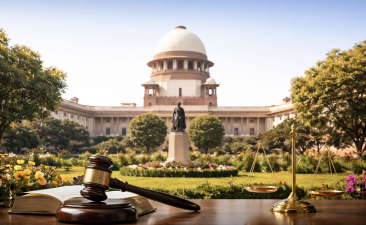
The Supreme Court’s recent suo motu intervention over a controversial NCERT textbook passage has brought into light the importance of protecting the dignity of public institutions and communities alike. This action reaffirms the constitutional principle that respect for institutions and social groups is essential to maintaining public trust and democratic governance. The Court’s stance also raises deeper questions about how education shapes civic understanding and the constitutional values that bind India’s diverse society.
Judicial Protection and Institutional Trust
The Supreme Court acted swiftly to address allegations of judicial corruption in educational material. This move puts stress on that institutions with constitutional authority must be shielded from misrepresentation. Public confidence in courts is crucial for the rule of law. When reputational harm is normalised, it threatens constitutional governance itself. Protecting institutions is not just legal but a matter of preserving societal trust.
Education’s Role in Shaping Civic Imagination
Textbooks are powerful tools of nation-building. They influence how young citizens perceive history, society, and each other. Recent revisions in NCERT books have removed or diluted references to sensitive historical events such as the Gujarat riots and Babri Masjid demolition. The reduction in coverage of caste struggles and Dalit history risks presenting a partial narrative. Such sanitisation may lead to ignorance disguised as truth and weaken democratic engagement with contested histories.
Constitutional Doctrine of Social Dignity
The Court emphasised that the Constitution does not allow hierarchies of dignity. Respect for institutions and communities must be mutually reinforcing. Articles 14, 15, 21, and 51A(e) together create a framework that guarantees equality, prohibits discrimination, and promotes fraternity. The principle of fraternity binds liberty and equality into a coherent democratic order. Vilification of any community undermines this foundation and threatens social harmony.
Legal Framework and Enforcement Challenges
Indian Penal Code sections 153A, 153B, 295A, and 505 criminalise hate speech and communal vilification. However, enforcement has been inconsistent. The Court’s intervention calls for uniform application of constitutional values to protect both institutions and citizens. Selective vigilance risks creating divisions and weakening the moral core of democracy. Upholding dignity equally is essential for the promise of constitutional belonging to be realised.
Topics for Prelims:
Supreme Court and Institutional Trust
- The Supreme Court’s suo motu powers allow it to act on its own accord.
- Institutional trust is vital for the rule of law and constitutional governance.
- Reputational harm to institutions can erode public confidence.
- Judicial authority is grounded in both legal mandate and societal respect.
- Swift judicial intervention reinforces institutional dignity.
Constitutional Provisions on Dignity and Equality
- Article 14 guarantees equality before the law.
- Article 15 prohibits discrimination based on religion, caste, language, or region.
- Article 21 protects life and personal dignity.
- Article 51A(e) imposes a duty to promote fraternity and harmony.
- The Preamble enshrines fraternity as a foundational ideal.
Questions for UPSC:
- Critically analyse the role of the judiciary in protecting institutional dignity and public trust in India’s constitutional framework.
- Explain the significance of fraternity as a constitutional value and its impact on social cohesion in a diverse society like India.
- What are the challenges in enforcing laws against hate speech in India? How can these challenges affect democratic governance?
- With suitable examples, comment on the impact of educational curriculum changes on the formation of civic identity and historical understanding among youth.
Answer Hints:
1. Critically analyse the role of the judiciary in protecting institutional dignity and public trust in India’s constitutional framework.
- The judiciary acts as guardian of constitutional values and institutional reputation through suo motu and adjudicatory powers.
- Protection of institutional dignity sustains public confidence vital for rule of law and democratic governance.
- Judicial interventions against misrepresentation prevent erosion of trust that can destabilize constitutional order.
- Judicial authority rests on both legal mandate and societal respect; undermining trust weakens its effectiveness.
- Swift and decisive action by courts signals zero tolerance for disparagement, reinforcing institutional integrity.
- However, selective protection risks creating hierarchies of dignity, potentially weakening moral coherence of democracy.
2. Explain the significance of fraternity as a constitutional value and its impact on social cohesion in a diverse society like India.
- Fraternity is enshrined in the Preamble and Article 51A(e), promoting harmony and brotherhood across communities.
- It bridges liberty and equality, ensuring these ideals are not fragmented or merely formal.
- Fraternity encourages mutual respect, reducing social conflict and communal divisions.
- It underpins constitutional guarantees against discrimination (Articles 14, 15) and protects dignity (Article 21).
- Vilification of communities threatens fraternity, weakening the democratic fabric and social cohesion.
- Upholding fraternity is essential for inclusive citizenship and peaceful coexistence in India’s plural society.
3. What are the challenges in enforcing laws against hate speech in India? How can these challenges affect democratic governance?
- Laws such as IPC Sections 153A, 153B, 295A, and 505 criminalise hate speech and communal vilification.
- Enforcement is often uneven, influenced by political context, visibility, and identity of affected groups.
- Normalization of hate speech in public discourse lowers intervention thresholds, weakening deterrence.
- Selective vigilance encourages perceptions of bias, undermining faith in legal and democratic institutions.
- Insufficient enforcement can exacerbate social tensions, threatening peace and constitutional order.
- Consistent application of laws is crucial to uphold dignity, equality, and social harmony in democracy.
4. With suitable examples, comment on the impact of educational curriculum changes on the formation of civic identity and historical understanding among youth.
- Textbooks shape civic imagination by influencing how history and society are understood by young citizens.
- Removal or dilution of references to events like Gujarat riots, Babri Masjid demolition, and caste struggles risks presenting sanitized narratives.
- Partial histories encourage ignorance disguised as truth, weakening critical engagement with contested pasts.
- Overemphasis on conflict or suffering can stereotype communities, overshadowing their agency and contributions.
- Curricular omissions affect social cohesion by shaping incomplete or biased civic identities.
- Balanced, honest education is essential for nurturing informed, empathetic citizens capable of upholding constitutional values.