
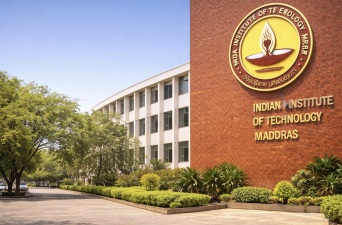
The Indian Institute of Technology (IIT) Madras has commenced admissions for its Bachelor of Science (BS) programmes through the newly introduced IIT Admission Test (IAT). This initiative marks a significant step in diversifying the admission process beyond traditional exams like JEE Advanced. The BS programmes at IIT Madras focus on interdisciplinary science education and research, aiming to nurture scientific talent in emerging fields.
About IIT Madras BS Programmes
IIT Madras offers BS degrees in various science disciplines including Physics, Chemistry, Mathematics, and interdisciplinary areas such as Data Science and Artificial Intelligence. These programmes are designed to provide a strong foundation in scientific principles along with research exposure. The BS degrees aim to prepare students for advanced studies or careers in research, academia, and industry.
IIT Admission Test (IAT) Overview
The IAT is a new entrance examination introduced to select candidates for the BS programmes at IIT Madras. Unlike the Joint Entrance Examination (JEE), which primarily focuses on engineering admissions, the IAT assesses aptitude in basic sciences and analytical skills. This test aims to identify students with a strong inclination towards scientific inquiry and research.
Eligibility and Admission Process
Candidates who have completed their higher secondary education with a strong background in science subjects are eligible to apply for the IAT. The admission process involves the written test, followed by interviews or counselling sessions. Successful candidates will gain admission to the BS programmes starting in the upcoming academic session.
Significance for Science Education in India
The introduction of the IAT and BS programmes at IIT Madras represents an effort to strengthen science education at the undergraduate level. It provides an alternative pathway for students passionate about pure and applied sciences. This approach is expected to encourage research-oriented learning and contribute to India’s scientific advancement.
What to Study for UPSC Exams?
- Interdisciplinary Science Education in India
- Research and Development Policies
- Higher Education Reforms
- Science and Technology Institutions in India
- National Education Policy 2020
Interdisciplinary Science Education in India
Interdisciplinary science education integrates multiple scientific disciplines to foster holistic understanding and innovation. Indian institutions like IITs and IISERs promote such education to address complex real-world problems. It combines fields such as biology, chemistry, physics, mathematics, and computer science. Curriculum design emphasizes research, critical thinking, and problem-solving skills. Government initiatives support interdisciplinary programs to boost scientific research and technology development. Challenges include rigid departmental structures and resource allocation.
Research and Development Policies
India’s Research and Development (R&D) policies focus on increasing innovation, scientific output, and technology self-reliance. The Department of Science and Technology (DST) and Council of Scientific and Industrial Research (CSIR) are key agencies. Policies encourage public-private partnerships, funding for basic and applied research, and international collaborations. The National Innovation Foundation promotes grassroots innovations. R&D expenditure is around 0.7% of GDP, with aims to increase it to 2%. Intellectual property rights and technology transfer frameworks are integral components.
Higher Education Reforms
Higher education reforms in India aim to enhance quality, access, and equity. Key measures include autonomy for universities, accreditation reforms, and digital education promotion. The National Institutional Ranking Framework (NIRF) ranks institutions to improve competitiveness. Reforms encourage multidisciplinary education, research integration, and skill development. The establishment of new institutions and expansion of online learning platforms are ongoing. Challenges include faculty shortages, regional disparities, and infrastructure gaps.
Science and Technology Institutions in India
India hosts premier science and technology institutions like IITs, IISERs, TIFR, and ISRO. IITs specialize in engineering and technology education and research. IISERs focus on basic sciences and interdisciplinary research. TIFR is a leading center for fundamental research in physics and mathematics. ISRO leads space research and satellite technology. These institutions receive government funding and collaborate internationally. They contribute significantly to India’s scientific publications, patents, and technology development.
National Education Policy 2020
The National Education Policy (NEP) 2020 aims to transform India’s education system from foundational to higher levels. It promotes multidisciplinary and holistic education with flexibility in course choices. NEP emphasizes research, innovation, and critical thinking. It proposes the establishment of a National Research Foundation to fund research. The policy encourages the use of technology and online education. It also focuses on teacher training, equitable access, and vocational education integration. Implementation is phased with coordination between central and state governments.
Last Modified: April 8, 2026