
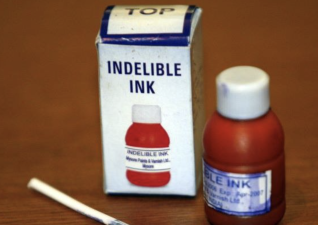
The purple mark on a voter’s finger is a familiar safeguard in Indian elections. It is called indelible ink and is used to prevent double voting. The recent controversy in Maharashtra over its easy removal has renewed attention on how the ink works, who makes it, and how election officials use it.
What Is Indelible Ink?
Indelible ink is applied to a voter’s left index finger after voting. Its purpose is simple – to show that the person has already cast a ballot. The mark is meant to remain visible for several days and should not be removed easily. It is one of the oldest anti-duplication measures used in Indian elections.
Use in India Since 1962
India began using indelible ink in 1962 during the third general election. The Election Commission adopted it to stop a voter from casting a second vote at another polling station. The system has continued since then because it is low-cost, visible and effective in large-scale elections.
Composition and Manufacture
The ink contains silver nitrate, which reacts with the skin and light to create a dark stain. A dye is also added to make the mark clearly visible. The formula was developed by the National Physical Laboratory of India in the early 1950s. It is manufactured exclusively by Mysore Paints and Varnish Ltd, a Karnataka government undertaking based in Mysuru.
Controversy in Maharashtra Polls
During municipal corporation elections in Maharashtra, some voters and Opposition parties alleged that the ink was coming off too easily. Videos on social media showed marks being removed with sanitiser or nail polish remover, especially where marker pens were used. Election officials said that even if the ink is removed, other safeguards prevent repeat voting. They also noted that marker pens have been used in local body elections since 2011.
Last Modified: April 27, 2026