
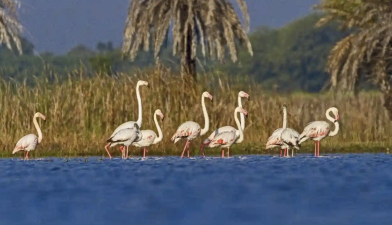
India has expanded its Ramsar network with the addition of two new wetlands – Patna Bird Sanctuary in Etah district of Uttar Pradesh and Chhari-Dhand in Kutch district of Gujarat. The announcement comes ahead of World Wetlands Day and takes India’s total Ramsar sites to 98. The development reflects the country’s growing focus on wetland conservation and international environmental commitments.
New Ramsar Sites
- Patna Bird Sanctuary is a freshwater wetland in Uttar Pradesh.
- Chhari-Dhand is a seasonal wetland in the arid landscape of Kutch, Gujarat.
- Both sites have been recognised for their ecological importance and biodiversity value.
Ecological Significance
- The wetlands provide habitat to hundreds of migratory and resident bird species.
- They support endangered birds and other wildlife.
- Species such as chinkara, wolves, caracal, desert cats and desert foxes are found in the region.
- Wetlands also help in water storage, flood control and climate resilience.
India and the Ramsar Convention
India is a Contracting Party to the Convention on Wetlands, commonly known as the Ramsar Convention. The treaty was signed in Ramsar, Iran, in 1971. India became a signatory on 1 February 1982. Wetlands of international importance are designated under this framework for conservation and wise use.
Ramsar Network in India
India’s Ramsar network has grown from 26 sites in 2014 to 98 sites at present, an increase of over 276%. This expansion shows greater recognition of wetlands as critical ecosystems. Ramsar designation also strengthens conservation planning, monitoring and sustainable management of these areas.
Last Modified: April 27, 2026