
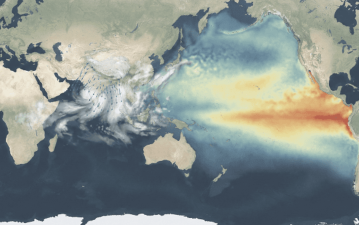
India may face an El Nino phase after July 2026, raising concerns over the southwest monsoon and rainfall distribution. The India Meteorological Department has said that ENSO-neutral conditions are likely to continue until July, while current climate signals show a rising probability of El Nino later in the season. El Nino is the warming of the central equatorial Pacific Ocean and is often linked with weaker monsoon rainfall in India.
What El Nino Means
El Nino is defined as central equatorial Pacific temperatures remaining at least 0.5 degree Celsius above normal for five consecutive overlapping three-month periods. It is the opposite of La Nina, which involves cooling of the same region. Both are part of the ENSO cycle, a major driver of global weather variability.
Why It Matters for India
El Nino has historically been associated with below-normal rainfall in India. Six out of 10 El Nino years have seen depressed monsoon rainfall. The last global El Nino occurred in 2023-24, when India received below-normal rainfall. July and August are the most critical monsoon months, so any El Nino development during this period can affect agriculture, water availability, and hydropower generation.
Forecast and Uncertainty
Climate models indicate more than a 50% chance of El Nino after June, rising to nearly 70% in July, August, and September. However, February and March forecasts are considered less reliable. April forecasts are usually more accurate, and clearer signals are expected then. This makes the current assessment provisional rather than definitive.
February Weather Outlook
For February, below-normal rainfall is likely over most parts of India, except some areas of northwest and east-central India. Temperatures are expected to remain above normal in most regions, except parts of southern India. January rainfall was 31% below normal, and winter snowfall has also been declining, which may reflect broader climate change impacts.
Last Modified: April 27, 2026