
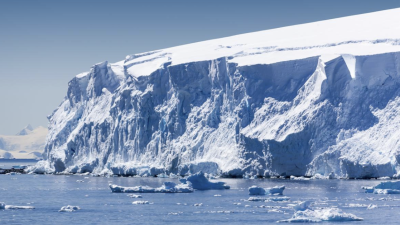
Thwaites Glacier in West Antarctica has become a major climate concern because it is melting rapidly due to warming ocean waters linked to human-driven climate change. Often called the Doomsday Glacier, it is already contributing to global sea-level rise. Scientists warn that its further retreat could destabilise the wider West Antarctic Ice Sheet and trigger severe coastal flooding across the world.
Why Thwaites Glacier Matters
Thwaites Glacier is one of the most vulnerable glaciers in Antarctica. It acts as a critical support for the West Antarctic Ice Sheet. Its collapse could lead to a much larger ice loss from the region. Researchers estimate that Thwaites alone contributes around 4% of annual global sea-level rise.
Climate Risk and Sea-Level Impact
The glacier is melting at an unprecedented pace because warm ocean water is reaching its underside. If the glacier continues to weaken, global sea levels could rise by about 65 cm. Such a rise would increase the risk of flooding in low-lying coastal areas, threaten infrastructure, and displace millions of people. The issue is therefore seen as a major long-term climate security challenge.
Seabed Anchored Curtain Proposal
A team of scientists and engineers has proposed an underwater wall, or seabed anchored curtain, to block warm currents from reaching the glacier. The plan involves a 150-metre-tall barrier stretching about 80 km across the seabed in front of Thwaites Glacier. The project includes a three-year phase for research, design, testing, and construction planning, with a budget of $10 million.
Technical and Scientific Challenges
The proposal faces serious engineering hurdles. The structure would have to survive extreme Antarctic conditions, strong ocean pressure, and long-term exposure to seawater. Experts note that the project is experimental and its success is uncertain. However, it reflects growing interest in climate intervention research to slow ice loss and reduce future sea-level risks.
Last Modified: April 28, 2026