
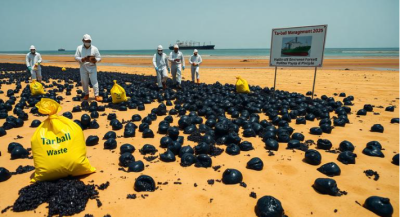
Tar balls, the sticky weathered remnants of oil spills, have become a recurring coastal pollution issue along India’s western shoreline. To address this, the Ministry of Environment, Forest and Climate Change has proposed draft Tar Balls Management Rules, 2026. The draft seeks to define institutional responsibilities for prevention, monitoring, collection, treatment and disposal of tar balls, with a focus on protecting marine ecosystems and coastal livelihoods.
What Are Tar Balls?
Tar balls are small, dark, sticky blobs of oil that form when spilled oil weathers in the marine environment. They may also arise from natural oil seeps. These deposits often wash ashore and accumulate on beaches. They are harmful to seabirds, fish and marine animals, including sea turtles that may mistake them for food.
Coastal Impact and Affected Regions
India’s western coast is especially vulnerable, particularly the stretch from Gujarat to Goa. The problem is more visible during the seasonal period from April to September. Tar balls damage beach ecology, affect tourism and create disposal challenges for coastal authorities.
Key Provisions of the Draft Rules
- State governments will be responsible for environmentally sound management of tar balls.
- States may declare tar ball pollution a state disaster and act under the Disaster Management Act.
- District administrations will handle collection, processing, transport and shoreline clearance.
- Tar ball management must be included in District Disaster Management Plans.
- State Level Crisis Management Groups may be formed under the National Oil Spill Disaster Contingency Plan.
Institutional Roles and Response Mechanism
- The Indian Coast Guard will implement the National Oil Spill Disaster Contingency Plan.
- It will conduct aerial and surface surveillance in India’s Exclusive Economic Zone.
- Relevant ministries include Defence, Ports, Shipping and Waterways, and Petroleum and Natural Gas.
- The Central Pollution Control Board and coastal agencies will support coordination and compliance.
- Advanced tools such as remotely operated vehicles and automated underwater vehicles may be used to detect underwater oil plumes.