
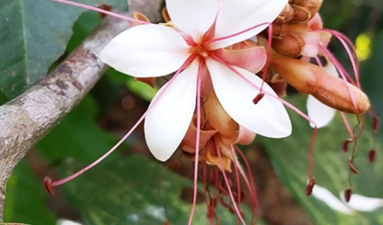
Researchers from the Jawaharlal Nehru Tropical Botanic Garden and Research Institute (JNTBGRI) in Kerala recently discovered a new evergreen tree species named Humboldtia nairiana. Found in the riparian forests of the Shendurney Wildlife Sanctuary within the southern Western Ghats, this species belongs to the legume family. The tree is named in honor of G.M. Nair, a plant biotechnologist and former director of JNTBGRI. The discovery, based on specimens collected during a floristic survey, emphasizes the ecological value of the Western Ghats biodiversity hotspot and was published in the Journal of Plant Development Sciences.
Botanical Profile and Characteristics
Morphological Features
Humboldtia nairiana is a small evergreen tree that grows up to 5 meters in height. It features distinct compound leaves with 2 to 4 pairs of leaflets. The flowers are small, white to pinkish, and arranged in dense clusters. This species is easily distinguished from other members of the genus by its specific floral structure, particularly the size and shape of its sepals and petals.
Habitat and Ecology
The species is localized to the riparian forests of the Shendurney Wildlife Sanctuary. These forests grow along the banks of rivers and streams, providing a unique microclimate. The tree grows in shaded, moist environments at an elevation of around 200 to 400 meters above sea level.
The Genus Humboldtia
Distribution and Endemism
The genus Humboldtia belongs to the Fabaceae (legume) family, under the subfamily Detarioideae. This genus is largely endemic to the Western Ghats of India and Sri Lanka. Out of nearly 10 known species, the majority are confined entirely to the southern Western Ghats of Kerala and Tamil Nadu.
Mutualistic Relationships
Several species within the Humboldtia genus exhibit myrmecophytism, a mutualistic relationship with ants. These trees develop hollow internodes or swollen structures called domatia, which provide shelter for ant colonies. In return, the ants protect the plant from herbivores. However, initial observations indicate that Humboldtia nairiana lacks these prominent hollow ant-dwellings, making it morphologically distinct from species like Humboldtia brunonis.
Conservation Status and Threats
Geographic Isolation
Humboldtia nairiana is currently known only from a highly restricted population within the Shendurney Wildlife Sanctuary. This narrow geographic range makes the species vulnerable to localized environmental changes and stochastic events.
Major Threats
The survival of the species faces several challenges:
- Habitat Fragmentation: Infrastructure development and changing land-use patterns near protected areas alter riparian ecosystems.
- Climate Change: Changes in rainfall patterns and rising temperatures affect the flow of forest streams, impacting riparian vegetation.
- Invasive Species: Exotic weeds compete with native seedlings for space and nutrients.
Shendurney Wildlife Sanctuary: Ecological Context
Location and Terrain
Shendurney Wildlife Sanctuary is located in the Kollam district of Kerala. It forms a critical part of the Agasthyamala Biosphere Reserve. The sanctuary is named after the endemic tree Gluta travancorica, locally known as Chenkurunji.
Forest Types and Biodiversity
The sanctuary features a mix of West Coast tropical evergreen forests, semi-evergreen forests, and moist deciduous forests. It serves as a vital catchment area for the Thenmala Dam reservoir.
| Parameter | Details |
| Protected Area Network | Agasthyamala Biosphere Reserve |
| Key Endemic Flora | Gluta travancorica (Chenkurunji), Humboldtia nairiana |
| Major River/Water Body | Shendurney River, Thenmala Reservoir |
| Key Fauna | Lion-tailed macaque, Nilgiri langur, Asian elephant |
IASPOINT Booster Facts for UPSC
- Genus Eponym: The genus Humboldtia is named after the Prussian naturalist and explorer Alexander von Humboldt.
- Agasthyamala Biosphere Reserve: This reserve spans Kerala and Tamil Nadu. It is included in UNESCO’s World Network of Biosphere Reserves.
- Chenkurunji Connection: Shendurney Wildlife Sanctuary was established specifically to protect Gluta travancorica (Chenkurunji), a tree facing severe climate change risks.
- JNTBGRI: The Jawaharlal Nehru Tropical Botanic Garden and Research Institute is an autonomous institution established under the Government of Kerala. It maintains the largest conservatory of tropical plants in Asia.
- Western Ghats Endemism: Nearly 35% of all plant species found in the Western Ghats are endemic to the region, meaning they are found nowhere else on Earth.