
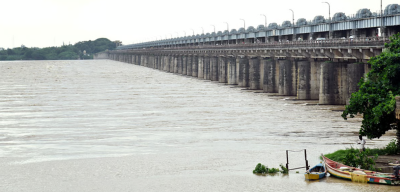
The Andhra Pradesh government has established a high-level Environment Protection Task Force to prevent contamination in the Godavari and other major rivers across the state. This administrative action prepares the state for the upcoming Godavari Pushkaralu festival scheduled for mid-2027, which expects an influx of around 10 crore devotees. The initiative follows directives from Deputy Chief Minister and Environment Minister K. Pawan Kalyan after an inspection in Rajamahendravaram revealed heavy discharge of untreated urban sewage and industrial effluents. The task force is mandated to enforce immediate containment strategies and execute long-term river-cleaning operations.
Structure and Mandate of the Task Force
The state government issued official orders setting up an inter-departmental and inter-district mechanism to execute strict anti-pollution protocols.
Composition of the Committee
- Chairmanship: Led by the Principal Secretary of the Department of Environment and Forests.
- Convener: The Member Secretary of the Andhra Pradesh Pollution Control Board (APPCB).
- Administrative Members: District Collectors from the primary Godavari basin areas, including East Godavari, West Godavari, Eluru, Kakinada, Konaseema, and Polavaram.
- Line Departments: Senior representation from Municipal Administration, Panchayat Raj, Industries, Irrigation, Agriculture, Fisheries, Tourism, Endowments, and Rural Water Supply.
Core Operational Mandate
- Biweekly Review Meetings: The committee meets every 15 days to evaluate field reports, track pollution hotspots, and execute corrective actions.
- Industrial Compliance Audits: Implementation of mandatory quarterly environmental audits categorizing units into Red, Yellow, and Green bands based on adherence to effluent standards.
- Point-Source Regulation: Direct monitoring of urban drainage channels, such as the Nalla Channel, and chemical discharge lines from manufacturing facilities like the Andhra Paper Mills.
- Financial Devolution: Allocation of ₹100 crore through the APPCB distributed among the six basin districts for immediate creation of pollution control infrastructure.
- Single-Use Plastic Ban: Execution of a year-long prohibition on single-use plastics along the entire river course and embankments to achieve zero-plastic zones.
Major Pollution Dynamics in the Godavari Basin
The Godavari River faces ecological stress due to a mixture of domestic, municipal, and industrial inputs that decrease its dissolved oxygen levels and elevate fecal coliform counts.
| Pollution Source Category | Primary Attributed Pollutants | High-Risk Impact Zones |
| Municipal Sewers | Untreated domestic greywater, organic waste, plastic debris | Rajamahendravaram urban limits, major Gram Panchayats |
| Industrial Units | Chemical effluents, heavy metals, paper and pulp processing waste | Manufacturing corridors adjacent to the main river channel |
| Agricultural Runoff | Chemical fertilizers, chemical pesticides, residual nitrogen | Intermediate basin farming plains across the six districts |
Geographical and Ecologic Profile of Godavari River
Understanding the natural course of the river remains essential for macro-level environmental planning and mapping downstream pollutant transport.
Key Geographical Indicators
- Origin: Rises at Trimbakeshwar near Nashik in Maharashtra within the Western Ghats.
- Length: Spans approximately 1,465 kilometers, making it the second-longest river in India after the Ganga.
- Basin Coverage: Drains about 10% of India’s total geographical area, extending across Maharashtra, Telangana, Andhra Pradesh, Chhattisgarh, and Odisha.
- Major Tributaries: Pravara, Purna, Manjra, Penganga, Wardha, Wainganga, Indravati, and Sabari.
IASPOINT Booster Facts for UPSC
- Second Largest Basin: The Godavari is famously termed the ‘Dakshin Ganga’ or ‘Vridha Ganga’ due to its massive size and age.
- Water Quality Classification: Central Pollution Control Board (CPCB) categorizes river water under Designated Best Use criteria where outdoor bathing requires Class B standards (Dissolved Oxygen ≥ 5 mg/l and Biochemical Oxygen Demand ≤ 3 mg/l).
- Pushkaralu Astronomy: The festival takes place once every 12 years when Brihaspati (Jupiter) enters the Simha (Leo) zodiac sign.
- Ecological Sensitive Zones: The Coringa Mangrove Sanctuary is located near the Gautami branch of the Godavari delta, making downstream pollution a direct threat to marine biodiversity.
- Polavaram Project: A major multi-purpose national irrigation project under construction on the Godavari River in Andhra Pradesh, located within the jurisdiction of the newly formed task force districts.
- Statutory Authority: The APPCB enforces the Water (Prevention and Control of Pollution) Act, 1974, which provides the legal framework for the task force’s punitive operations against polluting units.