
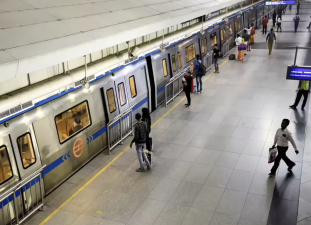
Prime Minister Narendra Modi inaugurated two new Delhi Metro corridors and laid the foundation stone for three additional metro projects worth around Rs 18,300 crore in the national capital. The expansion is aimed at improving urban mobility, easing congestion, and strengthening last-mile connectivity across Delhi and adjoining areas.
New Pink Line Corridor
The Majlis Park–Maujpur-Babarpur section of the Pink Line has been opened. This 12.3 km elevated stretch extends the Pink Line to about 71.56 km. It is designed to help create India’s first fully operational Ring Metro, offering circular connectivity across several parts of Delhi.
- The corridor includes stations such as Majlis Park, Burari, Jharoda Majra, Jagatpur-Wazirabad, Soorghat, Nanaksar-Sonia Vihar, Khajuri Khas, Bhajanpura, Yamuna Vihar and Maujpur-Babarpur.
- The project also features a new bridge over the Yamuna River.
- A double-decker structure has been built to carry both a metro line and a road flyover.
Magenta Line Extension
The Deepali Chowk–Majlis Park extension of the Magenta Line has also been inaugurated. This 9.92 km elevated corridor adds seven new stations and takes the line length to nearly 49 km. Some sections rise to around 28.36 metres, making them among the highest elevated tracks in the metro network.
Phase V(A) Metro Projects
The Prime Minister also laid the foundation stone for three new corridors under Phase V(A) of Delhi Metro expansion. These include the Central Vista corridor from Ramakrishna Ashram Marg to Indraprastha, and two extensions of the Golden Line.
- Golden Line extension from Aerocity to Terminal 1 of the airport.
- Golden Line extension from Tughlakabad to Kalindi Kunj.
- These projects are expected to improve airport and inter-city connectivity.
Urban Mobility Impact
The new corridors are expected to reduce traffic pressure, cut travel time, and support cleaner transport in Delhi. The metro expansion also strengthens links between residential, administrative, and transport hubs, making the network more integrated and efficient.
Last Modified: April 28, 2026