
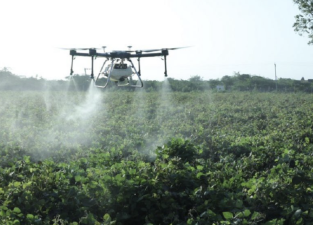
India has recorded a sharp rise in the adoption of nano-fertilisers and drone-based farm technologies, with the government linking both to lower input costs, better nutrient efficiency and more sustainable agriculture. The latest official update also outlines ongoing trials, training programmes and distribution networks meant to scale up these technologies across different agro-climatic zones.
Nano-Fertiliser Adoption
Cumulative sales of nano-fertilisers have reached 1,593.37 lakh bottles of 500 ml each. This includes 1,219.27 lakh bottles of Nano Urea and 374.10 lakh bottles of Nano DAP. These products are being promoted as alternatives or supplements to conventional fertilisers.
Trial Results and Efficiency Gains
Field trials by ICAR institutions and State Agricultural Universities have shown encouraging results.
- Nano Urea used as a foliar spray can reduce urea consumption by 25 to 50 per cent.
- Comparable yields have been observed in many cases.
- Yield gains of 3 to 8 per cent have also been reported in some trials.
- Nano DAP may partially replace conventional phosphorus fertilisers by up to 50 per cent under suitable conditions.
The government has initiated further studies, including a Phase-II assessment with the National Productivity Council and a five-year ICAR network project, to examine nutrient use efficiency across agro-climatic regions.
Concerns and Application Practices
Officials have noted that performance can vary at higher substitution levels, especially in low-fertility soils. The focus is now on standardising application methods, promoting balanced fertiliser use and expanding awareness through field demonstrations and campaigns. Nano-fertilisers are being supplied through Pradhan Mantri Kisan Samridhi Kendras, supported by outreach through Kisan Sammelans, webinars and regional drives.
Drone Technology in Agriculture
Under the Namo Drone Didi scheme, with an outlay of ₹1,261 crore for 2023-24 to 2025-26, 1,094 drones have been distributed to women self-help groups. Of these, 500 drones were provided specifically under the scheme. Beneficiaries have received training at DGCA-authorised centres. In addition, ₹52.50 crore has been allocated to ICAR under the Sub-Mission on Agricultural Mechanisation for drone promotion. Between 2022-23 and 15 March 2026, institutions and Krishi Vigyan Kendras procured 297 drones and conducted over 36,000 demonstrations across more than 38,000 hectares.
Last Modified: April 29, 2026