
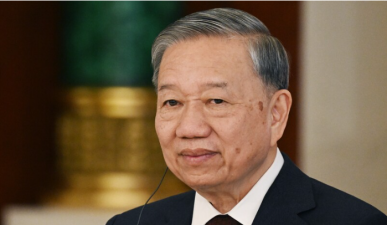
Vietnam’s Communist Party general secretary To Lam has been unanimously elected President for a five-year term, giving him control over both the party and the state. The move marks a major shift from Vietnam’s traditional system of shared leadership and strengthens his position at a time of economic reform, bureaucratic restructuring and external pressure on trade and diplomacy.
Power Consolidation in Vietnam
To Lam’s election completes his rise to the top of Vietnam’s political system. He had already become party chief, and the presidency now adds formal state authority to his role. This is only the second time he has held both posts, after briefly doing so in 2024 following the death of Nguyen Phu Trong.
Shift from Shared Leadership
Vietnam has usually separated the top party and state offices between different leaders. To Lam’s dual role is being seen as a departure from that norm. The arrangement resembles the leadership model in China under Xi Jinping and in Laos, where power is more centralised.
Economic Reform and Governance Agenda
To Lam has prioritised peace, stability and faster growth. He has also overseen a major administrative overhaul, including:
- Cutting government jobs.
- Merging ministries.
- Redrawing provincial boundaries.
- Advancing infrastructure projects.
His focus is on improving private-sector growth and moving Vietnam beyond a labour-intensive export model. The country is targeting annual growth of 10% or more over the next five years.
Foreign Policy and Strategic Challenges
Vietnam faces pressure from the United States over its trade surplus and must also balance ties with China, its largest trading partner and a rival claimant in the South China Sea. Maintaining this careful foreign policy balance will be harder amid global instability and energy shocks linked to the war in Iran.
Last Modified: April 28, 2026