
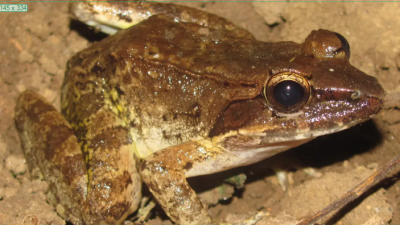
A new frog species, Limnonectes motijheel, has been documented from the forests of Arunachal Pradesh, adding to India’s growing record of hidden amphibian diversity. The species is notable for its mud-nesting habit, distinctive markings and a rare fanged jaw, features that make it scientifically and ecologically important. Its discovery also underlines the biodiversity value of Namdapha Tiger Reserve and the surrounding evergreen forest ecosystem.
Discovery and Location
The frog was recorded in the Namdapha landscape of Arunachal Pradesh, one of India’s richest biodiversity zones. It has been named after Motijheel, a lake within the Namdapha region. The naming reflects the close link between the species and its wet forest habitat. Namdapha is already known for rare and endemic flora and fauna, and this discovery strengthens its status as a biodiversity hotspot.
Distinctive Physical Features
Limnonectes motijheel belongs to a group of medium-sized frogs. It is identified by:
- A dark-brown line between the eyes.
- An inverted V-shaped ridge along the back.
- A fanged jaw, which is uncommon among similar amphibians.
Scientists believe the fanged jaw may help in feeding or territorial behaviour, though further study is needed.
Unique Nesting Behaviour
The species shows unusual mud-nesting behaviour. It builds cup-shaped nests beneath moist soil layers and thick leaf litter on the forest floor. This underground nesting habit helps protect eggs and supports survival in humid evergreen forest conditions. Such behaviour is rare among Indian amphibians and adds to the species’ scientific value.
Conservation Significance
The discovery marks how much amphibian diversity in north-east India remains undocumented. It also shows the importance of detailed field surveys in forested regions. Findings like this are useful for conservation planning, habitat protection and ecological research. The presence of a rare species in Namdapha further reinforces the need to safeguard fragile wetland and forest ecosystems in Arunachal Pradesh.
Last Modified: April 25, 2026