
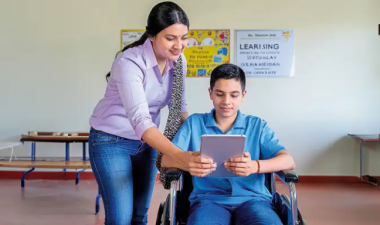
Prashast 2.0 is a digital screening platform developed by the National Council of Educational Research and Training (NCERT) for the early detection of 21 types of disabilities in school children across India. The platform was introduced on NCERT’s 65th Foundation Day on 1 September 2025 and follows an earlier version launched in 2022.
Screening Framework
Prashast 2.0 works as a two-part screening tool. Part I is used by mainstream teachers for initial observation, and Part II is used by special educators, counsellors, or school heads for detailed screening. The platform is designed for use by teachers, principals, and special educators in schools. It supports the identification of children with special needs at an early stage.
Legal and Policy Basis
Prashast 2.0 aligns with the National Education Policy (NEP) 2020 and the Rights of Persons with Disabilities (RPwD) Act, 2016. The RPwD Act, 2016 lists 21 disabilities, including locomotor disability, visual impairment, hearing impairment, autism spectrum disorder, and intellectual disability. The app also supports the issuance of disability certificates and links students with special needs to services under the Samagra Shiksha programme.
Digital Integration
Prashast 2.0 integrates with UDISE+ and APAAR IDs for student tracking and data collection. UDISE+ is the Unified District Information System for Education Plus, which is used for school education data in India. User Acceptance Testing for Prashast 2.0 was underway in Uttar Pradesh, Uttarakhand, New Delhi, and Kendriya Vidyalaya Sangathan before a wider launch planned for May 2026.
Implementation Context
The platform requires trained special educators for effective use in schools. The shortage of special educators in rural areas remains a practical constraint in disability screening and assessment. Early screening, assessment, and identification of children with special needs form part of school-based inclusive education systems in India.
Last Modified: April 30, 2026