
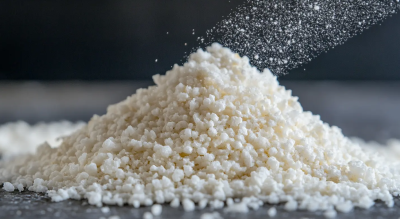
Amid fertilizer supply disruptions and price spikes caused by the geopolitical conflict involving Iran, the Union Ministry of Agriculture and Farmers Welfare has issued an advisory to state governments to promote ammonium sulphate as an alternative to urea for rice cultivation. The Indian Council for Agricultural Research (ICAR) recommended this substitute due to its dual nutrient advantage and domestic production capabilities, which reduce dependence on conflict-affected import channels. While India manufactures a major portion of its urea requirements, it remains highly reliant on imports for raw materials and specific complex fertilizers like Muriate of Potash (MOP).
Nutritional Profile and Agricultural Utility
Ammonium sulphate serves as a strategic nitrogenous fertilizer, offering specific chemical advantages over conventional urea under specific soil conditions.
Nutrient Composition and Delivery
- Dual Macronutrients: Unlike urea which only provides nitrogen, ammonium sulphate contains 21% nitrogen and 24% sulphur.
- Ammoniacal Form of Nitrogen: The nitrogen in this fertilizer exists in the ammoniacal form (NH4^+). Soil particles bind this form tightly, making it less prone to leaching losses compared to the nitrate form (NO3^-) derived from urea in porous soils.
- Sulphur Deficiency Correction: The inclusion of 24% sulphur helps correct widespread secondary nutrient deficiencies in Indian soils, improving chlorophyll synthesis and protein synthesis in grain crops.
Application in Rice Cultivation
- Basal and Top Dressing: Farmers can apply it during the initial field preparation or as a top dressing during the tillering stage of the paddy crop.
- Alkaline Soil Management: It possesses an acid-forming reaction in the soil, which helps lower the pH of alkaline and calcareous soils, thereby improving the availability of other micronutrients like zinc and iron to the rice plants.
Comparative Analysis: Ammonium Sulphate vs Urea
The transition from urea to ammonium sulphate involves distinct changes in application rates, nutrient dynamics, and soil interactions.
| Parameter | Urea | Ammonium Sulphate |
| Nitrogen Content | 46% Nitrogen | 21% Nitrogen |
| Secondary Nutrients | Contains no sulphur | Contains 24% Sulphur |
| Chemical Form | Amide form (must convert to ammoniacal then nitrate) | Ammoniacal form (NH4^+) |
| Application Quantity | Requires lower bulk volume due to high concentration | Requires roughly double the quantity to match nitrogen units |
| Soil pH Impact | Neutral to slightly acidic over long-term use | Strongly acid-forming, rapidly lowering soil pH |
| Leaching Resistance | High susceptibility to water-induced leaching | Moderate to high resistance due to clay binding |
Ecological Risks and Application Constraints
Agricultural experts have issued warnings regarding the indiscriminate application of ammonium sulphate, particularly in specific soil topologies.
Risks in Waterlogged and Heavy Soils
- Hydrogen Sulphide Toxicity: Under prolonged waterlogged conditions typical of low-lying paddy fields, anaerobic bacteria reduce the sulphate ions (SO42-) into toxic hydrogen sulphide (H2S) gas.
- Root Injury: High concentrations of hydrogen sulphide injure rice roots, causing a physiological disease known as “Akiochi” or suffocating disease, which impairs nutrient uptake and reduces crop yield.
- Soil Acidification: Continuous use in heavy clay soils or pre-existing acidic soils lowers the pH to levels that cause aluminum and manganese toxicity while locking up essential phosphorus.
India’s Fertilizer Supply Chain and Import Dependencies
The strategic shift to alternative formulations is driven by the structural vulnerabilities in India’s fertilizer manufacturing and import frameworks.
Domestic Production Capabilities
- By-Product Availability: India generates substantial volumes of ammonium sulphate as a direct by-product of steel manufacturing plants (from coke oven gases) and caprolactam production units.
- Diversified Import Options: Unlike urea and its raw materials, which are concentrated in Middle Eastern nations, ammonium sulphate can be sourced from diversified global markets unaffected by the current regional conflicts.
Vulnerability in Other Segments
- Muriate of Potash (MOP): India possesses near-zero domestic commercial reserves of potash and imports 100% of its MOP requirements from nations like Belarus, Canada, Russia, and Jordan.
- Phosphatic Fertilizers: For Di-Ammonium Phosphate (DAP), domestic units rely heavily on imported rock phosphate and phosphoric acid, primarily from Morocco, Jordan, and Saudi Arabia.
IASPOINT Booster Facts for UPSC
- Indian Council for Agricultural Research (ICAR): An autonomous organization under the Department of Agricultural Research and Education (DARE), Ministry of Agriculture and Farmers Welfare. It is the apex body for coordinating, guiding, and managing research and education in agriculture including horticulture, fisheries, and animal sciences in the entire country.
- Neem Coated Urea (NCU): The government has mandated 100% neem coating of indigenous and imported urea. Neem coating slows down the dissolution of urea in the soil, reducing nitrogen leaching and volatilization losses while preventing the diversion of subsidized urea for non-agricultural industrial uses.
- Essential Commodities Act, 1955: Fertilizers are declared as an essential commodity under this Act. The government regulates the movement, distribution, and statutory pricing of fertilizers through the Fertilizer Control Order (FCO) issued under this law.
- Primary, Secondary, and Micronutrients: Plants require 17 essential elements. Primary nutrients include Nitrogen (N), Phosphorus (P), and Potassium (K). Secondary nutrients include Calcium (Ca), Magnesium (Mg), and Sulphur (S). Micronutrients include Iron (Fe), Zinc (Zn), Manganese (Mn), Copper (Cu), Boron (B), Molybdenum (Mo), Chlorine (Cl), and Nickel (Ni).