
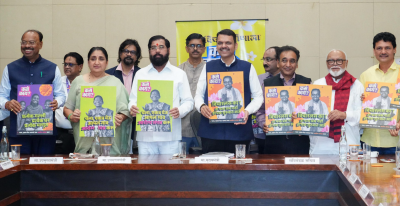
The Maharashtra government has launched the ‘Kasa Kay?’ (How are you?) public awareness campaign under its flagship ‘Majhe Gaav, Arogya Sampanna Gaav’ (My Village, Health-Prosperous Village) initiative. Officially inaugurated by Chief Minister Devendra Fadnavis at the state secretariat in Mumbai, the campaign targets rural areas to enhance grassroots health infrastructure, behavioral change, and public health literacy. The initiative addresses critical rural challenges by focusing on preventive healthcare, nutrition, sanitation, and clean drinking water, with active participation from Deputy Chief Ministers Eknath Shinde and Sunetra Ajit Pawar.
Core Objectives and Vision
Grassroots Health Literacy
The campaign seeks to bridge the gap between rural populations and government healthcare delivery. It shifts the public focus from curative medicine to preventive care, aiming to make health a daily community discussion.
Strategic Convergence
The initiative acts as an integration platform for multiple national and state welfare schemes. It works in alignment with:
- Sustainable Development Goal 3 (Good Health and Well-being)
- Ayushman Bharat and National Health Mission (NHM)
- Poshan Abhiyan (Nutrition Mission)
- Swachh Bharat Mission (Clean India Mission)
Key Pillars of the Initiative
Multi-Sectoral Health Determinants
The program addresses healthcare through interconnected components:
- Disease Prevention: Reducing the incidence of both communicable and non-communicable diseases (NCDs).
- Maternal and Child Health: Enhancing institutional deliveries, prenatal and postnatal care, and immunization coverage.
- Sanitation and Environmental Health: Improving rural sewage management, waste disposal, and clean drinking water access.
- Lifestyle and Mental Wellness: Integrating mental health awareness and healthy living habits into rural socio-cultural structures.
Institutional Framework
The scheme functions on a multi-tiered administrative structure to ensure transparency and field implementation:
| Level | Administrative Body / Head | Function |
| State Level (Apex) | State-Level Committee under the Health Minister | Overall policy guidelines, funding approvals, and inter-departmental coordination. |
| State Level (Action) | State Action Committee chaired by the Principal Secretary (Public Health) | Executive planning, target allocation, and programmatic oversight. |
| District & Taluka Level | Zilla Parishads, Taluka health offices, and Patient Welfare Committees (Jan Arogya Samitis) | Ground-level execution, resource monitoring, and diagnostic capacity building. |
| Grassroots Implementation | Sub-centers, Primary Health Centers (PHCs), Community Health Officers (CHOs), ASHA workers, and Anganwadis | Last-mile service delivery, household mapping, data updates, and behavioral tracking. |
Implementation Mechanics and Incentives
Annual Campaign Lifecycle
The initiative operates on a fixed annual timeline running from April 1 to March 31. This multi-year framework allows Gram Panchayats to evaluate their health parameters, bridge delivery gaps, and upgrade local infrastructure continuously.
Evaluation and Grading Parameters
Villages undergo an objective assessment managed by the Public Health Department. Gram Panchayats scoring 70% or higher on designated healthcare and sanitation matrices earn the official designation of an “Arogya Sampanna Gaav” (Health-Prosperous Village).
Rewards and Recognition
To foster competitive federalism at the grassroots level, the state government rewards top-performing units:
- Gram Panchayats: Qualified villages receive mementos, official certificates, and financial cash awards.
- Secondary Care Institutions: The best-performing Rural Hospitals (Gramin Rugnalayas) and Sub-District Hospitals compete for specialized performance awards worth up to ₹75 Lakhs.
Communication Strategy
The ‘Kasa Kay?’ component deploys multimedia tools to maximize rural outreach:
- Launch of an official regional health song and high-impact promotional videos.
- Distribution of informational vernacular booklets to counter medical misinformation.
- Mandatory rollout of specific preventative services, such as free electrocardiograms (ECGs), decentralized dialysis access at choice PHCs, and targeted Human Papillomavirus (HPV) vaccination drives against cervical cancer.
IASPOINT Booster Facts for UPSC
- Launch Year: The operationalization of ‘Majhe Gaav, Arogya Sampanna Gaav’ began on April 1, 2026, followed by the rollout of the ‘Kasa Kay?’ mass outreach module in May 2026.
- Target Population: Exclusively covers rural jurisdictions across all administrative divisions of Maharashtra (including Thane, Pune, Nashik, Aurangabad, Amravati, and Nagpur).
- Financial Health Integration: The campaign utilizes financial channels from the Mahatma Phule Jan Arogya Yojana (MPJAY), ensuring cashless healthcare services are extended right down to the primary healthcare tier.
- Evaluation Threshold: A strict minimum benchmark of 70% cumulative marks is required for a village to be certified under the star-rating scheme of “Arogya Sampanna Gram”.
- Core Diagnostic Mandate: The scheme prioritizes localized diagnostic infrastructure, ensuring zero cost for vital baseline tests like ECGs and basic renal dialysis at designated rural centers.