
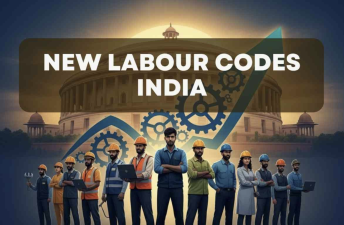
The Union Ministry of Labour & Employment inaugurated a two-day regional conference in Jaipur on the implementation of the four Labour Codes, ESIC, EPFO and the Pradhan Mantri Viksit Bharat Rozgar Yojana. The meeting brought together Labour and Industry Secretaries from States and Union Territories, along with senior officials from the Centre and key labour institutions. It is the second in a series of five regional conferences planned across the country.
Key Focus of the Conference
The conference was designed to support smooth implementation of the Labour Codes at the State level. It also aimed to review preparedness on rules, notifications, digital systems and institutional mechanisms. Discussions covered social security, employment generation and coordination between the Centre and States.
Labour Codes and Reform Agenda
The four Labour Codes have consolidated 29 labour laws into a single framework. This is presented as a major reform in India’s labour system. The Codes include provisions for:
- Work-from-home flexibility.
- Social security for gig, platform and unorganised workers.
- Timely wage payment and reduced compliance burden.
- Inspector-cum-Facilitator approach for easier enforcement.
State Role and Implementation Issues
Officials stressed that States are central to effective enforcement because labour is a concurrent subject. The conference reviewed the status of draft rules, IT readiness, and the integration of State systems with Central platforms. It also discussed the need to avoid overlap with Shops and Establishments laws and to speed up statutory notifications.
Social Security, ESIC and PMVBRY
The deliberations brought into light expansion of ESIC coverage, stronger healthcare access and better portability of benefits. Participants also discussed convergence with State health systems and PMJAY. The PMVBRY dashboard and related employment schemes were identified as important tools for job creation, formalisation of work and wider worker welfare.
Last Modified: April 26, 2026