
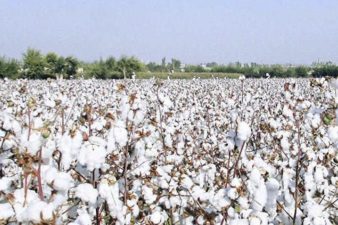
The Union Cabinet approved the Mission for Cotton Productivity on May 5, 2026, with an allocation of ₹5,659.22 crore for a five-year period from fiscal year 2026-27 to 2030-31. This central initiative aims to transform India’s cotton ecosystem by addressing yield stagnation, quality gaps, and processing inefficiencies. The mission spans the entire value chain from cultivation to export, aligning with the government’s “Farm to Fibre to Factory to Fashion to Foreign” vision. It intends to benefit around 32 lakh farmers across major cotton-growing states.
Core Objectives and Targets
The mission sets specific quantitative benchmarks to elevate India’s position in global cotton production by 2031.
Production and Yield Targets
- Lint Productivity: Raise the national average lint productivity from the current 440 kg per hectare to 755 kg per hectare.
- Total Production: Increase total annual cotton production to 498 lakh bales (1 bale = 170 kg) by the end of the mission period.
- Farmer Coverage: Direct support and technology transfer to reach approximately 32 lakh cotton cultivators.
Key Performance Indicators
| Indicator | Current Status | Target (By 2031) |
| Lint Productivity per Hectare | 440 kg | 755 kg |
| Total National Production | ~320-350 lakh bales | 498 lakh bales |
| Ginning Units Modernised | Base Level | 2,000 units |
Strategic Interventions in Cultivation
The mission introduces agronomic shifts and seed technologies to handle climate vulnerabilities and pest pressures.
Seed Development and Varietal Improvement
- Climate Resilience: Development of high-yielding, drought-tolerant, and early-maturing cotton varieties.
- Pest Resistance: Research focused on breeding strains resistant to the Pink Bollworm and sucking pests.
- ELS Focus: Targeted incentives for cultivating Extra Long Staple (ELS) cotton to reduce import dependency on premium textile grades.
Modern Agronomic Practices
- High Density Planting System (HDPS): Introduction of HDPS to accommodate more plants per acre, optimizing land use and increasing per-hectare yield.
- Closer Spacing and Canopy Management: Standardising the use of short-duration varieties suitable for mechanical harvesting.
Value Chain and Infrastructure Upgradation
To secure price premiums and reduce contamination, the mission funds post-harvest infrastructure.
Modernisation of Processing Units
- Ginning and Pressing: Financial and technical support to upgrade nearly 2,000 ginning and processing factories.
- Contamination Control: Installation of automated trash removers and modern ginning machinery to maintain fiber length and strength.
Testing and Quality Assurance
- Testing Infrastructure: Setting up rapid cotton testing laboratories near major market yards (mandis) and textile hubs.
- Branding and Traceability: Strengthening the “Kasturi Cotton Bharat” brand through blockchain-based traceability, ensuring certified quality in international markets.
IASPOINT Booster Facts for UPSC
- Cotton Crop Profile: Cotton is a tropical and subtropical Kharif crop requiring 210 frost-free days, 50-100 cm of rainfall, and uniform high temperatures between 21°C and 30°C.
- Soil Preference: It grows best in well-drained deep black soils (Regur soil) of the Deccan Plateau, though it is also cultivated in alluvial soils of northern India.
- Global Standing: India has the largest area under cotton cultivation globally, accounting for around 36% of the world’s cotton acreage, but trails in per-hectare productivity compared to China, the USA, and Brazil.
- Measurement Unit: In India, statistical data measures cotton production in bales, where one bale equals exactly 170 kg of lint.
- Kasturi Cotton Bharat: This is a joint initiative by the Ministry of Textiles, the Cotton Corporation of India (CCI), and trade bodies to provide DNA-traceable, low-contamination premium Indian cotton.
- Major Pest Vulnerability: The crop is highly susceptible to the Pink Bollworm (Pectinophora gossypiella), an insect pest that bores into cotton bolls, destroying the lint and seeds.