
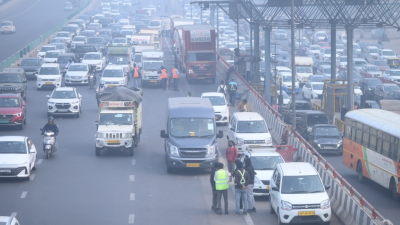
The Delhi Pollution Control Committee and the Delhi government launched the Road Real-time Air Pollution Detection Across Roads (Road RADAR) project on 8 May 2026. This initiative deploys 13 specialized field surveyors across Delhi’s districts to monitor and report localized, dispersed sources of air pollution. Using mobile applications, the surveyors geo-tag and log approximately 1,000 pollution issues daily across 18,000 kilometers of the city’s road network. The project improves real-time monitoring and automates complaint routing to civic bodies, addressing severe urban air quality challenges caused by vehicular emissions, construction activities, and open waste burning.
System Architecture and Operational Mechanism
Field Deployment and Digital Geo-Tagging
The Road RADAR system operates through a decentralized field network. One dedicated surveyor is assigned to each of the 11 administrative districts of Delhi, with additional surveyors managing high-pollution zones. These surveyors continuously patrol assigned road stretches managed by different civic agencies, including the Municipal Corporation of Delhi (MCD) and the Public Works Department (PWD). When a surveyor spots a pollution source, they use a customized mobile application to capture real-time photographs and automatically record the precise GPS coordinates of the site.
Automated Routing and De-duplication Protocol
To manage the high volume of daily complaints efficiently, the central database uses a unique identification system for every logged issue. The software processes the geographic data to prevent duplicate entries for the same pollution site. Once validated, the system automatically routes the complaint to the specific civic body responsible for that jurisdiction or asset. The relevant authority receives an instant notification detailing the exact location, category of pollution, and visual evidence, allowing for targeted remediation.
Categorization of Dispersed Pollution Sources
Tracked Emission Factors
The project monitors eleven distinct categories of road-level and dispersed pollution sources. These sources contribute directly to the concentration of Particulate Matter (PM2.5 and PM10) in the urban atmosphere. The monitoring framework classifies these issues into specific operational categories:
- Dust and Soil Exposure: Unpaved or barren roadsides requiring greening, unpaved pavements, and loose road dust re-suspension caused by vehicular movement.
- Waste Mismanagement: Open garbage burning, accumulation of municipal solid waste on roadsides, and improper dumping of plastic waste.
- Infrastructure and Construction: Accumulated construction and demolition (C&D) waste, uncovered transit of building materials, and unmitigated road digging.
- Biomass and Commercial Burning: Leaf burning and open-air commercial cooking using wood or coal.
Targeted Impact on Air Quality Metrics
| Pollution Source | Primary Pollutant Emitted | Immediate Remediation Action |
| Road Dust Re-suspension | PM10 (Coarse particles) | Mechanical sweeping and water sprinkling |
| Open Garbage Burning | Carbon Monoxide (CO), Dioxins, Black Carbon | Rapid fire extinguishing and waste removal |
| Construction Waste | Silica dust, Coarse Particulate Matter | Water mist spraying, green netting covers |
| Barren Roadsides | Soil dust particles | Hydro-seeding, interlocking tiles, greening |
Institutional and Regulatory Context in Delhi
Statutory Authorities
The implementation of Road RADAR involves multiple tiers of environmental governance. The Delhi Pollution Control Committee (DPCC), a statutory body constituted under the Water (Prevention and Control of Pollution) Act, 1974, acts as the nodal technical enforcement agency. The DPCC works with municipal corporations to ensure that the field data collected leads to penalties or corrective actions under the Air (Prevention and Control of Pollution) Act, 1981.
Graded Response Action Plan Integration
The real-time data generated by Road RADAR supplements the wider implementation of the Graded Response Action Plan (GRAP). GRAP is a set of emergency measures triggered systematically based on the Air Quality Index (AQI) levels recorded by the Central Pollution Control Board (CPCB). By identifying micro-level pollution hotspots before they impact regional ambient air quality monitoring stations, the road-level detection system helps prevent the escalation of air pollution stages during critical winter months.
IASPOINT Booster Facts for UPSC
- The Air Quality Index (AQI) Parameters: The sub-index and AQI in India are determined based on eight ambient air pollutants: Particulate Matter (PM10), Particulate Matter (PM2.5), Nitrogen Dioxide (NO2), Sulphur Dioxide (SO2), Carbon Monoxide (CO), Ozone (O3), Ammonia (NH3), and Lead (Pb).
- National Clean Air Programme (NCAP): Launched by the Ministry of Environment, Forest and Climate Change (MoEFCC), NCAP aims for a 20% to 30% reduction in particulate matter concentrations by 2024, taking 2017 as the base year. This target was updated to achieve a 40% reduction or concentration less than 60 μ g/m3 by 2026.
- Commission for Air Quality Management (CAQM): A statutory body established through an Act in 2021 for better coordination, research, identification, and resolution of problems surrounding air quality in the National Capital Region (NCR) and adjoining areas. It supersedes all other old bodies, including the Environment Pollution (Prevention and Control) Authority (EPCA).
- Green Delhi App: Prior to Road RADAR, the Delhi government launched the Green Delhi mobile application to allow ordinary citizens to photograph and report violations like garbage burning and industrial pollution directly to the government. Road RADAR differs by utilizing professional, dedicated surveyors for systematic mapping.
- Chemical Composition of Road Dust: Road dust consists of mineral compounds from soil, tire wear particles (containing zinc and polycyclic aromatic hydrocarbons), brake lining wear (containing copper and iron), and deposited exhaust emissions.