
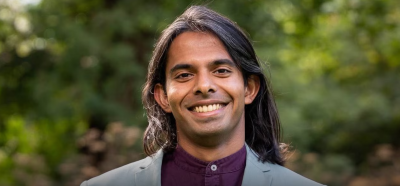
Dr. Q Manivannan, a non-binary transgender individual of Indian origin from Tamil Nadu, was elected to the Scottish Parliament on 8 May 2026. Representing the Edinburgh and Lothians East regional seat for the Scottish Greens, they are among the first two openly transgender Members of the Scottish Parliament (MSPs) alongside fellow party member Iris Duane. Manivannan relocated to Scotland in 2021 to pursue doctoral studies in International Relations at the University of St Andrews. Their victory marks a major milestone in global political representation and highlights the impact of recent legislative reforms in Scotland regarding candidacy qualifications for non-UK citizens.
Electoral Architecture of the Scottish Parliament
The Holyrood Legislative Framework
The Scottish Parliament, colloquially known as Holyrood and located in Edinburgh, operates as a devolved unicameral legislature. It possesses legislative competence over domestic matters such as healthcare, education, justice, local government, and economic development.
The Additional Member System (AMS)
Scotland utilizes a mixed-member proportional representation mechanism called the Additional Member System to elect its 129 MSPs.
- Constituency Seats: Voters elect 73 constituency MSPs using the traditional first-past-the-post system.
- Regional Seats: The remaining 56 MSPs are elected across eight electoral regions, with each region returning seven representatives. These regional seats are allocated using a party list system designed to make the overall seat share more proportional to the total votes cast. Manivannan secured election via this regional proportional framework for the Edinburgh and Lothians East region.
Radical Shift in Franchise and Candidacy Laws
2025 Legislative Expansion
The path for Manivannan’s election was paved by progressive changes in Scottish electoral law enacted under the Scottish National Party (SNP) administration. Legislation passed in 2025 expanded both the franchise (the right to vote) and the right to stand for public office to non-UK and non-Irish citizens.
Qualification Criteria for Foreign Nationals
Under current regulations, foreign nationals are fully eligible to stand as candidates in Scottish Parliamentary and local government elections provided they meet the following criteria:
- Lawful Residence: The individual must maintain a valid legal right to stay or remain in the United Kingdom (valid leave to enter or remain).
- Visa Status Diversity: Individuals residing on temporary visas, including international student visas or graduate work routes, are legally permitted to run for office.
- Commonwealth Status Alignment: As an Indian national, Manivannan qualifies under the historic Commonwealth citizen guidelines alongside the newer, generalized foreign national frameworks.
Post-Election Visa Adjustments
Manivannan’s status as a student transitioner fundraising for a post-graduation graduate visa drew political critique from opposition parties like the Conservatives and Reform UK. However, Scottish parliamentary rules allow for modern remote participation, and if an immigration status changes, political parties utilize predefined regional list succession rules rather than holding a standalone by-election.
Ideological Stance and Advocacy Pillars
Intersectional Political Agenda
Manivannan campaigned on a platform termed “kinder politics,” deeply rooted in their personal identity as a queer Tamil immigrant from a working-class and lower-caste background. Their advocacy focuses explicitly on dismantling systematic inequities faced by intersectional communities in Western urban spaces.
Key Governance Directives
The core tenets of Manivannan’s legislative agenda include:
- Marginalized Community Welfare: Advancing social welfare schemes and protection mechanisms for ethnic minorities, asylum seekers, and LGBTQ+ groups.
- Urban and Disability Rights: Formulating policies aimed at establishing feminist city designs, accessible infrastructure, and robust disability inclusion standards.
- Global Solidarity Positions: Expressing explicit, coordinated support for international causes, including the Palestinian solidarity movement and global anti-war initiatives.
Comparison of Legislative Representation Formats
The global approach to accommodating non-citizens and diverse genders in formal legislative systems varies considerably by jurisdiction:
| Parameter | Scottish Parliament Framework | Indian Parliamentary Framework |
| Citizenship Mandate | Permitted for all legal residents (including non-UK/Foreign Nationals with leave to remain). | Strictly restricted to citizens of India under Article 84 of the Constitution. |
| Gender Recognition | Explicitly accommodates non-binary and transgender identities on ballot structures. | Transgender persons can contest under the “Third Gender” category since the 2014 NALSA judgment. |
| Voting System Type | Mixed Electoral (Additional Member System blending FPTP and Proportional List). | First-Past-The-Post (FPTP) for Lok Sabha; Proportional Single Transferable Vote for Rajya Sabha. |
IASPOINT Booster Facts for UPSC
Transgender Political Representation in India
India saw its first transgender MLA in 2000, when Shabnam Mausi was elected to the Madhya Pradesh Legislative Assembly from the Sohagpur constituency. On a national level, the Transgender Persons (Protection of Rights) Act, 2019, prohibits discrimination against transgender persons in employment, education, and healthcare, though it does not mandate horizontal political reservations in legislative bodies.
Devolution in the United Kingdom
Devolution is the statutory delegation of powers from the central parliament at Westminster to sub-national assemblies. It was established following referendums in 1997, leading to the Scotland Act 1998, Government of Wales Act 1998, and the Northern Ireland Act 1998. Unlike a federal system like India or the US, the UK Parliament remains constitutionally supreme, retaining the theoretical power to alter or abolish devolved powers.
The Concept of “New Scots”
The Scottish Government employs the civic term “New Scots” to encompass all individuals who have relocated to Scotland to live, work, study, or seek asylum. This policy strategy aims to promote natural social integration by treating residency and local tax contribution as the baseline for civic participation and voting rights, rather than prioritizing ethnic ancestry or formal naturalized citizenship.
Last Modified: May 19, 2026