
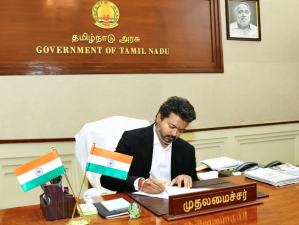
The Tamil Nadu government established the Singapen Special Task Force on May 11, 2026, to institutionalize comprehensive security frameworks for women. Operating directly under the supervision of the Chief Minister and the state police headquarters, the newly formed unit prioritizes preventative policing and protective interventions. The structural configuration initially approves 36 strategic administrative posts headed by an Inspector General of Police. The establishment of this dedicated cadre represents an integrated administrative model to systematically counter crimes against women, optimize distress response times, and map urban vulnerability profiles across the state.
Structural Composition and Leadership
The organizational architecture of the Singapen Special Task Force relies on a hierarchical law enforcement structure to ensure rapid command implementation and field accountability.
- Commanding Authority: The unit operates under the direct supervision of the Chief Minister of Tamil Nadu, bypassing traditional multi-layered bureaucratic reporting lines to quicken decision-making.
- Top-tier Leadership: A newly sanctioned post of Inspector General of Police (IGP) serves as the executive head. An officer of Superintendent of Police (SP) rank is redeployed to manage daily operational logistics at the headquarters level.
- Personnel Allocation: The initial phase comprises 36 sanctioned administrative and field posts. The specialized field teams function predominantly as all-women units to encourage comfortable distress reporting.
- Human Resource Sourcing: To ensure immediate operational readiness, the state police department has primarily redeployed experienced personnel from existing specialized units rather than waiting for fresh recruitment cycles.
Core Operational Mandates
The task force functions via a data-driven, visible enforcement strategy targeted at public and commercial ecosystems.
Preventive Surveillance and Hotspot Mapping
- Identifying specific geographical coordinates and public zones prone to harassment or criminal activities against women.
- Deploying visible patrol units to build community confidence and deter offenders in crowded urban centers.
- Increasing night and daytime surveillance across high-risk zones, including public transit points and commercial institutional spaces.
Targeted Public Spheres for Deployment
- Transit Hubs: Major bus terminals, local and interstate railway stations, and transit corridors.
- Educational Clusters: Areas surrounding women’s colleges, universities, and schools during opening and closing hours.
- Commercial Zones: High-density Information Technology (IT) corridors, industrial parks, and financial districts that employ women in late-shift rosters.
Technology Integration and Emergency Response
- The task force links directly with the centralized police control room emergency number (100).
- Field personnel carry body-worn cameras to log real-time evidence and maintain operational transparency.
- Dedicated all-women rapid-response vehicles carry advanced communication equipment to reach distress locations immediately upon call receipt.
Inter-Departmental Synergy and Support Ecosystems
The operational framework extends beyond policing to include rehabilitation, legal assistance, and multi-agency cooperation.
| Partner Agency | Nature of Collaboration / Responsibility |
| Social Welfare Department | Setting up immediate rehabilitation, institutional housing, and trauma care counseling for victims. |
| Education Department | Conducting institutional gender sensitization programs and organizing legal awareness campaigns in schools and colleges. |
| Non-Governmental Organizations (NGOs) | Providing external legal aid, continuous emotional counseling, and grassroot victim-support infrastructure. |
IASPOINT Booster Facts for UPSC
- The Meaning of ‘Singapen’: In the Tamil language, ‘Singapen’ translates to ‘Lioness’. The nomenclature is chosen to reflect resilience, authority, and protective strength in law enforcement.
- Constitutional Underpinnings: The creation of specialized bodies for women’s safety aligns with Article 15(3) of the Constitution of India, which empowers the State to make special provisions for women and children.
- Directive Principles of State Policy (DPSP): This initiative fulfills the spirit of Article 39A (equal justice and free legal aid) and Article 42 (just and humane conditions of work) by securing safe public and professional spaces.
- Seventh Schedule Allocation: Police and Public Order are state subjects under List II (State List) of the Seventh Schedule to the Constitution of India, authorizing state governments to execute dedicated policing structural reforms.
- Justice Verma Committee Relevance: The focus on increased police visibility, hotspot patrolling, and technology integration directly corresponds to the recommendations of the Justice Verma Committee (2013) on women’s safety reforms.