
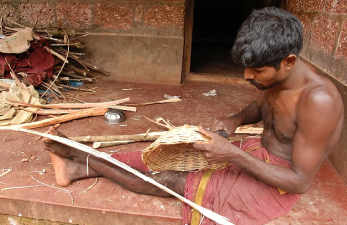
The UN-Habitat World Cities Report 2026, titled “The Global Housing Crisis: Pathways to Action,” highlights systemic exclusions in housing, spotlighting the struggles of indigenous groups such as the Koraga tribe in Karnataka, India. Classified as a Particularly Vulnerable Tribal Group (PVTG), the Koragas face deep housing inequalities driven by historical caste discrimination, social isolation, and bureaucratic barriers in accessing state welfare schemes. Globally, the report reveals that 40 percent of the population lacks access to secure, affordable shelter. With urban areas projected to absorb 2 billion more residents by 2050, localized and region-specific housing solutions are urgently needed to mitigate widening socio-economic divides.
Profile of the Koraga Tribe
Socio-Cultural Background
The Koraga people are an indigenous tribal community primary residing in the coastal districts of Dakshina Kannada and Udupi in Karnataka, as well as the Kasaragod district of Kerala. They speak Koraga Bhasha, a distinct spoken language without a formal script, which utilizes the Kannada script when written. The community follows a matrilineal family structure organized around unique exogamous clans known as “Bali.” Social leadership is traditionally headed by the senior-most village elder called the “Mooppan.”
Traditional Livelihood and Cultural Practices
The community is traditionally dependent on basket-making, agricultural labor, and forest-resource collection. Rhythmic drumming using the “Dholu” (drum) and “Voote” (flute) remains central to their cultural identity and rituals. Historically, the community was subjected to an inhuman practice known as Ajalu, which treated them as inferior beings, forced them to ingest non-edible substances, and required them to run before buffaloes during Kambala events. This practice was legally banned under the Karnataka Koragas (Prohibition of Ajalu Practice) Act, 2000.
Drivers of Housing Inequality
Caste Discrimination and Social Exclusion
Despite legal protections, deep-rooted caste-based discrimination restricts the Koragas’ geographic and social mobility. They face systemic barriers when trying to rent or construct homes outside designated tribal hamlets. Social bias frequently impedes their integration into mainstream urban settlements, limiting their housing choices to segregated, poorly serviced locations.
Landlessness and Administrative Barriers
A large portion of the Koraga population remains landless due to historic alienation from forest resources and displacement. Administrative bottlenecks in verifying land titles prevent many families from utilizing state-sponsored housing benefits. Many eligible applicants are excluded from schemes because they occupy un-surveyed government or private lands without formal ownership rights.
The Global Housing Crisis: UN-Habitat 2026 Findings
Key Deficits and Projections
The World Cities Report 2026 reveals a critical deficit in global housing delivery systems, shifting from short-term fixes to long-term rights-based frameworks.
| Metric | Global Data (UN-Habitat 2026) |
| Affected Population | 40% of the world population (3.4 billion people) |
| Informal Settlement Residents | Over 1 billion people |
| Global Housing Unit Deficit | Increased from 251 million (2010) to 288 million (2023) |
| Forced Evictions (2003-2023) | 64 million people globally |
| Future Urban Pressure | 2 billion additional urban residents expected by 2050 |
Structural Causes of Global Housing Inadequacy
- Declining Affordability: Real estate prices are rising faster than household incomes worldwide. In Central and South Asia, the housing price-to-income ratio has reached 16.8, creating extreme market stress.
- Rental Burden: Around 44% of global households spend more than 30% of their monthly income on rent.
- Escalating Input Costs: Rising costs of land acquisition and construction materials make low-cost housing developments economically unviable for private developers.
- Climate-Induced Structural Risk: Increased frequencies of environmental disasters cause massive uninsured infrastructure losses, amounting to 280 billion USD in recent cycles.
Policy Frameworks and Recommendations
Institutional Interventions in India
To address the vulnerabilities of groups like the Koragas, targeted government interventions are being implemented:
- PM-JANMAN Scheme: The Pradhan Mantri Janjati Adivasi Nyaya Maha Abhiyan focuses on saturating PVTG habitations with basic services, secure housing via PMAY-G, clean drinking water, and grid electricity.
- ST Area Sub-Plan: Funds are allocated through the Ministry of Tribal Affairs for Capital Asset Creation, including direct dug-well irrigation schemes and house construction for the Koraga and Jenu Kuruba PVTGs.
UN-Habitat Global Action Plan
- State Primary Responsibility: Governments must take the lead role in housing supply since market forces alone fail to address low-income segments.
- Alternative Finance Models: Scaled deployment of pay-as-you-go housing, rent-to-buy contracts, and community cost-sharing programs.
- In-Situ Slum Upgrading: Prioritizing community-led, on-site infrastructure improvements over displacement or forced relocation.
- Gender-Inclusive Planning: Mandating gender-impact analysis during urban project approvals to protect female-headed households from rental market discrimination.
IASPOINT Booster Facts for UPSC
- PVTGs Criteria: Created on the recommendation of the Dhebar Commission (1960-61), which state that a Scheduled Tribe group is categorized as a PVTG if it possesses: a pre-agricultural level of technology, stagnant or declining population, extremely low literacy, and a subsistence-level economy.
- PVTGs Population: There are 75 recognized PVTGs spread across 18 States and 1 Union Territory in India. Odisha houses the highest number of PVTG communities (13).
- Karnataka PVTGs: The state has two recognized PVTGs: the Koraga and the Jenu Kuruba.
- UN-Habitat: Established in 1978 and headquartered in Nairobi, Kenya, it is the UN program dedicated to sustainable urban development. It mandates the implementation of Sustainable Development Goal 11 (Sustainable Cities and Communities) and the New Urban Agenda.
- World Urban Forum (WUF): The premier global conference on urbanization established by the UN. The 13th session (WUF13) was held in Baku, Azerbaijan, in May 2026, where the World Cities Report 2026 was officially launched.