
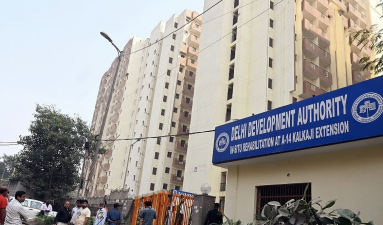
The Delhi Development Authority (DDA) launched an artificial intelligence-powered single-window clearance system under its Online Building Permit System (OBPS) on 12 May 2026. Directed by the Lieutenant Governor of Delhi, Taranjit Singh Sandhu, this digital platform streamlines the building permit approval process by integrating plan submission, document uploads, fee payments, and tracking. The initiative aligns with the central government’s national objectives of Ease of Doing Business and Ease of Living. By replacing fragmented procedures with a centralized framework, the upgraded system targets the delivery of construction permits within 30 to 60 days, checking bureaucratic delays and minimizing public harassment.
Core Features of the AI-Enabled OBPS
The upgraded platform introduces technology-driven governance tools to automate urban development permissions.
Automated Plan Scrutiny
The integration of artificial intelligence allows the portal to automatically evaluate structural and architectural drawings. The software analyzes uploaded blue-prints against the Unified Building Bye-Laws (UBBL) for Delhi to identify compliance deviations without manual intervention.
Single-Window Clearance
Applicants can submit structural plans, upload ownership documents, and apply for multiple No-Objection Certificates (NOCs) simultaneously. The portal links various external authorities such as the Delhi Fire Services, National Monuments Authority, and Delhi Metro Rail Corporation onto a unified interface.
Geo-Tagged Mobile Verification
Field inspections are regulated through a mobile application that forces officials to record inspection data on-site with real-time geographic coordination tags. This verification matches physical site statuses against submitted documents to prevent fraudulent clearances.
Digital Tracking and Certificates
The platform provides an end-to-end electronic trail consisting of real-time application status monitoring, integrated electronic payment gateways, and automated SMS or email alerts. Approved permits and occupancy-cum-completion certificates are issued as digitally signed downloadable documents.
Impact on Urban Governance and Infrastructure
Transitioning from physical processing to an AI-driven digital window fundamentally alters civic administration workflows.
Reduction in Administrative Timelines
The platform cuts the statutory time required to clear building permits down from several months to a maximum window of 60 days. Simple residential permits are scheduled for clearance within 30 days of submission.
Elimination of Rent-Seeking and Red Tape
By removing human interaction from the primary scrutiny phase, the system reduces opportunities for corruption, discretionary interpretation of building laws, and procedural delays that previously caused files to stall in local municipal offices.
Data Standardisation
The platform enforces the use of uniform CAD (Computer-Aided Design) data standards for drawing submissions. This creates a structured repository of spatial data that can assist in future master planning exercises for urban conglomerates.
Challenges in AI-Based Building Sanctions
While automation introduces structural speed, several implementation hurdles remain active in algorithmic urban governance.
Data Variations and Input Anomalies
Artificial intelligence layout checkers rely strictly on standard format inputs. Variations in design styles by architects or minor technical errors in drawing layers can lead to outright algorithmic rejections, forcing repetitive re-submissions.
Legacy Data Integration
Merging newly automated systems with old, non-digitized land ownership records, zonal plans, and multi-layered municipal boundaries presents operational friction during the verification of plot regularisation.
Digital Divide and Technical Capacity
Small-scale local builders and citizens often lack the specialized technical knowledge required to navigate CAD-based pre-scrutiny files, creating a reliance on specialized intermediaries or certified architects.
Global and National Analogies
Several administrative zones utilize automated structural clearance models to optimize urban expansion.
| Region / City | Platform Name | Operational Mechanism |
| Singapore | CORENET X | BIM (Building Information Modelling) automated regulatory check system. |
| Maharashtra | BPAMS (MahaIT) | Automated building plan approval system used across municipal corporations. |
| Bengaluru (BBMP) | Nanna Bhoomi Portal | Geographic Information System (GIS) linked property and layout sanction tool. |
IASPOINT Booster Facts for UPSC
- Nodal Ministry: The DDA operates under the Ministry of Housing and Urban Affairs (MoHUA), Government of India.
- Unified Building Bye-Laws (UBBL) 2016: These regulations govern all construction requirements in Delhi, defining parameters like Floor Area Ratio (FAR), setbacks, ground coverage, and structural safety standards which the AI system now screens.
- Ease of Doing Business Linkage: Construction permit speed is a core indicator evaluated in local and global business environment rankings, where single-window systems serve to boost investment indicators.
- National Urban Digital Mission (NUDM): Launched in 2021 by MoHUA, this mission creates a shared digital infrastructure for urban India across towns and cities, providing the foundational logic for local initiatives like the DDA’s OBPS.
- SDG Target alignment: The integration of AI in town planning supports Sustainable Development Goal 11 (Sustainable Cities and Communities) and SDG 9 (Industry, Innovation, and Infrastructure).