
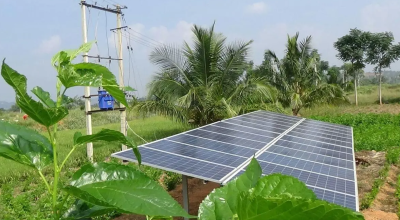
India and the International Fund for Agricultural Development (IFAD) launched an eight-year Country Strategic Opportunities Programme (COSOP) for the period 2026 to 2033 during a launch event held in New Delhi. This new strategic framework focuses on boosting rural income growth, enhancing climate resilience, and building sustainable livelihoods across vulnerable rural communities. The initiative directly aligns with India’s “Viksit Bharat @ 2047” vision to transform the nation into a fully developed economy by its centenary of independence. The programme strengthens the long-standing collaboration between India and IFAD, a specialized United Nations agency dedicated to rural poverty reduction.
Core Pillars of India-IFAD COSOP (2026–2033)
The programme operates on specific strategic priorities designed to upgrade the economic and ecological landscape of rural India.
Climate-Resilient Agriculture and Value Chains
The strategy prioritizes adaptation techniques to safeguard smallholder farmers from weather extremes. It focuses on water-harvesting infrastructure, heat-tolerant crop varieties, and soil health management to stabilize crop yields. By integrating climate risk assessments into value chains, the programme ensures that post-harvest processing and logistics can withstand environmental shocks.
Institutional Strengthening and Market Linkages
The framework channels resources through grassroots institutions to pool rural resources and increase bargaining power. It builds the operational capacity of three primary groups:
- Self-Help Groups (SHGs): Expanding financial inclusion, enterprise development, and credit access for rural women.
- Farmer Producer Organisations (FPOs): Aggregating produce to reduce input costs and establish direct trade links with corporate buyers.
- Primary Agricultural Credit Societies (PACS) and Cooperatives: Modernizing local storage infrastructure and diversifying service delivery at the village level.
Digital Agriculture and Ecosystems
The deployment of digital public infrastructure forms a core delivery mechanism. The program supports the scaling up of agritech solutions, including real-time weather forecasting, AI-driven pest detection, digital land records, and mobile-based agri-extension services. These tools eliminate information asymmetry for remote cultivators.
Strategic Alliances and Operational Framework
NABARD and IFAD Partnership
A dedicated strategic partnership agreement was signed between IFAD and the National Bank for Agriculture and Rural Development (NABARD). This alliance targets the optimization of rural financial products and credit flow.
- Blended Finance Models: Combining international development funds with domestic commercial capital to lower interest rates for high-risk climate adaptation projects.
- Innovation Acceleration: Funding agritech startups that create low-cost, scalable solutions for smallholders.
- Infrastructure Investment: Co-financing warehouse construction, cold-chain networks, and secondary processing centers in aspirational districts.
Global South Cooperation
India will utilize this programme to act as a knowledge hub for other developing economies. The initiative establishes a structured mechanism to export successful Indian development models—such as the digital United Payments Interface (UPI) for agri-credit, the electronic National Agriculture Market (eNAM), and localized SHG frameworks—to countries across Africa, Asia, and Latin America.
Targeted Outcomes and Key Focus Areas
| Focus Dimension | Target Action & Intervention | Expected Developmental Impact |
| Income Diversification | Promotion of non-farm enterprises, backyard poultry, and micro-processing units. | Reduced dependency on monsoon-dependent crop cultivation. |
| Gender Inclusion | Dedicated credit lines and asset-ownership drives for women farmers. | Enhanced female labor force participation in high-value agriculture. |
| Natural Resource Management | Community-led watershed management and agroforestry. | Restored degraded lands and improved groundwater tables. |
| Nutritional Security | Introduction of biofortified crops and millets into local production. | Improved dietary diversity in tribal and backward blocks. |
IASPOINT Booster Facts for UPSC
- IFAD Overview: Established in 1977 as an international financial institution and a specialized United Nations agency, born out of the 1974 World Food Conference. It is headquartered in Rome, Italy.
- IFAD Membership: It has 178 member states. India is a founder member and sits on its Governing Council and Executive Board.
- Viksit Bharat @ 2047: A government roadmap to make India a developed nation by 2047, focusing on structural structural transformation, economic growth, social progress, and environmental sustainability.
- Global South Framework: Refers broadly to regions of Latin America, Asia, Africa, and Oceania, mostly characterized by low-to-middle income levels. India frequently uses fora like Voice of Global South Summit to drive developmental agendas.
- FPOs and Section 4A: Farmer Producer Organisations can register as producer companies under the Companies Act, combining the cooperative spirit with corporate efficiency.
- NRLM Synergy: The IFAD programme works in close alignment with India’s Deendayal Antyodaya Yojana – National Rural Livelihoods Mission (DAY-NRLM) to deploy rural livelihood models at scale.