
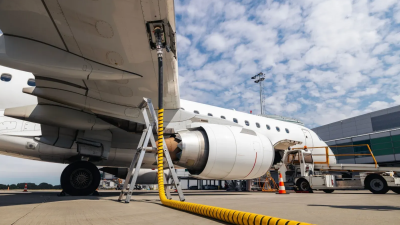
The Union Cabinet has approved a one-time Price Stabilization Fund of up to Rs. 10,000 crore to shield Scheduled Indian Airlines from volatile global fuel costs caused by the West Asia crisis. Provided as interest-free advances to state-owned Oil Marketing Companies (OMCs) through the Ministry of Petroleum and Natural Gas, this budgetary support aims to anchor jet fuel costs and sustain air connectivity. International Aviation Turbine Fuel (ATF) prices surged nearly 2.5 times from Rs. 60.50 per litre in March 2026 to Rs. 142 per litre in May 2026, forcing the government to intervene to cushion airlines, protect public investment in airport infrastructure, and safeguard approximately 77 lakh jobs dependent on the aviation ecosystem.
Structural Mechanics of the Fund
The stabilization program operates as a self-sustaining revolving financial pool rather than an outright subsidy. It balances the fiscal risks between the state, oil suppliers, and commercial airlines.
Price Compensation and Benchmark Matching
The fund compensates OMCs for financial under-recoveries whenever the prevailing international Import Parity Price (IPP) of ATF exceeds a government-determined benchmark price. This pricing cushion applies uniformly across both domestic and international flight operations for participating Indian carriers.
Recovery and True-Up Framework
When global crude oil and ATF prices moderate below the set benchmark, the mechanism initiates an automated financial recovery. The differential profit margin earned by OMCs will be retrieved from the companies and deposited back into the Consolidated Fund of India. This cyclical balancing continues dynamically until the entire advance advance corpus is trued up and settled.
Operational Framework and Tripartite Governance
The implementation of the price stabilization plan requires strict commercial exclusivity and inter-ministerial supervision to maintain high procedural transparency.
- Fixed-Price Arrangements: Willing Indian airlines can secure fixed-price fuel contracts to insulate their operating costs from daily international spot market fluctuations.
- Exclusive Procurement Clauses: To access the subsidized rates, commercial airlines must sign a formal Memorandum of Understanding (MoU) committing to procure ATF exclusively from state OMCs for the duration of the support.
- Institutional Supervision: A dedicated Monitoring Committee oversees claim verification, fund reconciliation, and final financial settlements. This committee comprises senior representatives from the Ministry of Civil Aviation, the Ministry of Petroleum and Natural Gas, and the Department of Expenditure under the Ministry of Finance.
- Duration and Review Cycles: The stabilization support remains in force for a maximum period of 36 months (three years). The framework mandates an annual performance review, with provisions for a timeline extension if the initial Rs. 10,000 crore advance is not completely recovered within the three-year window.
Macroeconomic Impact on the Aviation Sector
Fuel typically represents the single largest component of an airline’s balance sheet, making corporate survival highly vulnerable to external energy supply shocks.
| Operational Indicator | Pre-Crisis Baseline | Peak Crisis Impact | Post-Intervention Target |
| ATF Price per Litre | Rs. 60.50 (March 2026) | Rs. 142.00 (May 2026) | Capped at Rs. 75.60 for domestic routes |
| Fuel Share of total Expenses | Approximately 40% | Up to 60% of total costs | Stabilized at predictable budget levels |
| Route Viability Risk | Low / Stable growth | High risk of route closures | Protected via fixed-price guarantees |
Mitigation of Airspace Disruptions
The financial pressure on Indian international carriers was severely worsened by the closure of Pakistani airspace, which forced aircraft flying to Europe, Central Asia, and North America to take longer, circuitous routes. By absorbing the extra fuel burn costs through the stabilization fund, the government prevents a drastic contraction in international flight frequencies.
Affordability and Logistics Continuity
Capping fuel cost inflation prevents a direct pass-through of high input costs to the public, keeping passenger ticket fares stable during peak travel seasons. Furthermore, the fund prevents disruptions in domestic air cargo logistics, keeping supply chains operational for high-value and perishable goods.
IASPOINT Booster Facts for UPSC
- Aviation Turbine Fuel (ATF) Pricing: ATF is a specialized, kerosene-based mineral oil fuel. In India, domestic ATF pricing is revised on the first day of every month by state OMCs based on international crude oil movements and foreign exchange rates.
- Import Parity Price (IPP): This methodology calculates the nominal cost of an imported commodity by adding its international Free-on-Board (FOB) price to cross-border logistics costs, including ocean freight, insurance, port handling charges, and applicable customs duties.
- Consolidated Fund of India: Established under Article 266(1) of the Constitution of India, all revenues received by the government, loans raised, and money received in repayment of loans form this fund. No money can be appropriated out of it without parliamentary authorization.
- Taxation Status of ATF: Unlike petrol and diesel, which attract central excise duty and state Value Added Tax (VAT), ATF was brought under a uniform lower tax structure in 2021 where states were urged to cut VAT to 1-4% to support regional connectivity under the UDAN (Ude Desh ka Aam Nagrik) scheme. However, it still remains outside the formal Goods and Services Tax (GST) net.
- Emergency Credit Line Guarantee Scheme (ECLGS): Prior to the fuel stabilization fund, the central government extended liquidity relief to the pandemic-hit aviation sector by earmarking nearly Rs. 5,000 crore in collateral-free operational credit under the ECLGS framework.