
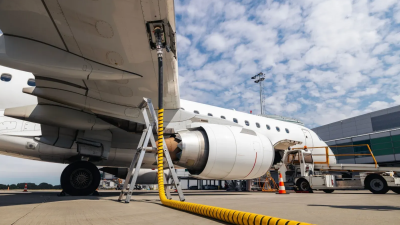
The Union Cabinet has approved a Rs. 10,000 crore Price Stabilization Fund to protect Indian airlines from volatile global Aviation Turbine Fuel (ATF) prices caused by the West Asia crisis. Provided as interest-free advances to state-owned Oil Marketing Companies (OMCs) via the Ministry of Petroleum and Natural Gas, this mechanism aims to stabilize operating costs and maintain air connectivity.
Mechanics of the Stabilization Fund
- Price Cushion: OMCs are compensated for under-recoveries when the Import Parity Price (IPP) of ATF exceeds a government-fixed benchmark.
- Cyclical Recovery: When global prices fall below the benchmark, the mechanism initiates an automated recovery of excess margins, depositing them back into the Consolidated Fund of India.
- Fixed-Price Contracts: Participating airlines must enter into MoUs to procure ATF exclusively from state OMCs to secure insulation from spot market fluctuations.
- Duration: The plan is valid for 36 months, with annual performance reviews to ensure the corpus is trued up.
Impact and Rationale
- Cost Management: ATF accounts for up to 60% of airline expenses during crises. Capping costs helps prevent the pass-through of fuel inflation to passengers.
- Strategic Protection: Supports 77 lakh jobs and maintains critical logistics/cargo chains despite geopolitical shocks (e.g., restricted airspaces).
IASPOINT Booster Facts
- ATF Pricing: Revised monthly by OMCs based on international crude movements and exchange rates.
- IPP Methodology: Includes international Free-on-Board (FOB) price, ocean freight, insurance, and duties.
- Constitutional Basis: The Consolidated Fund of India (Article 266(1)) requires parliamentary authorization for all appropriations.
- Tax Status: ATF remains outside the Goods and Services Tax (GST) net; states manage VAT at reduced rates to support regional connectivity (UDAN).