
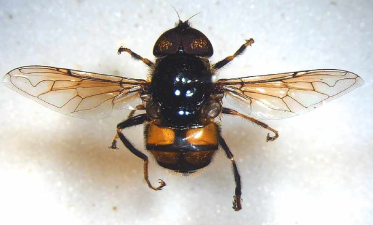
Scientists from the Zoological Survey of India (ZSI) have discovered two new hoverfly species, Eristalinus sapphirinus and Eristalinus brunettii, in the Gangetic Plains of West Bengal. This is the first addition to India’s Eristalinus fauna in over 100 years. The researchers used an integrative taxonomic approach, combining traditional morphological analysis of wing patterns and genitalia with mitochondrial DNA barcoding (COI gene) to confirm the new species.
Characteristics of the New Species
- Eristalinus sapphirinus: Identified by a distinct, brilliant sapphire-blue metallic sheen on its abdomen.
- Eristalinus brunettii: Named after entomologist James Edward Brunetti; characterized by dark brown and dull metallic thorax markings.
Ecological Significance
Hoverflies of the family Syrphidae perform dual ecological roles:
- Adults (Pollinators): They are highly efficient pollinators for crops like mustard and coriander, capable of hovering in place to feed on nectar and pollen.
- Larvae (Decomposers): Known as “rat-tailed maggots,” they thrive in stagnant, nutrient-rich water. By consuming organic waste and fecal matter, they aid in water purification and nutrient recycling.
IASPOINT Booster Facts
- ZSI: Established in 1916 and headquartered in Kolkata, it operates under the Ministry of Environment, Forest and Climate Change (MoEFCC).
- Batesian Mimicry: Many harmless hoverflies mimic the yellow and black coloration of stinging bees and wasps to deter predators.
- Bioindicators: Their presence in high numbers often indicates organic pollution and low dissolved oxygen in water bodies.
- DNA Barcoding: Uses a standardized genetic sequence as a “molecular tag” to identify species accurately.