
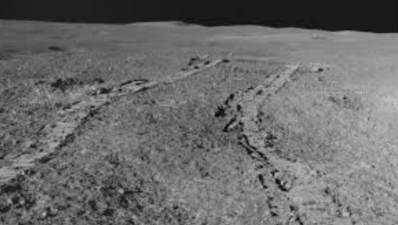
Analysis of data transmitted by India’s Chandrayaan-3 mission has revealed the chemical structure of the lunar regolith at Shiv Shakti Point, located near the Moon’s South Pole. The in-situ measurements demonstrate that the soil at this landing site chemically resembles the famous lunar meteorite ALHA 81005, which was discovered in Antarctica in 1981. The soil is rich in iron and magnesium but contains low concentrations of aluminum. This specific chemical signature indicates a thorough mixing of the surface regolith with material excavated from deeper lunar layers, likely dislodged by the massive impact event that created the nearby South Pole-Aitken basin. These findings offer strong empirical support for the Lunar Magma Ocean theory and provide crucial data for planning future international expeditions aimed at exploring the early geological evolution of the Earth-Moon system.
Chemical Analysis and Meteorite Correlation
Compositional Blueprint of Shiv Shakti Point
The Alpha Particle X-ray Spectrometer (APXS) onboard the Pragyan rover conducted multiple elemental analyses of the topsoil around the landing site. The data indicates an abundance of transition metals, specifically iron and magnesium, alongside standard silicates. Conversely, the concentration of aluminum is notably depressed compared to samples retrieved from the equatorial regions by previous Apollo and Luna missions. This high-magnesium, low-aluminum profile establishes a unique compositional category for the lunar south polar highlands.
The ALHA 81005 Link
The chemical data matches the composition of the Allan Hills 81005 (ALHA 81005) meteorite, an independent piece of lunar rock discovered in Victoria Land, Antarctica. For decades, scientists classified ALHA 81005 as a piece of the lunar highlands regolith breccia, but its exact point of origin on the Moon remained unknown. The Chandrayaan-3 data confirms that meteorites with this chemical signature match the material found at the lunar South Pole, providing a physical sample on Earth that scientists can study to understand the polar regolith.
Geological Mechanisms and Impact History
South Pole-Aitken Basin Excavation
The unique chemical mix at the landing site is a direct result of the Moon’s intense impact history. The Shiv Shakti Point sits within the continuous ejecta blanket of the South Pole-Aitken (SPA) basin, which is the largest and oldest confirmed impact crater on the Moon. The ancient asteroid collision that formed the SPA basin was powerful enough to punch through the upper lunar crust, excavating iron- and magnesium-rich rocks from the lower crust and upper mantle and scattering them across the polar surface. Over billions of years, subsequent micro-meteorite bombardments ground these deep-seated rocks down, mixing them with the local surface soil to create the blended regolith observed today.
Validation of the Lunar Magma Ocean Theory
The Lunar Magma Ocean (LMO) hypothesis states that shortly after its formation, the Moon’s outer layer was completely molten. As this giant magma ocean cooled, less dense minerals like anorthositic plagioclase crystallized and floated to the top, forming the aluminum-rich primordial upper crust. Heavier, iron- and magnesium-rich minerals like pyroxene and olivine sank to form the lunar mantle. The presence of deep-seated, magnesium-rich materials near the surface at the South Pole confirms this orderly separation of minerals, validating the core principles of the LMO model.
Advanced Payloads of Chandrayaan-3
| Instrument Name | Analytical Method | Scientific Objective |
| APXS (Alpha Particle X-ray Spectrometer) | Alpha particle and X-ray irradiation | Determines elemental composition (Mg, Al, Si, K, Ca, Ti, Fe) of the soil. |
| LIBS (Laser Induced Breakdown Spectroscopy) | Intense laser-pulse ablation | Conducts rapid qualitative and quantitative elemental mapping of rocks and soil. |
| ChaSTE (Chandra’s Surface Thermophysical Experiment) | Thermal probe insertion | Measures the thermal conductivity and temperature gradient of the polar regolith up to a depth of 10 cm. |
| ILSA (Instrument for Lunar Seismic Activity) | MEMS-based accelerometer | Records micro-seismic activity to study the structure of the lunar crust and mantle. |
IASPOINT Booster Facts for UPSC
- Shiv Shakti Point: The official nomenclature approved by the International Astronomical Union (IAU) for the specific landing site coordinates of the Chandrayaan-3 Vikram lander near the lunar South Pole ($69.37^\circ \text{S}, 32.35^\circ \text{E}$).
- Tiranga Point: The designated name given to the lunar touchdown location of the Chandrayaan-2 crash-landing site, which served as a baseline reference for the subsequent mission.
- Discovery of ALHA 81005: Found during the ANSMET (Antarctic Search for Meteorites) expedition in 1981, it was the first meteorite collected on Earth that was definitively proven to have originated from the Moon.
- Regolith Definition: The loose, fragmented layer of dust, soil, and broken rock that blankets the solid bedrock of the Moon, created by continuous meteorite impacts and exposure to solar wind particles.