
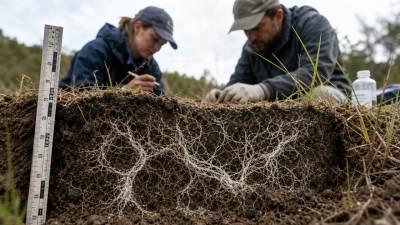
A global map of arbuscular mycorrhizal (AM) fungi networks was published in Science on 11 June 2026, using data from over 16,000 soil cores and machine-learning analysis.
Key quantitative findings
- Network extent: ~110 quadrillion kilometres of hyphae in global topsoils (≈68 quadrillion miles).
- Carbon stock: ~300 million tonnes of carbon stored in AM fungal biomass.
- Annual flux: ~4 billion tonnes CO2‑equivalent sequestered by AM-related processes (~11% of anthropogenic CO2 emissions).
Ecological role and processes
- Host coverage: AM fungi form symbioses with ~70% of terrestrial plant species.
- Transport functions: Facilitate movement of carbon, water and nutrients; hyphal flow rates up to 120 μm s−1 reported.
- Micro-scale density: A teaspoon of soil can contain up to 10 metres of mycorrhizal hyphae.
Spatial distribution
- Grassland hotspots: ~40% of global AM infrastructure concentrated in grasslands (examples: South Sudan, Tibetan Plateau, Banni grasslands).
- Land‑use contrast: Croplands exhibit roughly 50% lower AM network density than wild ecosystems.
Methods and data access
- Approach: >16,000 soil cores combined with machine learning and robotic imaging to estimate distribution and mass.
- Availability: Maps and underlying datasets published alongside the Science paper and publicly accessible.
IASPOINT Booster Facts
- Taxonomy: AM fungi are in Glomeromycotina; obligate symbionts lacking a known free‑living stage.
- Inventory relevance: Soil carbon changes involving fungal biomass affect national inventories via IPCC soil carbon accounting guidelines.