
Daily Activities

UPSC Prelims Current Affairs

UPSC Mains Current Affairs

Current Affairs

BHAVYA Industrial Parks

BHAVYA Industrial Parks

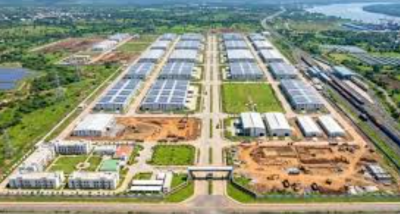
The Union Minister of Commerce & Industry launched the operational guidelines and the digital portal for the Bharat Audyogik Vikas Yojana (BHAVYA) scheme. Approved by the Union Cabinet with an allocation of ₹33,660 crore, the initiative aims to develop 100 future-ready, plug-and-play industrial parks across India over a six-year period from 2026-27 to 2031-32. The scheme operates on a challenge-based competitive model, encouraging state governments to pitch project proposals optimized for their native industrial strengths. Spearheaded by the Department for Promotion of Industry and Internal Trade (DPIIT), BHAVYA seeks to unlock manufacturing capabilities, attract massive domestic and global investments, and streamline business operations via institutional and digital reforms.

Institutional Structure and Core Objectives

The 51:49 Equity Partnership

The development of the industrial parks relies on an institutional collaboration between the Central Government and respective states. The National Industrial Corridor Development Corporation (NICDC) extends programmatic and infrastructural backing on behalf of the Centre, partnering with states under a 51:49 equity special purpose vehicle (SPV) model. State governments are mandated to provide the necessary land banks, while the central funding assists in building advanced infrastructure.

Financial Outlay and Phased Implementation

The total fiscal allocation stands at ₹33,660 crore, with the Central Government providing financial assistance of up to ₹1 crore per acre for public infrastructure creation. If a state partners with private sector players, the central assistance is capped at ₹50 lakh per acre. The project timeline is structured into distinct phases:

  • Phase I (First Tranche): Targeting 20 industrial parks based on applications submitted between June 1 and July 31.
  • Phase I (Second Tranche): Targeting 30 industrial parks based on applications submitted up to September 30.
  • Phase II: The remaining 50 parks will be executed sequentially, integrating modifications drawn from early implementation experiences.

Infrastructure Architecture and Land Demarcation

Scaled Land Criteria

To maintain geographical inclusivity across diverse terrains, the minimum land requirements are scaled based on regional topography:

  • Hilly and North-Eastern States: Minimum land area required is 25 acres.
  • General/Mid-Sized States: Minimum land area ranges from 100 to 500 acres.
  • Mega Industrial Clusters: Maximum land area extends up to 1,000 acres, especially near major urban and maritime trade hubs.
Multimodal Connectivity and PM GatiShakti

A primary mandate of the BHAVYA scheme is the integration of these industrial parks with the PM GatiShakti National Master Plan. This integration ensures that the chosen sites feature built-in multimodal connectivity, including direct links to freight corridors, national highways, railway sidings, and ports. This structure reduces logistical bottlenecks, minimizes transit delays, and optimizes supply chain operations for manufacturing units.

Innovation, Advanced Facilities, and Global Integration

Dedicated Technological Ecosystems

Beyond heavy manufacturing, the BHAVYA industrial parks will house specialized zones to incubate next-generation economic drivers. Dedicated land parcels will be allocated for startups, deep-tech enterprises, technology-oriented businesses, Global Capability Centres (GCCs), and intensive research and development (R&D) activities.

In-House Testing and Certification

To ensure rapid quality compliance and export readiness, the parks will feature advanced testing laboratories. These facilities will operate in partnership with national statutory bodies, including the Bureau of Indian Standards (BIS), the Export Inspection Agency (EIA), and the Food Safety and Standards Authority of India (FSSAI). This allows manufacturers to secure necessary certifications directly within the industrial cluster.

International Investment Enclaves

The scheme permits the creation of dedicated international enclaves inside the parks. Developed in collaboration with partner nations such as Japan, Singapore, South Korea, and Switzerland, these enclaves aim to attract foreign direct investment (FDI) and provide specialized social infrastructure and a familiar environment for expatriate professionals.

Feature / ParameterSpecifications under BHAVYA Scheme
Full FormBharat Audyogik Vikas Yojana
Total Financial Allocation₹33,660 Crore
Target Infrastructure100 Plug-and-Play Industrial Parks
Scheme Timeline6 Years (2026-27 to 2031-32)
Implementation AgencyNICDC and State-level SPVs
Funding CeilingUp to ₹1 Crore per acre (Government); ₹50 Lakh per acre (Public-Private)
Selection MethodologyChallenge-based competitive model among States

Digital Governance via the BHAVYA Portal

End-to-End Proposal Management

The newly launched BHAVYA digital portal serves as the single transactional interface for the entire lifecycle of the scheme. State governments use the platform to submit their detailed project reports (DPRs), showcasing land availability, investor commitments, and sectoral suitability.

Transparency and Monitoring

The portal automates project appraisal, financial tracking, and real-time physical monitoring. By offering full visibility to central ministries, state bodies, and private investors, it eliminates administrative delays and ensures adherence to the scheme’s strict completion timelines.

IASPOINT Booster Facts for UPSC

  • NICDC Mandate: The National Industrial Corridor Development Corporation (NICDC) acts as the apex body overseeing the development of various industrial corridors across India under the administrative control of DPIIT.
  • PM GatiShakti Platform: Launched as a digital platform to bring 16 ministries together for integrated planning and coordinated implementation of infrastructure connectivity projects. It uses geographic information system (GIS) based spatial planning tools.
  • Plug-and-Play Concept: Refers to industrial sites equipped with pre-cleared regulatory approvals, environmental clearances, and operational utilities (electricity, water, sewage) so that an entrepreneur can initiate manufacturing instantly.
  • Challenge-Based Selection: A governance model where funds or projects are awarded not through fixed quotas, but by ranking competitors on objective parameters like site suitability, connectivity, and policy readiness. This matches the model used in India’s Smart Cities Mission.
  • Special Purpose Vehicle (SPV): A distinct legal entity created under the Companies Act, 2013, to fulfill specific, narrow object clauses. The 51:49 SPV in BHAVYA ensures isolated financial accounting and dedicated project management.
Last Modified: June 9, 2026

Leave a Reply

Your email address will not be published. Required fields are marked *

Archives