
Daily Activities

UPSC Prelims Current Affairs

UPSC Mains Current Affairs

Current Affairs

APEDA and Millet-based Agri-exports

APEDA and Millet-based Agri-exports

The Agricultural and Processed Food Products Export Development Authority (APEDA) facilitated India’s first sea shipment of botanical-infused, ready-to-cook millet functional foods from Karnataka to New Zealand in June 2026. Shipped by a Bengaluru-based enterprise, this one-metric-tonne consignment marks a critical shift toward value-added agricultural exports over raw grains. The export order resulted from business networking at APEDA-supported international trade platforms, including World Food India 2025 and Gulfood 2026. This initiative creates global market access for indigenous grains, diversifies the national agri-export basket, and enhances the income potential of domestic millet farmers.

Institutional Framework of APEDA

APEDA serves as the nodal statutory body for promoting and developing the export of scheduled agricultural products.

Establishment and Mandate
  • Statutory Origin: Established by the Government of India under the Agricultural and Processed Food Products Export Development Authority Act passed by Parliament in December 1985. The Act came into effect on February 13, 1986.
  • Administrative Ministry: Functions under the Ministry of Commerce and Industry.
  • Headquarters: Located in New Delhi, supported by 18 regional offices across India to facilitate decentralized export operations.
Core Responsibilities
  • Export Promotion: Developing industries relating to the scheduled products for export by way of providing financial assistance, subsidies, and incentives.
  • Standard Setting: Fixing standards and specifications for the scheduled products for the purpose of exports.
  • Market Intelligence: Carrying out inspection of meat and meat products in slaughterhouses, processing plants, and storage premises to ensure quality control.
  • Organic Export Management: Functions as the Secretariat to the National Accreditation Board (NAB) for implementing the accreditation of Certification Bodies under the National Programme for Organic Production (NPOP).
  • Sugar Import Monitoring: Entrusted with the additional administrative responsibility to monitor the import of sugar into India.

Strategic Transition to Value-Added Millet Exports

The shipment to New Zealand highlights a policy pivot toward processing and functional food creation within the agricultural sector.

Botanical-Infused Functional Foods

Functional foods refer to items that offer health benefits beyond basic nutrition due to specific bioactive components. Infusing millets with traditional botanical extracts enhances their therapeutic profile, addressing the global demand for clean-label, wellness-oriented nutritional products.

Advantages of Sea Freight Over Air Shipments
  • Cost Efficiency: Bulk transportation via sea routes significantly lowers the per-kilogram logistics cost compared to air freight. This cost reduction makes Indian value-added products price-competitive in distant oceanic markets like New Zealand.
  • Carbon Footprint Reduction: Sea shipping lowers transport-related greenhouse gas emissions per tonne-kilometer, aligning with international sustainability benchmarks for food supply chains.
  • Scale of Operation: Enables exporters to move larger volumes commercially, moving away from small-scale sample testing via air courier.
Economic Impact on the Value Chain

Exporting processed, ready-to-cook items retains the economic surplus within the country. Food processors, packaging units, and local farmers benefit from higher profit margins than those generated by exporting raw, unprocessed coarse grains.

Millet Cultivation and Export Dynamics

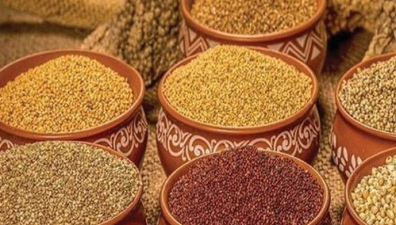
India positions millets, collectively known as ‘Shree Anna’, as a core component of its climate-resilient agricultural strategy.

FactorDescription and Details
Nutritional ProfileGluten-free, low glycemic index, high dietary fiber, rich in iron, calcium, and essential antioxidants.
Agronomic FeaturesHighly climate-resilient, requires up to 70% less water than paddy, survives in semi-arid regions, low carbon and water footprints.
Major VarietiesSorghum (Jowar), Pearl Millet (Bajra), Finger Millet (Ragi), Foxtail Millet (Kangni), Kodo Millet.
Leading Producing StatesRajasthan, Maharashtra, Karnataka, Gujarat, and Madhya Pradesh.
Export CompositionShifting from whole grains for animal feed to consumer-packaged snacks, mixes, and functional foods.

Government Initiatives for Globalizing Millets

India deploys a multi-pronged strategy to scale up the production, processing, and export of millets.

International Year of Millets (IYM) 2023

India spearheaded the United Nations resolution declaring 2023 as the International Year of Millets. This global campaign built brand awareness, positioning millets as a solution to global food security challenges and lifestyle diseases.

Production Support via NFSM

The National Food Security Mission (NFSM)-Nutri Cereals component incentivizes farmers with high-yielding variety seeds, technology distribution, and integrated nutrient management practices across targeted districts.

Production Linked Incentive (PLI) Scheme

The Ministry of Food Processing Industries administers the PLI Scheme for Food Processing Industry, which includes a dedicated component for Millet-based Products. This financial incentive supports enterprises engaged in manufacturing ready-to-cook or ready-to-eat millet variants, driving private investment into modern processing lines.

Export Promotion Strategies

APEDA has established a dedicated Millet Export Promotion Forum. The body maps global potential markets, sets up separate harmonized system (HS) codes for diverse millet varieties to track trade data, and organizes buyer-seller meets in collaboration with Indian embassies worldwide.

IASPOINT Booster Facts for UPSC

  • Scheduled Products of APEDA: The APEDA Act covers 17 categories of products, including fruits, vegetables, meat, poultry, dairy, confectionery, biscuits, bakery products, honey, jaggery, cocoa, chocolates, alcoholic and non-alcoholic beverages, cereals, groundnuts, pickles, papads, chutneys, guar gum, floriculture, herbal and medicinal plants, and de-oiled rice bran.
  • GI Tagged Kewra: The first sea shipment originated from Karnataka, but neighboring Odisha’s Ganjam district holds the Geographical Indication (GI) tag for Ganjam Kewra (screw pine) oil, a major botanical element used in traditional flavorings.
  • Nutri-Cereals Notification: The Government of India officially notified millets as “Nutri-Cereals” in April 2018 to remove the “coarse grain” stigma and recognize their high nutritional value.
  • Largest Producer: India is the largest producer of millets in the world and among the top exporters of the grain. It accounts for roughly 80% of Asia’s production and 20% of global production.
  • NPOP Monitoring: APEDA is the designated secretariat for the National Programme for Organic Production, meaning any organic millet-based functional food exported from India must comply with standards audited by APEDA-accredited certification bodies.
Last Modified: June 6, 2026

Leave a Reply

Your email address will not be published. Required fields are marked *

Archives