
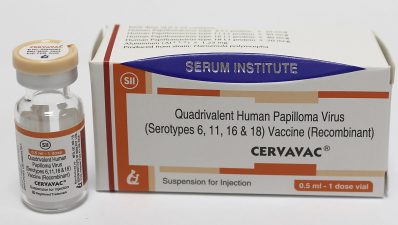
Serum Institute’s Cervavac HPV vaccine is slated for inclusion in India’s national immunisation programme after 2027, conditional on single‑dose efficacy results from an ongoing ICMR trial.
Clinical trial status
- Design: Two‑year comparative immunogenicity study by ICMR across three institutes.
- Sample: 504 girls receiving one dose of Cervavac or one dose of MSD’s Gardasil.
- Primary endpoint: Antibody titres to HPV types 16 and 18 over two years.
- Regulatory pivot: Cervavac was authorised as a two‑dose vaccine; single‑dose evidence required for schedule change and NIP inclusion.
Programme and supply
- NTAGI recommendations: HPV vaccination recommended in 2017 and 2022; Cervavac advised as two doses until single‑dose data are available.
- Current campaign: National campaign for 14‑year‑old girls uses MSD’s Gardasil, which has existing single‑dose efficacy data.
- Vaccine stock: Gavi has supplied about 2.6 crore HPV doses to India for current and next‑year campaigns.
Disease burden
- Incidence and mortality: ~125,000 cervical cancer cases and ~75,000 deaths annually in India.
- Attribution: Persistent HPV infection accounts for roughly 85% of cervical cancers in India.
IASPOINT Booster Facts
- HPV targets: Types 16 and 18 cause the majority of cervical cancers and are primary vaccine targets.
- Vaccine platforms: Cervavac is a recombinant virus‑like particle (VLP) vaccine; Gardasil is available in quadrivalent and 9‑valent formulations.
- Inclusion criteria: National Programme inclusion requires programmatic evidence on single‑dose efficacy, safety, cost‑effectiveness and NTAGI endorsement.