
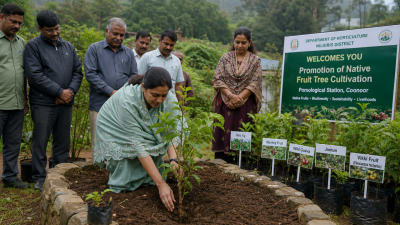
On 17 June 2026 the Nilgiris district administration and the Department of Horticulture launched an initiative at the Pomological Station, Coonoor to promote native fruit tree cultivation; one acre has been allotted for indigenous saplings.
Target species and ecological rationale
- Species targeted: wild figs (Ficus spp.), monkey fruit, wild guavas (Psidium spp.), jamun (Syzygium cumini), Eleocarpus tectorius (Vikki).
- Ecological role: native fruit trees provide seasonal food resources for frugivorous birds and mammals and will increase habitat heterogeneity at the station.
- Biogeography: Nilgiris are part of the Western Ghats biodiversity hotspot with high endemism and forest-fragment connectivity issues.
Implementation and support measures
- Demonstration site: one acre at Pomological Station, Coonoor reserved for plantation, propagation and field trials.
- Extension input: Horticulture Department providing technical guidance and subsidised planting material for fruit and traditional vegetable cultivation.
- Farmer outreach: district administration and horticulture department encouraging local farmers to adopt native-fruit cultivation and sapling production.
Agroforestry linkages and partnerships
- Intercropping pilot: United Planters’ Association of Southern India piloting tea intercropping with fruit and medicinal plants in the Nilgiris.
- Pomology role: pomological stations specialise in fruit research, variety trials and mass‑propagation of healthy saplings.
IASPOINT Booster Facts
- Sapling subsidies: state horticulture departments implement subsidy and extension schemes for planting material and nursery development.
- Conservation benefit: native fruit tree restoration supports resident and migratory avifauna and complements in‑situ habitat restoration in Western Ghats forests.