
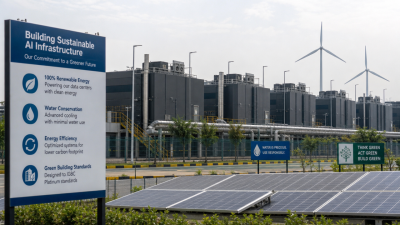
India’s AI data-centre expansion is under strain from rising thermal stress and resource demands. Rapidly growing rack densities and heat generation increase cooling, electricity and water needs, while climate exposure and site choices raise governance, environmental and infrastructure risks that affect energy security and local communities.
What is the issue and why it matters
Planned growth in AI computing capacity places strong new demands on power grids, freshwater resources and local ecosystems. Operational outages from extreme heat, higher running costs, and reputational and regulatory risk can slow India’s AI ambitions and create local social and environmental conflicts.
Scale and location risks
- Planned capacity: National capacity may reach about 6.5 GW by 2030, raising annual water use from roughly 150 billion litres in 2025 to more than double by 2030 if current patterns continue.
- Climate exposure: India ranks 11th globally for physical climate risk for planned data centres; Tamil Nadu, Telangana and Karnataka have high vulnerability to extreme heat and operational disruption.
- Site sensitivity: Large projects are being proposed in water‑stressed and ecologically sensitive coastal zones, increasing risk of resource conflict and ecological damage.
Key sustainability challenges
- Thermal management: Modern AI racks (120 kW+ per rack) produce 8–40 times more heat than legacy systems. Air cooling becomes non‑viable above ~700W GPU power, forcing transition to liquid cooling or immersion systems.
- Water demand: Projected water consumption may more than double by 2030. Many facilities are in water‑scarce regions, increasing competition with agriculture and domestic supply.
- Energy demand and grid stress: High continuous power draw and cooling loads strain transmission, distribution and peak capacity unless matched by dedicated generation or grid upgrades.
- Climate and operational risk: Heat events and extreme weather threaten availability and reliability of IT services and local utilities.
- Ecological impact: Large footprints in sensitive areas risk habitat loss, coastal degradation and groundwater depletion.
Technological demands and innovations
- Cooling technologies: Direct‑to‑chip liquid cooling, immersion cooling and two‑phase systems reduce airflow needs and lower energy for cooling. Hot‑aisle containment and waste‑heat capture improve efficiency.
- Power and renewables: On‑site or nearby renewable generation, power purchase agreements (PPAs) and dedicated green energy platforms are needed to decarbonise operations and reduce grid dependence.
- Design standards: High energy efficiency standards (IGBC Platinum, PUE/WUE targets) and modular high‑density designs reduce lifecycle impact.
- Examples: Reliance plans a 120 MW solar‑powered AI facility in Jamnagar; IFC–Sify are developing IGBC Platinum AI‑ready centres (103 MW); Adani proposes a 5 GW green AI platform with a 2 GW Visakhapatnam project.
Government policy and incentives: benefits and risks
- Incentives: The Union Budget 2026 offers a tax holiday for data centres until 2047. Some states provide long‑term power and water subsidies (for example Andhra Pradesh: 15 years power, 10 years water) to attract investment.
- Risk of unintended outcomes: Subsidies and tax breaks can encourage siting in resource‑constrained areas, strain municipal utilities, and delay required infrastructure upgrades unless conditional on sustainability performance.
- Regulatory role: Ministries and agencies—MeitY, Ministry of Power, MoEFCC, BEE, CEA and state regulators—must align incentives with environment and grid planning.
Private sector responses and operational best practices
- Renewable integration: Corporates are increasingly pairing centres with dedicated renewables or green PPAs to meet load and reduce emissions.
- Energy‑efficient certification: IGBC Platinum and similar benchmarks guide design, construction and operations.
- Cooling and water stewardship: Adoption of liquid cooling, water recycling, closed‑loop systems and alternative water sources (treated effluent, seawater where legal and feasible) reduces freshwater draw.
- Risk mapping and resilience: Climate risk assessments for site selection and operational continuity planning reduce outage risk.
| Challenge | Impact | Policy / Technical Response |
|---|---|---|
| Thermal loads | Operational outages; high energy use | Mandate liquid/immersion cooling; PUE targets; R&D incentives |
| Water scarcity | Local competition; ecological harm | Require water budgeting, reuse, non‑potable water use, conditional water subsidies |
| Grid stress | Blackouts; investment backlog | Conditional subsidies tied to grid upgrades; dedicated renewable capacity/PPAs |
| Site/environmental risk | Habitat loss; regulatory pushback | Mandate EIA, avoid ecologically sensitive zones, climate risk screening |
Policy gaps and recommended measures
- Integrated national framework: A cross‑ministry policy combining MeitY, Power, MoEFCC and BEE roles. Include mandatory climate risk screening, standardised reporting of PUE/WUE, and national siting guidelines.
- Conditional incentives: Reform tax and resource subsidies to require compliance with energy, water and biodiversity standards. Tie long‑term benefits to verified green credentials and local infrastructure upgrades.
- Sustainable site selection: Prohibit siting in high water‑stress or ecologically sensitive zones. Require cumulative impact assessment at regional scale.
- Water governance: Mandate internal water recycling, use of treated effluent, zero liquid discharge where feasible, and limits on fresh groundwater use. Integrate data‑centre water plans with local water resource plans.
- Energy strategy: Require a minimum share of dedicated renewable supply for new facilities. Promote grid modernisation, energy storage and flexible demand mechanisms to smooth load.
- Technical standards and incentives: Incentivise liquid/immersion cooling, waste‑heat reuse, and energy‑efficient hardware. Fund R&D for cooling technologies suited to Indian climates.
- Institutional measures: Strengthen capacity of state regulators and local bodies to assess cumulative impacts. Establish a central registry for data centres with climate risk and sustainability disclosures.
- Public‑private coordination: Use PPPs to fund grid and water infrastructure upgrades. Encourage sectoral codes of practice and multi‑stakeholder pilots for new cooling and recycling approaches.
Model Questions
- Examine the environmental and infrastructural challenges posed by the rapid expansion of AI data centres in India, with particular emphasis on thermal management and water sustainability. [GS-III: Environment & DM]
- Analyse the government’s role in addressing sustainability concerns arising from India’s AI data centre industry. [GS-II: Governance]
- Describe technological innovations and private sector initiatives that can mitigate sustainability challenges in India’s AI data centre expansion. [GS-III: Science & Technology]
- Propose an integrated policy framework to ensure sustainable growth of AI data centre infrastructure in India. [GS-III: Economic Development]
Answer should define scale (6.5 GW by 2030; water doubling), describe thermal challenge from high‑density racks and limits of air cooling, explain water risks in water‑stressed regions, assess grid and outage risks, and recommend liquid cooling, water recycling, EIA and conditional siting to manage sustainability.
Answer should list existing incentives (tax holiday to 2047; state power/water subsidies), evaluate risks of unconditional subsidies, discuss roles of MeitY, Ministry of Power, MoEFCC, BEE and state regulators, and propose policy reforms: conditional incentives, national siting rules, mandatory sustainability disclosures and capacity building for local authorities.
Answer should cover liquid and immersion cooling, hot‑aisle containment, waste‑heat recovery, energy‑efficient hardware, and renewable PPAs. Give private examples: Reliance’s 120 MW solar Jamnagar plan, IFC–Sify IGBC Platinum centres, Adani’s green‑energy platform. Recommend R&D and standards to accelerate adoption.
Answer should present a cross‑ministry framework linking incentives to environmental standards, mandate climate risk screening and EIAs, require PUE/WUE targets and renewable sourcing, enforce sustainable site selection, reform subsidies conditionally, fund grid/water upgrades via PPPs, and support R&D for cooling and reuse technologies.