
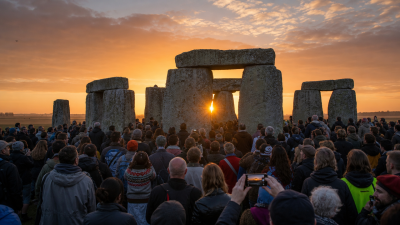
The Summer Solstice in the Northern Hemisphere for 2026 occurs on Sunday, 21 June at 4:24 a.m. EDT and marks the beginning of astronomical summer with the hemisphere receiving its maximum daylight.
Solstice — core facts
- Date & time: 21 June 2026, 4:24 a.m. EDT.
- Solar position: Sun attains maximum northern declination and appears overhead at the Tropic of Cancer (~23.5°N).
Cause & geometry
- Axial tilt: Earth’s obliquity ≈ 23.5°; tilt toward the Sun produces solstices.
- Solar declination: Varies annually between −23.5° and +23.5°; equals +23.5° at June solstice.
Geographical effects
- Northern Hemisphere: Longest day; high latitudes record much longer daylight; regions above the Arctic Circle (~66.5°N) may have continuous daylight.
- Southern Hemisphere: Concurrent winter solstice: shortest day and longest night.
Seasonal definitions
- Astronomical summer: Begins at June solstice (21 June 2026).
- Meteorological summer: 1 June–31 August; used for consistent climate statistics.
Astronomical details
- Post‑solstice trend: Day length in the north gradually decreases until the December solstice.
- Axial precession: ~26,000‑year cycle shifts the Sun’s background constellation; on the 2026 solstice the Sun lies in Taurus before entering Gemini.
IASPOINT Booster Facts
- Tropic of Cancer: Latitude of maximum northern solar zenith; its exact celestial marker shifts slowly due to precession.
- Arctic Circle definition: 90° − axial tilt; boundary for polar day/night phenomena.