
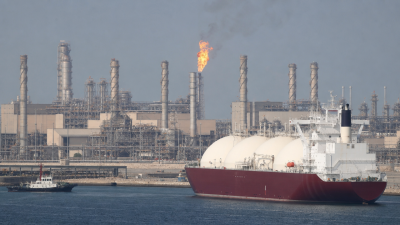
On Sunday evening an explosion occurred at the Barzan gas supply facility in Qatar’s Ras Laffan Industrial City. The incident killed 13 people, including 12 Indian nationals; 66 were injured. The Strait of Hormuz has reopened and India has intensified LNG diversification and emergency regulatory measures to protect supplies.
What is the current issue
India faces renewed energy supply risk after a technical accident at a major Qatari gas facility and recent transit disruptions through the Strait of Hormuz. These events exposed operational, transit and supplier-concentration vulnerabilities for LNG and crude flows that supply domestic industry and households.
Why it matters
- Governance: Energy shortages force emergency regulation and diplomatic engagement.
- Economy: Industrial curtailment and higher import bills can slow growth and raise inflation.
- Security: Dependence on maritime choke points creates strategic risk for national security and logistics.
- Society: Supply shocks affect employment, essential services and can incur human cost for expatriate workers.
Key challenges to India’s energy security
- High import dependence: Nearly 95% of LPG and roughly half of natural gas needs are met by imports. Crude oil sourcing is concentrated: over 85% of imports come from six countries (CEEW).
- Transit vulnerability: Critical choke points such as the Strait of Hormuz can disrupt shipments. The strait has recently reopened after transit disruption.
- Operational risk: Facility accidents — the Barzan incident was a technical accident during restart — can cause human loss and local disruption even when exports remain declared operational.
- Limited strategic buffers: Net crude import cover is only about 9–10 days and there is no dedicated strategic gas storage.
- Supplier concentration: Historical reliance on Gulf suppliers increases exposure to regional instability.
Government policy and institutional responses
- Regulatory action: Natural Gas (Supply Regulation) Order 2026 prioritised gas supply for essential sectors by curtailing allocations to petrochemical and other industrial users during shipment disruptions.
- Diplomacy and consular support: The Indian Embassy in Doha has engaged Qatari authorities to assist affected nationals and arrange repatriation of mortal remains.
- Diversification strategy: Import sourcing shifted: in May 2026 the United States became India’s largest LNG supplier, followed by Nigeria, Oman and Angola.
- Operational monitoring: Engagements with exporters and port authorities aim to verify continuity of exports; QatarEnergy reported exports and Ras Laffan port operations as unaffected.
- Policy gap identified: Absence of dedicated strategic gas storage and limited SPR capacity remain unaddressed priorities.
Strategic imperatives and options
- Diversify suppliers and contracts: Broaden long-term LNG contracts across regions (USA, Africa, Middle East, Australia) and increase spot-market flexibility to reduce single-source dependency.
- Build gas storage: Establish strategic underground and surface gas storage to provide buffer stocks for 14–30 days of critical supply, with priority drawdown rules for essential services.
- Expand SPR and strategic crude management: Increase public reserves beyond current 9–10 days and integrate commercial inventories into contingency planning.
- Enhance domestic supply: Accelerate exploration and production reforms, incentivise upstream investment and faster development of discovered fields.
- Increase terminal and logistics resilience: Add regasification capacity, LNG truck and pipeline distribution redundancy, and alternate routing to reduce transit choke dependence.
- Promote low-carbon transition: Scale renewables and green hydrogen to reduce long-term import exposure while preserving energy affordability.
Socio-economic and sectoral implications of supply disruptions
- Industry: Curtailment orders can lower petrochemical output, disrupt downstream supply chains and reduce GDP contribution from energy-intensive sectors.
- Prices and inflation: Reduced supply and higher import costs push domestic energy prices up, affecting consumers and production costs across the economy.
- Trade balance: Higher energy import bills widen the current account deficit and fiscal strain if subsidies are maintained.
- Employment and livelihoods: Output cuts risk job losses in affected industries. Vulnerable communities face indirect impacts via wage and price pressures.
- Human cost and consular duty: Fatalities among Indian nationals in overseas energy infrastructure accidents require consular action and compensation mechanisms.
- Strategic growth constraint: Repeated shocks can delay industrial expansion and energy-intensive infrastructure projects critical to development targets.
Institutional and policy recommendations (operational)
| Dimension | Practical step |
|---|---|
| Supply diversification | Secure multi-year LNG contracts across suppliers; increase spot-buy capability. |
| Strategic storage | Create dedicated strategic gas storage and expand SPR to cover 30+ days of imports. |
| Infrastructure resilience | Increase regasification, pipeline redundancy and alternate maritime routing agreements. |
| Domestic production | Reform licensing, fiscal terms and fast-track approvals for upstream projects. |
| Market instruments | Develop hedging, insurance and price-stabilisation mechanisms for import shocks. |
| Diplomacy | Negotiate transit security assurances and contingency logistics with supplier countries. |
Model Questions
1. Despite recent diversification efforts, India’s energy security remains vulnerable to external shocks. Critically examine the key challenges, drawing insights from recent events concerning LNG supply and the Strait of Hormuz. [GS-III: Economic Development]
India’s vulnerability stems from high import dependence (≈95% LPG, ~50% gas), supplier concentration (>85% crude from six countries), and transit risk through choke points like the Strait of Hormuz. Operational incidents such as the Barzan facility explosion show facility-level risks. Limited strategic buffers (9–10 days crude cover; no dedicated gas storage) reduce response capacity despite recent diversification to suppliers like the USA and African producers.
2. Discuss the policy and institutional mechanisms adopted by the Indian government to mitigate risks to its energy security, particularly in the context of natural gas supply, considering recent disruptions. [GS-II: Governance]
Measures include the Natural Gas (Supply Regulation) Order 2026 to prioritise essential sectors, diplomatic engagement with supplier nations and consular support for nationals, and active diversification of LNG sources (USA, Nigeria, Oman, Angola). Gaps remain: no strategic gas storage and limited SPR. Institutional coordination between Ministry of Petroleum, strategic agencies and state utilities requires strengthening for contingency execution.
3. The recent incident in Qatar and past disruptions in critical maritime routes underscore the imperative for India to further diversify its energy import basket and build robust strategic reserves. Analyse this statement in the context of India’s long-term energy strategy. [GS-III: Internal & External Security]
Diversification reduces geopolitical and operational risk by spreading supply across regions and contract types. Strategic reserves—both enhanced SPR for crude and dedicated gas storage—provide short-term buffers against transit or facility shocks. Complementary steps: boost domestic production, expand regasification/logistics, and develop alternate transit partnerships. Together these measures strengthen national resilience and reduce strategic vulnerability.
4. Examine the socio-economic implications for India stemming from major disruptions in its critical energy supply chains, citing recent examples related to LNG and crude oil. [GS-III: Economic Development]
Supply disruptions force industrial curtailment (e.g., petrochemicals under the Natural Gas Order 2026), reducing output and employment. Higher global energy prices raise inflation and widen the trade deficit. Essential services and manufacturing face cost and supply instability. Human consequences include loss of expatriate workers in infrastructure accidents and increased socio-economic hardship in dependent communities.
Last Modified: June 23, 2026