
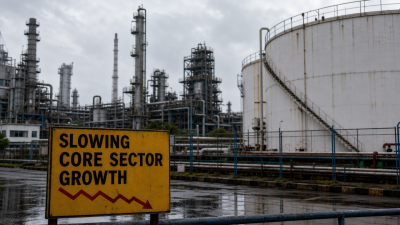
India’s eight core industrial sectors recorded growth of 0.5% in May 2026, the second‑lowest expansion in 21 months. Five of eight sectors contracted; petroleum refinery products, crude oil, natural gas, coal and fertiliser showed notable declines while electricity, steel and cement expanded.
What is the issue
Recent core sector data point to a sharp moderation in foundational industrial activity. The heaviest‑weighted petroleum refinery products contracted 8.7%, crude oil fell 4.6%, natural gas 4.9%, coal 9.3% and fertiliser 0.9%. Electricity accelerated to 8.7%; steel and cement posted positive growth. The pattern lowers the contribution of core sectors to overall industrial output and demand signals.
Why it matters for governance and the economy
– Core sectors drive the Index of Industrial Production (IIP). A slowdown transmits to manufacturing, construction and services. – Fiscal: lower corporate profits and indirect tax bases can compress revenues. – Employment and livelihoods: weaker activity reduces demand for labour in mining, manufacturing and construction. – External sector: energy‑intensive contractions affect import bills and trade balances.
Sectoral performance — compact table
| Core sector | May 2026 change | Remark |
|---|---|---|
| Petroleum refinery products | -8.7% | Heaviest‑weight; worst in 3.5 years |
| Crude oil | -4.6% | Worse than previous month/year |
| Natural gas | -4.9% | Weakest in three months |
| Coal | -9.3% | 10‑month low; third consecutive contraction |
| Fertiliser | -0.9% | Third consecutive month of decline |
| Electricity | +8.7% | Accelerated growth |
| Steel | + (positive) | Supported by construction/infrastructure |
| Cement | + (positive) | Linked to demand from projects |
Immediate implications for industrial output and IIP
– IIP for May is likely to weaken to around 2–3%, reducing short‑term industrial momentum. – Lower petroleum and coal output affects energy supply chains and raises production costs for downstream industry. – Reduced refinery throughput may raise input costs for transport and fertiliser manufacture, with downstream impacts on logistics and agriculture inputs.
Primary drivers of the slowdown
- External shock: Disruption from the West Asia crisis affected crude/refinery throughput and trade flows.
- Sectoral supply constraints: Coal and gas extraction and logistics issues reduced availability.
- Demand side: Slow domestic demand in segments linked to fuel and intermediate goods.
- Structural cycles: Refining margins and maintenance schedules can create cyclical output dips.
Broader economic implications
- Investment: Sustained weak core growth dampens capital expenditure plans, especially in energy‑intensive industries and refining capacity.
- Employment: Slower output reduces hiring in extraction, manufacturing and construction; informal sector risks rise.
- Fiscal stability: Lower indirect tax collections and corporate tax receipts may push fiscal pressure; subsidies or countercyclical spending could widen deficits.
- Inflation and supply chains: Energy shortages or higher import costs can fuel inflation and disrupt manufacturing schedules.
- Sentiment: Business and consumer confidence may weaken, feeding into lower consumption and investment in a negative feedback loop.
Why electricity, steel and cement grew
- Electricity: Robust domestic consumption, industrial electricity demand recovery and improved supply from renewables and thermal capacity.
- Steel and cement: Continued public and private infrastructure projects under the National Infrastructure Pipeline and housing/urban projects sustained demand.
- These sectors benefit from policy support (infrastructure spending, PLI for steel in specific segments) and project‑linked credit flows.
Policy interventions — short and medium term
- Short‑term stabilisers: Increase targeted infrastructure payments, expedite contractor clearances under NIP, and use temporary tax or credit relief for stressed refiners and miners.
- Energy security measures: Accelerate Strategic Petroleum Reserve fills, diversify crude procurement, and prioritise domestic exploration via ONGC, OIL, DGH and enhanced PSC terms.
- Supply‑side reforms: Fast‑track mineral clearances, improve coal linkages (Coal India and auction outcomes), streamline logistics and rail freight capacity for bulk commodities.
- Demand stimulus: Focused fiscal push in construction and manufacturing through project acceleration and viability gap funding where required.
- Industry support: Calibrate PLI, credit guarantees and working capital support for refineries, fertiliser units and gas infrastructure.
- Monetary and regulatory coordination: RBI and financial regulators to ensure liquidity for corporate working capital and for infrastructure financing vehicles.
Strategies to enhance resilience to international shocks
- Diversification: Broaden crude and LNG sourcing, expand trade partners and long‑term supply agreements.
- Domestic capacity: Incentivise domestic refining/upgrading, gas‑based fertiliser capacity and renewable energy to reduce import intensity.
- Strategic reserves and buffer stocks: Expand SPR capacity and maintain coal/gas buffer protocols for power plants and fertiliser plants.
- Logistics and connectivity: Strengthen ports, inland rail and pipeline capacity to reduce bottlenecks in moving bulk energy commodities.
- International diplomacy: Energy diplomacy and regional cooperation to secure shipping lanes and diversified imports.
Implementation challenges and risks
- Fiscal constraints: Countercyclical spending raises deficit risks; prioritisation required.
- Time‑lag: Supply‑side reforms and capacity expansion take time; short‑term relief may be needed.
- Global volatility: Further geopolitical shocks could undermine corrective measures.
- Coordination: Effective inter‑ministerial coordination (Petroleum, Coal, Power, Mines, Commerce, Finance) is essential for timely action.
Institutional mechanisms to monitor and respond
- Inter‑ministerial energy cell: Joint monitoring for crude/LNG flows, refinery throughput and SPR management.
- Core‑sector dashboard: Monthly central dashboard linking core indicators to IIP, capacity utilisation and project execution rates.
- Industry councils: Regular engagement with refining, mining and fertiliser producers to address logistics, input shortages and credit needs.
Model Questions
1. Examine the recent deceleration in India’s core sector growth, identifying the sectors most affected and the main causes. What immediate effect will this have on industrial output and IIP? [GS-III: Economic Development]
India’s core sector grew 0.5% in May 2026; five sectors contracted — petroleum refinery products (-8.7%), crude oil (-4.6%), natural gas (-4.9%), coal (-9.3%) and fertiliser (-0.9%). Causes include fallout from the West Asia crisis, supply constraints in coal and gas, and weak downstream demand. Immediate impact: likely IIP slowdown to c.2–3%, reduced industrial momentum, higher input costs and weaker manufacturing activity in the near term.
2. Analyse how sustained low core sector growth can affect investment, employment and fiscal stability in India. [GS-III: Economic Development]
Sustained core weakness reduces investor appetite for capital‑intensive projects, delaying capex decisions in manufacturing and infrastructure. Employment growth slows in mining, manufacturing and construction, raising informal sector risks. Fiscal implications include lower indirect tax and corporate receipts, possible rise in subsidies or countercyclical spending, and pressure on deficits. Weaker sentiment also amplifies demand shortfalls, further reducing revenue growth.
3. Despite the slowdown overall, electricity, steel and cement expanded. Explain the factors behind their resilience and recommend policy measures to promote balanced growth across core sectors. [GS-III: Economic Development]
Electricity growth reflects rising consumption and improved supply; steel and cement benefit from ongoing infrastructure and housing projects. Policy measures: accelerate project disbursements under the National Infrastructure Pipeline, extend targeted PLI and credit guarantees for vulnerable sectors, improve bulk logistics (rail/ports), and incentivise domestic energy and feedstock production to rebalance supply and demand across core industries.
4. Evaluate the role of external vulnerabilities, such as the West Asia crisis, in affecting India’s core sectors. Suggest strategies to enhance resilience against international shocks. [GS-III: Economic Development]
Geopolitical shocks raise crude/LNG prices and disrupt shipping, reducing refinery throughput and increasing import bills. Strategies: diversify suppliers and long‑term contracts, expand Strategic Petroleum Reserves, boost domestic exploration and refining capacity, develop LNG and gas infrastructure, strengthen port and pipeline logistics, and pursue proactive energy diplomacy to secure alternative routes and partners.
Last Modified: June 23, 2026