
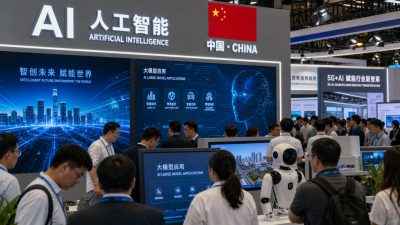
China has entered a new AI growth phase driven by a state-led push for data centres, local procurement and talent control. Recent measures include a five-year plan to invest c.2 trillion yuan in AI data centres, restrictions on AI specialists’ foreign travel and major telecom capex shifts to computing infrastructure.
What is the current issue?
Core facts
- State investment: A five‑year plan to invest about 2 trillion yuan in AI data centres, with a target that 80% of equipment, including chips, be procured from domestic suppliers such as Huawei.
- Talent control: New restrictions on foreign travel for AI specialists, including startup founders and leading researchers, to limit recruitment by foreign firms and centres.
- Infrastructure reallocation: Major telecom operators are shifting capital expenditure towards AI infrastructure and computing‑power networks.
- Industry and finance: Over 6,000 AI companies existed in 2025; core industry value exceeded 1.2 trillion yuan. Chinese AI firms drew roughly USD 13.9 billion in venture capital in 2025, third globally.
- Authoritarian applications: Reports of AI tools to identify potential political dissidents and 1.1 billion yuan allocated to agentic AI for state propaganda.
- Education shift: Universities reducing language majors and increasing programmes in embodied intelligence, AI and robotics.
- External trigger: US export controls on advanced models are accelerating sovereign AI initiatives and may boost Chinese model adoption.
Why it matters
- Governance: State control over AI development and talent affects global norms on research openness and academic mobility.
- Economy: Large capital flows into domestic AI supply chains will change global production patterns for chips, data centres and cloud services.
- Security: Dual‑use AI capabilities (surveillance, prediction, cyber) raise regional security risks and export concerns.
- Society and rights: Use of AI for surveillance and propaganda impacts privacy, free expression and civic space.
- International relations: Technology decoupling and sovereign AI drives reshape alliances, trade and investment flows.
China’s AI investment and self‑reliance strategy
- Objective: Reduce dependence on foreign core components and software. The 80% local procurement target aims to build end‑to‑end domestic supply chains for data centres and chips.
- Industry alignment: Telecoms, cloud providers and national champions are reallocating capex to computing networks and AI platforms.
- Finance and venture capital: Sustained VC inflows and state funding increase scale and commercialisation speed for domestic models and applications.
- Human capital: Education and training are being redirected toward embodied intelligence, robotics and applied AI skills.
Global technology competition and geopolitical implications
Strategic consequences
- Bifurcation risk: Strong state action and export controls abroad push the world toward competing AI ecosystems and standards.
- Supply‑chain realignment: Large investments in domestic manufacturing and procurement can fragment global manufacturing and force suppliers and buyers to choose blocs.
- Capital and model competition: Restrictions on certain Western models and parallel investment in sovereign AI encourage adoption of alternatives, including Chinese models, in third markets.
- Norms and governance: Divergent approaches to data governance, model safety and export controls complicate multilateral agreement on AI norms and controls.
Ethical and governance challenges of state‑directed AI
- Surveillance: AI tools to identify or predict dissenters increase risks of arbitrary targeting, mistaken identifications and chilling effects on speech.
- Agentic propaganda: Funding for autonomous propaganda systems poses risks of manipulation at scale and degradation of public deliberation.
- Research freedoms: Travel restrictions and talent controls constrain academic exchange and may reduce transparency in high‑risk AI research.
- Regulatory gaps: Existing administrative and legal frameworks may not provide effective checks on automated decision systems and mass profiling.
Impact on human rights and civil liberties
- Privacy: Large‑scale data collection to feed predictive systems increases exposure of personal data and weakens anonymity.
- Freedom of expression: Automated content control and propaganda systems can suppress dissent and skew information environments.
- Mobility and opportunity: Travel and career restrictions on researchers restrict individual freedom and academic choice.
- Remedies and redress: Limited transparency and legal recourse make it difficult for affected individuals to challenge algorithmic harms.
Key drivers and strategic shifts
- State financing: Direct allocation for data centres, agentic systems and associated support structures.
- Private sector gearing: Telecoms and cloud firms shifting capex to AI compute, and large firms integrating model development and deployment.
- Education and workforce planning: Curricular changes to produce engineers in embodied intelligence and robotics.
- Market formation: Strong venture flows to create many specialised AI firms and accelerate product cycles.
Economic and technological goals
- Technological sovereignty: Indigenous chip production, model stacks and cloud capacities to lower external dependencies.
- Industrial upgrading: Move up the value chain from hardware assembly to systems design, AI services and platform exports.
- Growth engine: Expand high‑value domestic AI industry to sustain economic growth and productivity gains.
Implications for India: security, economy and technology
- Security threats: Proliferation of surveillance and dual‑use AI tech may be exported or used in contested domains, affecting border and internal security.
- Supply‑chain exposure: Fragmentation in chip and cloud markets could increase cost and risk for Indian firms and state agencies.
- Talent competition: Travel restrictions and incentives may alter global mobility of AI professionals; India must retain and attract talent.
- Diplomatic balancing: India will need a calibrated approach between market engagement, strategic autonomy and cooperation with like‑minded partners.
Policy measures India should adopt
| Measure | Rationale |
|---|---|
| Scale up domestic R&D centres and Centres of Excellence | Reduce dependence on external tech; accelerate indigenous model and chip research by public‑private projects with IITs, IISc and research labs. |
| Incentivise semiconductor and data‑centre manufacturing (PLI and targeted subsidies) | Build local capacity for chips, servers and cooling infrastructure to secure supply chains and create jobs. |
| Strengthen data governance and algorithmic oversight | Operationalise an effective data protection regime, algorithmic impact assessment and redress mechanisms for automated harms. |
| Skill development and academic reforms | Expand courses in embodied intelligence, systems engineering and ethics; support retraining for affected workers. |
| Defence and cyber preparedness | Invest in AI‑enabled cyber‑defence, red‑teaming of critical systems and export controls for sensitive dual‑use items. |
| Strategic partnerships | Deepen cooperation with democratic partners (Quad, EU, Japan) for research collaboration, supply‑chain resilience and common standards. |
Operational steps for policy delivery
- Funding: Dedicated public funding windows for long‑horizon research and for commercial scale‑up.
- Regulation: Clear regulatory timelines for model safety, data portability and explainability requirements.
- Procurement: Use government procurement to stimulate domestic AI products while keeping interoperability for global standards.
- Diplomacy: Pursue multilateral dialogue on export controls, verification and norms for high‑risk AI.
Model Questions
1. Analyse the implications of China’s extensive AI expansion and self‑reliance strategy for the global technology competition, especially in light of recent US export controls. [GS‑II: International Relations]
India must assess shifts in supply chains, standard‑setting and market access. China’s investment and local procurement drive technological sovereignty and alternative ecosystems. US export controls encourage sovereign AI programmes and can accelerate adoption of Chinese models in third markets. Outcomes include increased bifurcation, higher compliance costs for multinational firms, pressure on multilateral governance, and intensified geo‑economic competition over talent, markets and critical components.
2. Examine the ethical and governance challenges posed by China’s deployment of AI for internal control, including surveillance and propaganda. Discuss the potential ramifications for human rights and individual freedoms. [GS‑II: Governance]
AI systems for identification and predictive surveillance risk mass privacy invasion, wrongful targeting and suppression of dissent. Agentic propaganda systems can manipulate public discourse. Travel restrictions on researchers reduce transparency and accountability. Together these measures weaken legal safeguards, limit remedies, and erode civic space. Governance responses require transparency, independent oversight, legal remedies and international attention to rights implications.
3. Discuss the key drivers and strategic shifts underpinning China’s current major AI growth phase, considering investment priorities, educational reforms, and industry development. What are its economic and technological goals? [GS‑III: Science & Technology]
Drivers include state financing for data centres, telecom capex reallocation to AI compute, VC flows, and curricular shifts toward embodied intelligence and robotics. The state aims for technological self‑reliance in chips and cloud, industrial upgrading from hardware to AI services, and a high‑value domestic AI sector. Outcomes sought are secure supply chains, exportable AI platforms, a skilled workforce and enhanced economic productivity.
4. In the context of China’s rapidly expanding AI capabilities and strategic competition with the US, what are the implications for India’s national security and technological self‑reliance? Suggest measures India could adopt. [GS‑III: Internal & External Security]
Implications: proliferation of dual‑use AI affects border and cyber security; supply‑chain shifts raise dependency and cost risks; talent competition intensifies. Measures: scale domestic R&D, incentivise semiconductor and data‑centre manufacturing, enforce data governance and algorithmic oversight, strengthen cyber‑defence and red‑teaming, expand AI skills training, and deepen strategic partnerships for resilient supply chains and shared standards.
Last Modified: June 23, 2026