
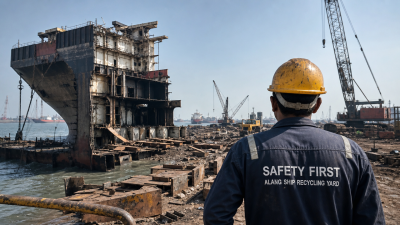
India became the world’s leading ship recycling nation in 2025, meeting its Maritime India Vision 2030 target five years early. India processed 2.99 million GT in 2025 and held 35.4% of global ship recycling, supported by legal reform, yard modernisation and demand-side incentives.
What is the issue
Scope and facts
- Scale: India’s ship recycling rose to 2.99 million GT in 2025 from 1.86 million GT in 2024 (near 60% increase).
- Market share: India captured 35.4% of global recycling in 2025.
- Drivers: Legal alignment with the Hong Kong Convention (HKC), financial assistance for yard modernisation, and fiscal incentives for ship owners.
Why it matters
Governance, economy, environment and international relations
- Economy: Job creation, scrap recovery for domestic industry and linkages with Indian shipbuilding through credit notes.
- Environment & health: Proper management of hazardous materials reduces coastal pollution and occupational hazards.
- Regulatory credibility: HKC alignment and facility modernisation strengthen India’s access to global customers and regulatory lists such as the EU approved yards list.
- Strategic industry: Strengthens maritime value chains and reduces import dependence for steel and non-ferrous scrap.
Economic significance and growth
- Volume and value: Rapid volume increase expands domestic supply of steel scrap and secondary raw materials. Higher throughput supports allied services (transport, logistics, repair).
- Employment: Wage and informal-sector shifts to formal work where HKC compliance requires documented labour protections and training.
- Demand incentives: Ship-breaking Credit Note Scheme grants ship owners a note equal to 40% of scrap value usable up to 5% of a new vessel’s cost in India, linking recycling with domestic shipbuilding demand.
Policy and legal framework
- Recycling of Ships Act, 2019: Sets domestic obligations for recycling and aligns procedure with HKC requirements.
- HKC status: India ratified HKC and the Convention became mandatory for Indian operations from 26 June 2025. Compliance standards now form the baseline for yard certification.
- Administrative role: Ministry of Ports, Shipping and Waterways (MoPSW) issues rules, compliance guidance and financial support to implement HKC norms.
Environmental and safety compliance (HKC)
- HKC requirements: Inventory of hazardous materials, safe handling, environmental protection plans, and worker safety systems.
- Modernisation support: MoPSW assistance of ₹53.5 crore enabled 115 facilities to attain HKC-compliant status through infrastructure and EHS upgrades.
- Operational change: Shift from beaching-only operations to structured processes with waste collection, containment and documented disposal routes for hazardous streams.
Institutional support and governance
- MoPSW: Grants, technical guidance, certification oversight and international engagement.
- State role: Gujarat prepared a master plan for Alang to coordinate infrastructure, safety norms and services for international clients.
- Industry and third parties: Yard operators, classification societies and independent auditors implement compliance regimes and training programmes.
Infrastructure development and capacity expansion
- Alang expansion: Plans aim to raise capacity to about 9 million LDT to meet rising demand from global shipowners.
- Master plan elements: Improved beaching layout, waste-handling infrastructure, paved working surfaces, effluent treatment and emergency response facilities.
- Logistics: Upgrades in port access, roads and material handling are required to support higher throughput.
Financial incentives and circular economy
- Ship-breaking Credit Note Scheme: 40% credit on scrap value, usable up to 5% of a new ship’s cost built in India; encourages owners to bring vessels for domestic recycling and supports Indian shipyards.
- Capital support: Direct MoPSW assistance for yard modernisation reduces upfront compliance costs and accelerates adoption of HKC standards.
- Circular benefits: Recovered steel and materials feed domestic industry and reduce import needs; salvage of machinery and equipment supports local repair sectors.
International standing and market access
- EU approved list: India is pursuing inclusion; HKC-compliant facilities and documented waste-management chains strengthen the case.
- Market confidence: Certification and transparent processes attract shipowners seeking compliant end-of-life disposal.
- Diplomacy and trade: Compliance with international rules improves India’s negotiating position in maritime governance fora.
Maritime sustainability aspects
- Environmental management: HKC alignment mandates inventories of hazardous materials and plans for their safe removal and disposal.
- Worker health: Formal safety systems, personal protective equipment, medical checks and training reduce occupational illness and accidents.
- Resource efficiency: Material recovery contributes to resource circularity and reduces lifecycle emissions from new metal production.
Challenges and risks
| Dimension | Risk / Challenge |
|---|---|
| Compliance costs | Modernisation and ongoing HKC compliance raise capital and operational costs for yards; small operators may struggle. |
| Hazardous waste | Management and disposal of asbestos, heavy metals and oily waste require secure supply chains and treatment capacity. |
| Labour transition | Reskilling, wage formalisation and social protection are needed to avoid loss of livelihoods during regulatory change. |
| International recognition | Inclusion in regulatory lists such as the EU requires documentary proof and inspection regimes; delays affect market access. |
| Market volatility | Global demand for recycling fluctuates with shipping economics and steel prices, affecting yard utilisation. |
Policy directions and operational priorities
- Certification and audits: Strengthen third-party inspections, digital tracking of hazardous materials and public disclosure of compliance status.
- Capacity for hazardous waste: Invest in regional treatment and secure disposal facilities for asbestos, PCBs and oily wastes.
- Skilling and social protection: Fund training, health services and transition support for workers tied to formal employment contracts.
- Financial design: Calibrate credit note and grant schemes to support small yards’ upgrade and link incentives to verifiable EHS performance.
- International engagement: Pursue EU approved-list inclusion through structured audits and bilateral cooperation on inspections and waste disposal chains.
- Innovation: Support R&D for safer cutting methods, waste minimisation and material recovery processes.
Model Questions
1. Discuss the economic drivers behind India becoming the world’s leading ship recycling nation in 2025, and critically evaluate measures taken to ensure environmental and safety compliance in the sector. [GS-III: Economic Development]
India’s rise rests on policy push, yard modernisation, and incentives that improved competitiveness and material supply chains. Volume rose to 2.99 million GT and global share reached 35.4%. Compliance measures include the Recycling of Ships Act, HKC alignment, ₹53.5 crore modernisation support and certification of 115 yards. Challenges remain in hazardous-waste disposal, labour welfare and financing for smaller yards; these require enforcement, treatment facilities and targeted support.
2. Analyse the policy and institutional framework that propelled India to the forefront of the global ship recycling industry. What strategies should follow to enhance capacity and international standing? [GS-II: Governance]
The Recycling of Ships Act and HKC incorporation provide the legal base; MoPSW grants and Gujarat’s master plan enabled yard upgrades and demand linkage via credit notes. To scale capacity and reputation, priorities are: expand compliant infrastructure at Alang to ~9 million LDT, strengthen certification and digital compliance, invest in hazardous-waste treatment, finance small-yard upgrades, and secure inclusion on the EU approved list through verified audits.
3. Examine how infrastructure development and financial incentives contribute to India’s plan to expand ship recycling capacity while advancing maritime sustainability. [GS-III: Environment & DM]
Infrastructure upgrades—paving, effluent treatment, waste containment and emergency response—enable HKC-compliant operations and higher throughput at Alang. Financial incentives such as ₹53.5 crore assistance and the Ship-breaking Credit Note Scheme (40% scrap-value credit usable up to 5% of new-vessel cost) reduce upgrade barriers and link recycling to shipbuilding. Combined, these measures drive circular material flows, safer operations and reduced coastal pollution when backed by treatment facilities and monitoring.
4. Evaluate the significance of India’s ratification and implementation of the Hong Kong Convention for its maritime sector and international commitments. [GS-II: International Relations]
HKC ratification established internationally accepted standards for safe, environment-friendly recycling. Implementation improved India’s credentials with shipowners and regulators, aiding market access and the push for EU approval. It aligns domestic law with global norms, obliges hazardous-material inventories and worker protections, and positions India as a regulatory-compliant hub; success depends on transparent audits, waste-disposal chains, and adherence to cross-border environmental rules.
Last Modified: June 23, 2026