
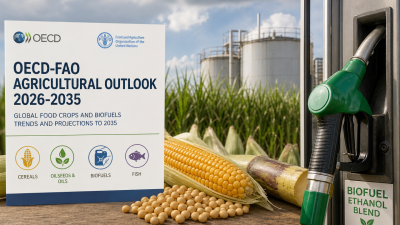
The OECD‑FAO Agricultural Outlook 2026‑2035 finds first‑generation biofuels from food crops will remain the dominant source of global biofuel production through 2035.
Key Projections (2026–2035)
- Demand growth: Global biofuel demand projected to grow at 1.4% annually to 2035.
- Ethanol volume: Global ethanol production projected at 162.5 billion litres by 2035.
- Cereal use by 2035: Food 40%, feed 34%, biofuels/industrial ~25%.
Feedstock Shares for Ethanol
- Main feedstocks: Maize 61%, sugarcane 22%, molasses 5%, wheat 2% of ethanol production by 2035.
- Biodiesel feedstocks: Predominantly vegetable oils — soybean, rapeseed, palm oil.
First‑ vs Second‑Generation Biofuels
- First‑generation: Derived from food crops (sugar, maize, rice, other cereals) and vegetable oils; expected to remain dominant.
- Second‑generation: From cellulosic feedstocks (crop residues, dedicated energy crops, woody biomass); not expected to substantially increase its production share by 2035.
Geographic and Policy Links
- Drivers of growth: Emerging economies (India, Brazil, Indonesia) account for the bulk of projected demand growth.
- High‑income trend: Contribution to global biofuel growth projected to fall markedly from ~40% in the past decade to ~10% by 2035.
- India note: Economic Survey 2025‑26 flagged potential cropping‑pattern impacts from ethanol blending on pulses and oilseeds.
IASPOINT Booster Facts
- Report dates: OECD‑FAO Agricultural Outlook 2026‑2035 launched 29 June 2026; report released 6 July 2026.
- Terminology: “First‑generation” = food‑crop based; “Second‑generation” = lignocellulosic/cellulosic feedstocks.