
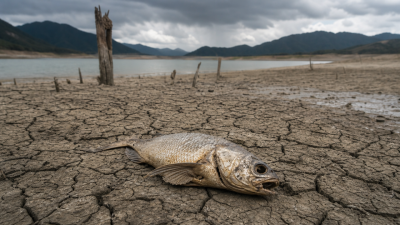
Recent global analysis finds climate change is causing higher local extinctions in temperate species (49%) than tropical species (33%). The study examined 5,151 species at 39,157 sites across terrestrial, marine and freshwater habitats and reports especially high losses in marine and freshwater realms.
What is the issue?
Current finding
A University of Arizona–led study compared historical and recent biodiversity surveys. It reports 49% local extinction in temperate species versus 33% in tropical species. Marine species show 56% local extinction, freshwater 50% and terrestrial 43%.
Why it matters for governance and society
- Environment: Altered community composition, collapsed food webs and loss of ecosystem functions.
- Economy: Fisheries, agriculture and tourism face direct productivity and income losses.
- Security: Resource scarcity and migration pressures may increase social tensions in affected regions.
- Policy: Existing conservation priorities and laws need recalibration for climate-driven dynamics.
Key findings and comparative data
| Dimension | Temperate | Tropical |
|---|---|---|
| Local extinction (overall) | 49% | 33% |
| Maximum temperature rise (25-yr average) | ≈3.3°C (6°F) | ≈1.8°C (3.3°F) |
By realm: Marine 56%, Freshwater 50%, Terrestrial 43% local extinction rates globally.
Ecological explanations
- Faster warming in temperate zones: Larger increases in maximum temperatures in temperate regions reduce thermal safety margins.
- Limited elevational refuge: Temperate regions often lack steep temperature gradients; species cannot move upslope or poleward to cooler microclimates as easily.
- Range-wide versus edge losses: Tropical extinctions are concentrated at warm range edges where steep mountain gradients permit upslope shifts; temperate losses occur across wider portions of ranges.
- Hydrological sensitivity: A 100 mm rainfall decline raises freshwater extinction odds by ~60%.
- Thermal sensitivity in marine systems: Each 1°C mean‑annual temperature rise increases warm‑edge extinction odds by ~85% for terrestrial and ~139% for marine species.
Species range shifts and adaptive responses
Complementary research finds species shifting upslope with warming. Tropical species are moving their lower range limits upslope faster than temperate species. Responses are uneven across taxa and realms because of dispersal ability, habitat fragmentation and availability of suitable microclimates.
Implications for conservation strategy
- Reprioritise geographic focus: Increase attention to temperate regions as well as tropical hotspots.
- Protect aquatic systems: Prioritise marine protected areas, freshwater inflow management and pollution control given higher extinction rates in aquatic realms.
- Connectivity: Establish ecological corridors, riparian buffers and marine linkages to facilitate range shifts.
- Climate refugia: Identify and secure microrefugia and cooler landscapes within protected-area planning.
- Dynamic management: Move from static protected-area boundaries to flexible, climate-responsive governance including seasonal and transient protections.
- Ex situ and assisted measures: Use seed banks, captive breeding and targeted assisted migration where in situ survival is unfeasible.
Challenges in predicting biodiversity responses
- Spatial heterogeneity: Regional climate change patterns differ; warming is not uniform.
- Species traits: Physiological tolerance, dispersal capacity and generation time vary widely.
- Biotic interactions: Competition, predation, disease and mutualisms alter realised outcomes.
- Habitat fragmentation: Limits movement even when climatic space shifts are available.
- Data gaps: Many taxa and regions lack long-term monitoring to validate models.
Policy and governance responses
- National legal instruments: Integrate climate-driven extinction risks into the Biological Diversity Act, Wildlife Protection Act and State biodiversity strategies.
- Protected-area reform: Expand and connect protected areas; adopt mobile and seasonal protections for migratory and marine species.
- Integrate with climate policy: Align NBSAP and NAPCC missions to fund and implement ecosystem-based adaptation.
- Fisheries and water governance: Enforce sustainable fishing, restore riverine flows and control pollution to reduce freshwater and marine stressors.
- Research and monitoring: Scale long-term biodiversity monitoring, remote sensing and citizen science; support predictive ecology and climate‑biology modelling.
- Finance and institutions: Use CAMPA funds, green finance and international mechanisms (e.g. GEF, bilateral aid) for targeted conservation.
- International cooperation: Coordinate cross‑boundary conservation where species ranges cross nations; share data and best practice.
India-specific context and measures
- Himalayan temperate zones: Prioritise high‑altitude conservation under the National Mission for Sustaining the Himalayan Ecosystem and state action plans. Map climate refugia and strengthen community reserves.
- Marine and coastal: Expand ecologically coherent marine protected areas, enforce coastal zone regulations and restore mangroves and seagrass beds for nursery functions.
- Freshwater systems: Improve river basin management, maintain environmental flows, reduce pollution and control invasive species to lower freshwater extinction risk.
- Policy integration: Update India’s National Biodiversity Action Plan and State Biodiversity Strategies to include dynamic conservation, assisted migration protocols and climate risk criteria for protected-area designation.
- Community engagement: Empower local and indigenous institutions under the Biodiversity Act for on-ground monitoring and adaptive management.
- Capacity and finance: Fund regional ecological observatories, build technical capacity in state forest departments and access international climate adaptation finance.
Socio-economic and ethical ramifications
- Ecosystem services loss: Declines in pollinators, fish stocks and water purification affect food security and human health.
- Livelihood risk: Fishers, pastoralists and forest communities face income shocks and reduced resilience.
- Cultural impact: Loss of species undermines traditional knowledge and cultural practices of indigenous communities.
- Ethical obligation: Policy choices involve intergenerational equity and fairness to communities that bear disproportionate costs of biodiversity loss.
Way forward
- Mitigation and adaptation together: Reduce greenhouse gas emissions while funding adaptive conservation measures.
- Targeted monitoring: Prioritise temperate and aquatic taxa for intensive surveillance and rapid response.
- Flexible governance: Adopt rules for dynamic protected areas, assisted migration and contingency interventions.
- Science-policy interface: Translate predictive models into operational risk maps and management triggers.
- Equitable action: Ensure benefits and burdens of conservation and adaptation are shared, and involve local communities in decision-making.
Model Questions
1. Recent global research finds higher local extinction rates in temperate species than tropical ones. Analyse the study’s main findings and explain the ecological reasons for this pattern. [GS-III: Environment & DM]
The study analysed 5,151 species at 39,157 sites and found 49% local extinction in temperate species versus 33% in tropical. Marine, freshwater and terrestrial rates were 56%, 50% and 43% respectively. Faster maximum temperature rise in temperate zones, limited elevational refugia, broader range losses (not only warm‑edge) and hydrological stress explain higher temperate extinctions. Species traits and habitat fragmentation further constrain responses.
2. Evaluate the policy and governance implications of rising local extinctions, especially for marine and freshwater species, and suggest specific measures India can adopt. [GS-II: Governance]
Implications include need to recast protected-area planning, strengthen aquatic governance and integrate biodiversity with climate policy. India should expand and connect MPAs and river sanctuaries, ensure environmental flows, control pollution, update NBSAP and state plans for dynamic conservation, fund long-term monitoring, deploy assisted conservation where needed, involve local communities under the Biodiversity Act and mobilise domestic and international finance for targeted adaptation actions.
3. How do the June 2026 study and the July 2026 altitudinal-shift study together reframe understanding of species’ adaptation to warming? What challenges remain in predicting biodiversity responses? [GS-III: Environment & DM]
The studies show non-uniform responses: temperate species suffer wider local extinctions while tropical species shift upslope faster at lower limits. This demonstrates that vulnerability depends on warming magnitude, topography, dispersal and microrefugia. Prediction is challenged by spatial climate variability, species-specific tolerances, biotic interactions, habitat fragmentation and limited long-term data, necessitating improved monitoring, trait-based models and scenario testing.
4. Discuss socio-economic and ethical ramifications of climate-driven local extinctions for dependent communities, and outline the ethical responsibilities in biodiversity conservation. [GS-IV: Ethics, Integrity and Aptitude]
Local extinctions undermine ecosystem services, threatening food security, livelihoods and cultural practices of fishers, pastoralists and indigenous peoples. Ethically, policymakers must uphold intergenerational equity, prevent disproportionate burden on marginalised groups and respect community rights in conservation. Responsibilities include inclusive decision-making, fair compensation, capacity support, protection of traditional knowledge and transparent allocation of adaptation funds to those most affected.
Last Modified: July 6, 2026