
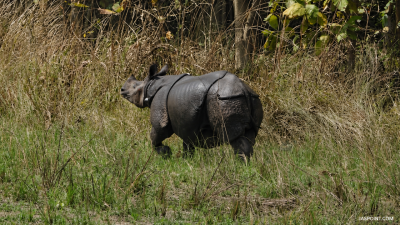
The rhino population in Dudhwa Tiger Reserve rose to 53 after the fourth rhino census conducted between 25 and 27 June 2026, comprising 17 adult males, 25 adult females and 11 calves older than one year.
Population and Census
- 2026 census: Conducted 25–27 June by 20 teams of trained forest personnel and WWF‑India; total count 53 (17 adult males; 25 adult females; 11 calves >1 year).
- Spatial split: Six rhinos in RR1, 36 in RR2 and 11 free‑ranging within the reserve.
Species Status and Legal Protection
- Scientific name: Rhinoceros unicornis (greater one‑horned/Indian rhinoceros).
- Global listing: IUCN Red List status Vulnerable; listed in CITES Appendix I.
- Indian law: Protected under Schedule I of the Wildlife (Protection) Act, 1972.
Dudhwa Landscape and Management
- Location: Terai grassland‑swamp ecosystem in Uttar Pradesh near the India–Nepal border.
- Reintroduction history: Programme initiated in 1984–85 with seven founder rhinos translocated from Assam and Nepal.
- Management units: Rhino Rehabilitation enclosures RR1 and RR2 used for captive breeding, protection and phased release.
Important Facts for Exams
- Primary stronghold: Kaziranga National Park contains the largest Indian rhino population.
- Conservation strategy: Translocation and reintroduction are applied to establish secondary populations and reduce extinction risk.