
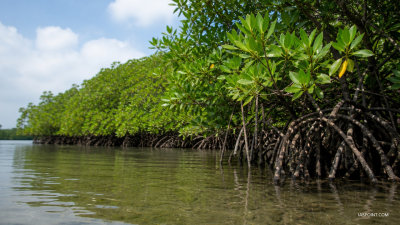
The Bureau of Indian Standards published a draft Indian Standard titled “Restoration of Mangrove Ecosystem — Guidelines” in March 2026; the EED 06: WG 02 committee (formed 2023) held stakeholder consultation at Jharkhali on 11 June 2026 and received hundreds of inputs.
Scope of the Draft Standard
- Title & date: “Restoration of Mangrove Ecosystem — Guidelines”, draft published March 2026.
- Coverage: Restoration across mangrove settings — estuaries, deltas, intertidal zones, sheltered shorelines, island territories.
- Stakeholder inputs: Hundreds of comments from local communities, scientists and agencies during public consultation.
Technical and Operational Features
- Site-specific approach: Differentiation by tidal regime, salinity, geomorphology and settlement patterns.
- Planting materials: Recommends cloth or biodegradable bags instead of polythene for seedlings.
- Restoration linkages: Calls for integration with local livelihoods; stakeholders proposed fruit-bearing species where ecologically suitable.
Implementation Challenges
- Standardisation constraint: National single SOP difficult due to regional ecological variability.
- Committee process: EED 06: WG 02 prepared unified SOP; field consultations included community inputs (11 June 2026).
- Legal status of standards: Indian Standards are voluntary unless made mandatory by statute or government order.
MISHTI Programme
- Target & coverage: Restore 540 sq km across nine coastal states and four Union Territories; launched 2023.
- Funding: Extended to 2029; additional ₹500 crore allotted, total allocation ₹600 crore; ₹88.40 crore released as of 10 July 2026.
IASPOINT Booster Facts
- BIS legal base: Bureau of Indian Standards established under the BIS Act, 2016; functions under Ministry of Consumer Affairs, Food & Public Distribution.
- Mangrove ecology: Halophytic vegetation occupying intertidal zones; Sundarbans is India’s largest mangrove forest.