
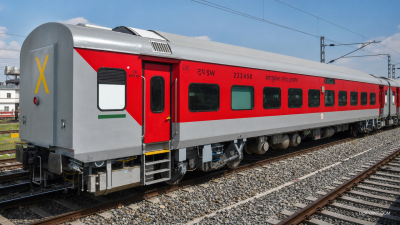
On 14 July 2026 the Union Minister for Railways announced eight new structural freight reforms under “Reform Express”, raising implemented measures to 17 of a targeted 52. Reforms cover containerisation, a unified pan‑India CTO licence, tariff rationalisation, contracting rules, Rail Bhoomi and POL tank‑wagon policy.
What is current
Indian Railways has introduced a single unified Container Train Operator (CTO) licence (₹25 crore registration fee; 20‑year validity) removing route restrictions. Tariffs for fertilisers and foodgrains now use a per‑tonne‑per‑kilometre rate with a rationalised three‑tier variation. Fly ash and selected bulk agricultural commodities may move in ISO‑standard closed containers. Rail Bhoomi digitises land acquisition. Private firms may propose specialised wagon designs subject to RDSO trials and approval. Oil companies can procure or lease POL tank wagons for direct operation.
Why it matters
Reforms alter market entry rules, pricing transparency, asset ownership and risk allocation. They affect logistics costs, modal share between rail and road, environmental externalities from bulk transport, construction project governance and land acquisition timelines. Operational design and institutional capacity will determine whether policy changes lead to increased private investment, faster project delivery and reduced pollution or to implementation bottlenecks and exclusion of smaller firms.
Private sector participation and logistics efficiency
- Unified CTO licence: Single pan‑India permit removes route constraints and provides regulatory certainty for 20 years. Expected to attract large operators and integrated logistics firms.
- Licence economics: ₹25 crore fee creates a threshold that filters entrants; benefits scale operators but may deter smaller regional players.
- Tariff rationalisation: Per‑tonne‑per‑km pricing with three‑tier variation reduces complexity, improves price discovery, and eases contract negotiations with shippers.
- Wagon design and POL integration: Private proposal of specialised wagons and permission for oil companies to operate POL tank wagons enable tailored solutions and reduce dependence on railway‑owned rolling stock.
- Operational constraints: Gains depend on terminal capacity, rake availability, yard handling, last‑mile connectivity and alignment with Dedicated Freight Corridors and ports.
Contractual governance and risk management
- Performance security: 10% upfront deposit at contract start increases immediate contractor skin‑in‑the‑game and reduces delayed recoveries through running bills.
- Bidder eligibility: Firms with pending litigation >50% of net worth are barred, lowering litigation risk and likely improving execution reliability.
- Mandatory insurances: Contractor’s All Risk and Professional Indemnity cover shift project risk to insurers and reduce contingent liabilities for the railways.
- Governance implications: Stricter criteria improve fiscal discipline but may restrict competition. Complementary measures needed: transparent prequalification, arbitration mechanisms, e‑procurement oversight and capacity building for smaller firms.
Environmental sustainability and cargo protection through containerisation
- Fly ash in closed containers: Transition to ISO‑standard sealed containers eliminates fugitive dust during loading, transit and unloading. This reduces health risks and environmental contamination along corridors.
- Agricultural commodities: Sealed container movement of fertilisers, foodgrains, flour and pulses reduces spillage, infestation and spoilage. Fertiliser containers can be staged at rake points for demand‑based dispatch.
- Modal shift potential: Transparent tariffs and private participation can shift traffic from road to rail, lowering GHGs per tonne‑km and reducing road congestion and accidents.
- Implementation needs: Requires investment in container handling equipment, sealed storage at rake points and monitoring for compliance and lifecycle waste management.
Digitalisation and capacity building
- Rail Bhoomi portal: A CRIS‑developed platform to manage end‑to‑end land acquisition workflows online. Expected benefits: reduced administrative delay, central tracking and single source of truth for land records and payments.
- Skill certification: QR‑coded digital certificates for artisans in critical trades with practical competency assessments. Rollout target: up to 24 months across projects to improve workmanship and safety.
- Systems integration: Success requires interoperability with project management systems, contractor databases and payment portals; attention to data security and capacity building at field level.
Implementation challenges and policy options
- Capacity and infrastructure: Expand container terminals, mechanised handling, siding connectivity and rake-turnaround efficiency. Coordinate investments with Dedicated Freight Corridor capacity.
- Inclusion and competition: Calibrate the licence fee and prequalification norms to allow participation of medium‑sized operators; consider graded fees or performance‑linked rebates.
- Regulation and oversight: Define clear approval timelines and trial protocols for private wagon designs at RDSO to prevent delays. Publish standard insurance and safety templates to reduce negotiation friction.
- Land and social safeguards: Use Rail Bhoomi to speed processes but retain due diligence on resettlement, consent and grievance redress to avoid legal setbacks.
- Monitoring and KPIs: Set measurable targets — modal share, rake utilisation, terminal dwell time, emissions reduction, contract‑award timelines — and publish periodic performance reports.
Model Questions
1. Examine how the unified Container Train Operator (CTO) licence and simplified tariff structure can affect private investment and modal share in India’s freight sector. [GS-III: Economic Development]
Unified CTO licence removes route restrictions and offers 20‑year regulatory clarity, encouraging large integrated operators. A ₹25 crore fee filters entrants. Per‑tonne‑per‑km tariff with three‑tier variation improves transparency and pricing predictability. Together these reforms can shift freight from road to rail, lower logistics cost and attract investment, but outcomes depend on terminal capacity, last‑mile connectivity, rake availability and complementary regulatory and infrastructure measures.
2. Discuss the governance and risk‑mitigation implications of the new contracting rules in Indian Railways. [GS-II: Governance]
Upfront 10% performance security increases contractor accountability and liquidity. Barring bidders with litigation >50% net worth reduces execution and legal risk. Mandatory Contractor’s All Risk and Professional Indemnity insurance transfer specific liabilities to insurers. These measures strengthen fiscal discipline and risk allocation but may limit competition; mitigants include graded eligibility, capacity building for SMEs, transparent arbitration and tighter contract monitoring.
3. Analyse the environmental advantages and implementation constraints of containerised transport for fly ash and agricultural commodities. [GS-III: Environment & DM]
ISO‑closed containers for fly ash eliminate fugitive dust, lowering health and environmental harm. Sealed containers for foodgrains and fertilisers reduce spillage, infestation and spoilage, improving resource efficiency. Environmental gains require investment in handling equipment, sealed storage, monitoring and integration with DFCs and port terminals. Regulatory enforcement and lifecycle waste management are necessary to secure sustained environmental benefits.
4. Evaluate the role of Rail Bhoomi and digital skill certification in reducing project delays and improving construction quality on railway projects. [GS-III: Science & Technology]
Rail Bhoomi centralises land‑acquisition workflows, reducing process opacity and tracking delays. QR‑coded digital skill certificates standardise artisan competency and link skills to contractor eligibility, improving workmanship and safety. Benefits depend on system interoperability, data security, on‑ground training, and industry acceptance. Timely roll‑out and integration with procurement and payment systems are essential to translate digital tools into faster project delivery and fewer defects.
Last Modified: July 15, 2026