
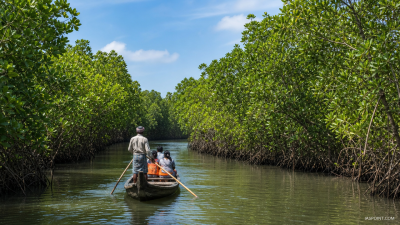
The Pichavaram mangrove in Cuddalore district has been economically assessed at ₹2,485.38 crore by Tamil Nadu forest authorities and ISEC Bengaluru. The study placed blue carbon (vegetation + soil) value at ₹1,612 crore, noted NABARD-supported beekeeping for 100 Irula households, and recorded threats from microplastics, shrimp farming, land conversion and unregulated tourism.
What is the issue
Pichavaram’s recent valuation monetises ecosystem services to inform policy and local livelihoods. The assessment quantifies vegetation and soil carbon, fisheries support, coastal protection, biodiversity value and tourism potential. It connects ecological stocks to fiscal figures used in planning and climate finance decisions.
Why it matters for governance and economy
- Fiscal trade-offs: Monetary valuation allows comparison between conservation and alternative land uses when allocating funds or approving projects.
- Climate finance: Quantified blue carbon strengthens India’s case for credits and grants under international climate mechanisms.
- Local governance: Valuation supports livelihood schemes and strengthens claims for funding community-based conservation.
- Disaster risk reduction: Mangrove coastal buffering reduces storm damage and public expenditure on engineered defences.
Physiological adaptations and geographical distribution
- Adaptations: Pneumatophores for root aeration; stilt and buttressed roots for stability; salt filtration in roots and salt-excreting leaves; vivipary (germinating propagules) for dispersal and establishment in tidal zones.
- Role: Sediment trapping, shoreline stabilisation, nursery habitat for fisheries, carbon sequestration in biomass and deep soils.
- Distribution in India: Major areas include Sundarbans (West Bengal), Gujarat, Andhra Pradesh, Tamil Nadu (Pichavaram), Maharashtra, Odisha, Karnataka, Goa, Kerala and Andaman & Nicobar Islands.
Valuation of ecosystem services and blue carbon reservoirs
The joint assessment placed total ecosystem services at ₹2,485.38 crore (₹1.83 crore/ha). Blue carbon (vegetation + soil) was valued at ₹1,612 crore (≈₹1.19 crore/ha).
| Component | Stock (t/ha) | Value per ha | Total value |
|---|---|---|---|
| Vegetation carbon | 79.449 t/ha | ₹28 lakh/ha | ₹387 crore |
| Soil organic carbon | 251.14 t/ha | ₹90.24 lakh/ha | ₹1,224.63 crore |
| Combined blue carbon | — | ₹1.19 crore/ha | ₹1,612 crore |
Socio-economic integration and tribal livelihoods
Ramsar status: Pichavaram is a designated Ramsar site, providing an international conservation framework. Irula livelihoods: NABARD funded a Climate Resilient Village initiative with ₹25.37 lakh to support 100 Irula households via scientific beekeeping (250 bee boxes) and branding of “Pichavaram Mangrove Honey”. Governance implications: Non-extractive enterprises reduce pressure on mangrove resources. Market access, technical training, tenure clarity and benefit-sharing arrangements are necessary for long-term sustainability.
Environmental stressors and pollution
- Microplastics: Seasonal microplastic contamination detected in fish and shellfish; monsoon increases riverine input.
- Aquaculture: Shrimp farming alters hydrology and increases nutrient and chemical runoff.
- Land conversion and encroachment: Agricultural expansion and infrastructure reduce mangrove extent and disrupt sediment flows.
- Tourism: Unregulated visitation causes waste, trampling of propagules and boat-related pollution.
Policy instruments and mitigation strategies
- Regulatory measures: Enforce Coastal Regulation Zone (CRZ) classifications and permit regimes to prevent conversion of intertidal zones and restrict intensive aquaculture near mangroves.
- Green accounting: Integrate ecosystem valuations into state and national accounts to guide budgetary decisions and cost–benefit appraisals for coastal projects.
- Climate finance and carbon mechanisms: Use blue carbon estimates to access climate funds and design carbon credit projects with verified measurement, reporting and verification (MRV) protocols.
- Waste and pollution control: Implement upstream waste management, zero-plastic zones, and river-basin level measures to reduce monsoon microplastic loads.
- Community-based restoration: Support local stewardship, provide technical training (hydrological restoration, propagule planting, fishbone channels), and ensure benefit-sharing and tenure security.
- Monitoring and research: Regular ecological audits, microplastic monitoring, and satellite/field mapping to track mangrove extent, carbon stocks and restoration outcomes.
Model Questions
1. Explain the physiological adaptations of mangroves and discuss their geographical distribution along the Indian coast. [GS-III: Environment & DM]
Mangroves show pneumatophores for root aeration, stilt/buttressed roots for stability, salt exclusion and excretion mechanisms, and vivipary for propagule survival. They trap sediment, form nurseries for fisheries and store carbon in biomass and soils. In India mangroves occur in Sundarbans, Gujarat, Andhra Pradesh, Tamil Nadu (Pichavaram), Maharashtra, Odisha, Karnataka, Goa, Kerala and Andaman & Nicobar Islands, spanning both east and west coasts.
2. Evaluate the role of community-based conservation in protecting coastal wetlands while addressing tribal livelihood vulnerabilities, with reference to Pichavaram. [GS-II: Governance]
Community-based conservation links protection with sustainable incomes. In Pichavaram, NABARD-supported scientific beekeeping for 100 Irula households provides non-extractive revenue, reduces pressure on mangroves and builds local stewardship. Key governance needs are market access, technical capacity, tenure security, benefit-sharing and institutional support to scale interventions and integrate communities into monitoring and decision-making frameworks.
3. Discuss the utility of economic valuation of blue carbon ecosystems in national environmental planning and climate finance. [GS-III: Economic Development]
Economic valuation translates services—carbon sequestration, coastal protection, fisheries—into fiscal terms for budgeting and cost–benefit analysis. Pichavaram’s ₹2,485.38 crore assessment supports green accounting, strengthens claims for climate finance and carbon credits, and provides empirical basis to prioritise conservation over destructive land uses in planning and CRZ decisions.
4. Analyse primary anthropogenic threats to estuarine blue carbon sinks and recommend mitigation strategies. [GS-III: Environment & DM]
Major threats are microplastic pollution (peak during monsoon), shrimp farming runoff, land conversion and unregulated tourism. Mitigation requires enforcing CRZ rules, upstream waste management and zero-plastic zones, sustainable aquaculture standards, community-led restoration and seasonal ecological audits. MRV systems for carbon and biodiversity help align restoration with climate finance and regulatory compliance.
Last Modified: July 15, 2026